How Do “LLM Connections” Actually Work When You Can’t Actually Submit Your Business Data?
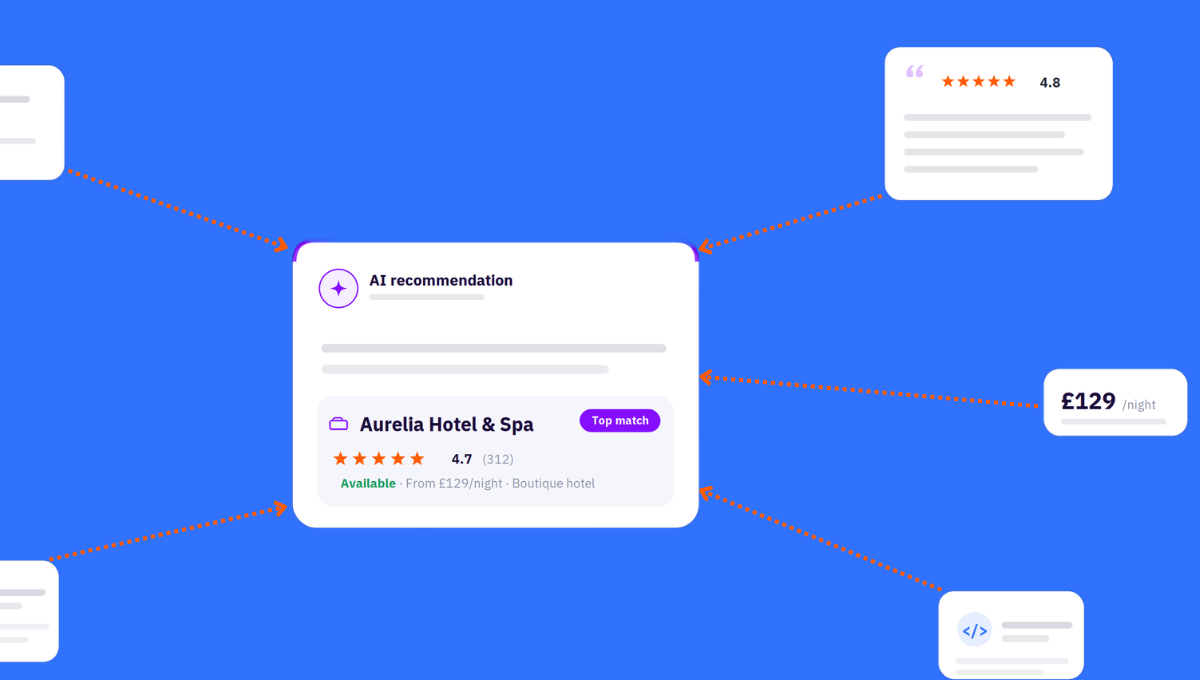
No listings platform submits data directly to ChatGPT or Perplexity, or any AI tool for that matter. Here’s how AI data sources actually work to influence your LLM visibility.

Key takeaways
- There are no official APIs, submission pipelines, or direct integrations between listings management platforms and major LLMs
- AI models pull from Google, Yelp, directories, review sites, and structured web content — not from vendor dashboards
- Accurate, consistent data across authoritative directories, strong review signals, and structured local content are the inputs AI models read when building local recommendations
“LLMs are not traditional directories or publishers, which means there are no direct connectors or APIs available for ingesting client data. Any claim of a direct data partnership with an LLM for listings ingestion should be treated with caution. This is not how the ecosystem currently operates.”

It turns out we’ve been getting a version of this question from enterprise clients a lot lately — on demo calls and in follow-up emails: “You listed major LLMs as publishers. How do those connections actually work — are these official partnerships, direct integrations, submissions, or something else?”
It’s a fair question because when vendors talk about ‘pushing verified data directly to LLMs in real time,’ they’re insinuating there’s some kind of magical API behind that loose promise. There really isn’t.
In the words of our Technical Product Manager, Luma Ghazaleh:
{{quote}}
So when we — or any other vendor in this space — refer to “connections” to LLMs, what we mean is indirect influence rather than direct ingestion. Using a platform like Uberall, brands improve their presence across the ecosystem that LLMs rely on. Here’s how that works.
Can You Influence How Your Business Gets Found in ChatGPT and Other LLMs?
Large language models like ChatGPT and Gemini are not business directories, and they don’t accept submissions like Yelp or Bing or other directories do.
They don’t have a dashboard you log into to update your hours. So, how do businesses actually get their location data into these LLM systems? Understanding how LLMs get business data means understanding two different paths.
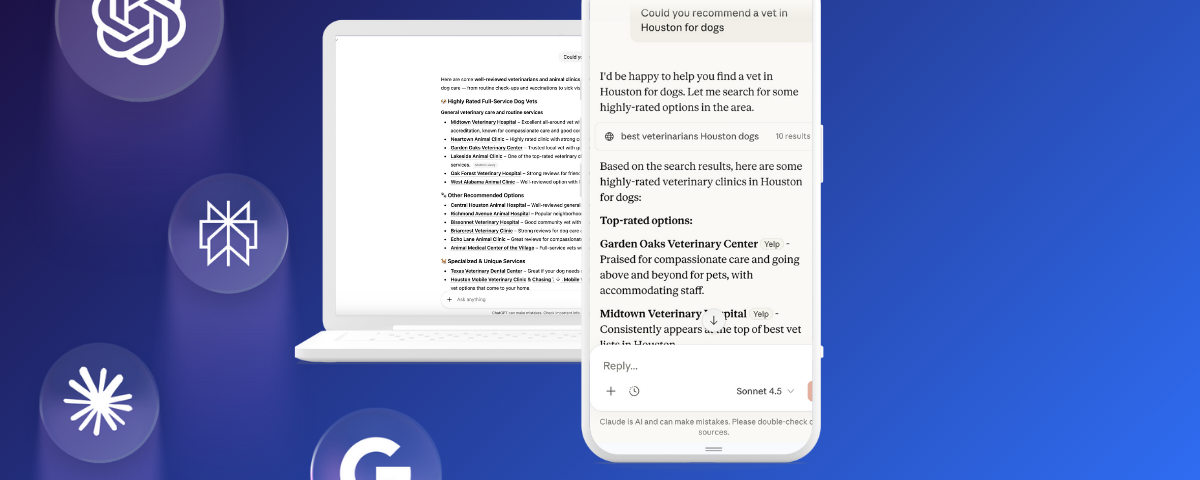
When someone asks one of these tools for the best hotel near Navy Pier or the best frozen yogurt near 33579, the model assembles its answer from data it has already received either from training data or from live search — not from data any vendor pushed to it.
This answer also depends on which tool customers are using because they’re not all built the same.
Training-data-first models (ChatGPT, Claude, Gemini, Grok) learned about businesses from a fixed snapshot of the internet — food blogs, review sites, newspaper articles, editorial “best of” lists. That snapshot might be months old. They do also use live search, but training data comes first.
Live-retrieval models like Perplexity work the other way around — they pull from whatever is currently published and indexed, using training data as a supplement rather than the primary source. This single difference gives searchers different results.
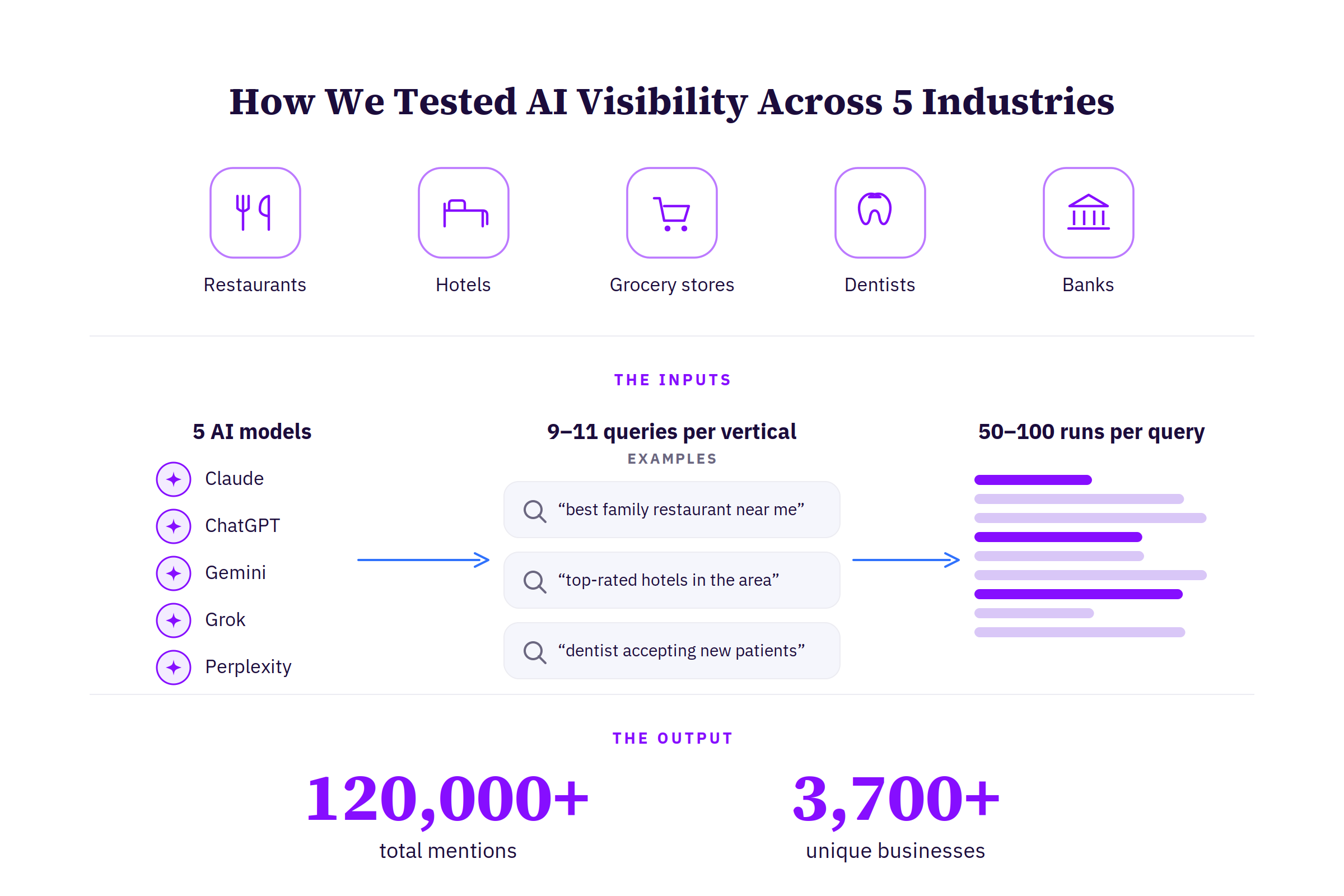
As part of Uberall’s most recent cross-vertical AI visibility research, our GEO/AEO Analyst Katya Shishchenko tested how five AI models recommend businesses across restaurants, hotels, grocery, dental, and banking — running each model against 9 to 11 real-world prompt intents per vertical, from baseline discovery queries to need-specific searches. This prompt-running process was repeated 50 to 100 times per combination, producing over 120,000 mentions across 3,700+ unique businesses.
According to the research, Perplexity consistently surfaced more businesses, cited its sources, and returned real, verifiable business names. Static models tended to recommend the same narrow set of businesses repeatedly, hallucinate names that don’t exist, and rely on older data. Which makes sense, right?
Katya found each model also has a distinct personality:
- Claude is the most conservative — it favors local and community businesses but largely avoids naming specific healthcare providers. Anthropic’s safety policies prevent Claude from giving recommendations that could be perceived as medical advice, so in our dental study, it only named practices for prompts about immediate clinical needs like emergencies or urgent care.
- Gemini is the most diverse, likely because it cross-references live Google Maps data. It surfaces 8× more unique restaurants than ChatGPT in the same study.
- ChatGPT is consensus-driven and concentrated — a short, sticky shortlist, but with the highest hallucination rates across verticals.
- Grok is credential-focused — it references chef qualifications and Instagram content more than any other model.
- Perplexity searches live, cites its sources, and generates the most mentions per run. For businesses with strong current web presence, it’s the “easiest” model to win on.
OK, so let’s make the question more specific: How do businesses actually get their location data into live search? Can they still influence what’s in the training data?
Which Data Sources Should You Prioritize for LLM Visibility?
We’ve been mapping the hierarchy of data sources that AI tools like ChatGPT, Gemini, and Perplexity rely on most since over a year ago — especially for local searches. Our Technical Product Manager Luma carried out multiple experiments last year, and we’ve been continuously expanding on her findings ever since.
But what do we mean by data sources? These are the different channels AI tools pull from to generate their answers. As a rule across all verticals, these typically are “ranked” in the hierarchy below, meaning that the higher tiers have a greater influence in what gets written in these generated answers. If you prioritize your efforts across these sources, you can effectively get your location data into live search and build real LLM visibility.
You should note, though, that the sources carrying the most weight vary significantly by industry.
Top Tier: Google
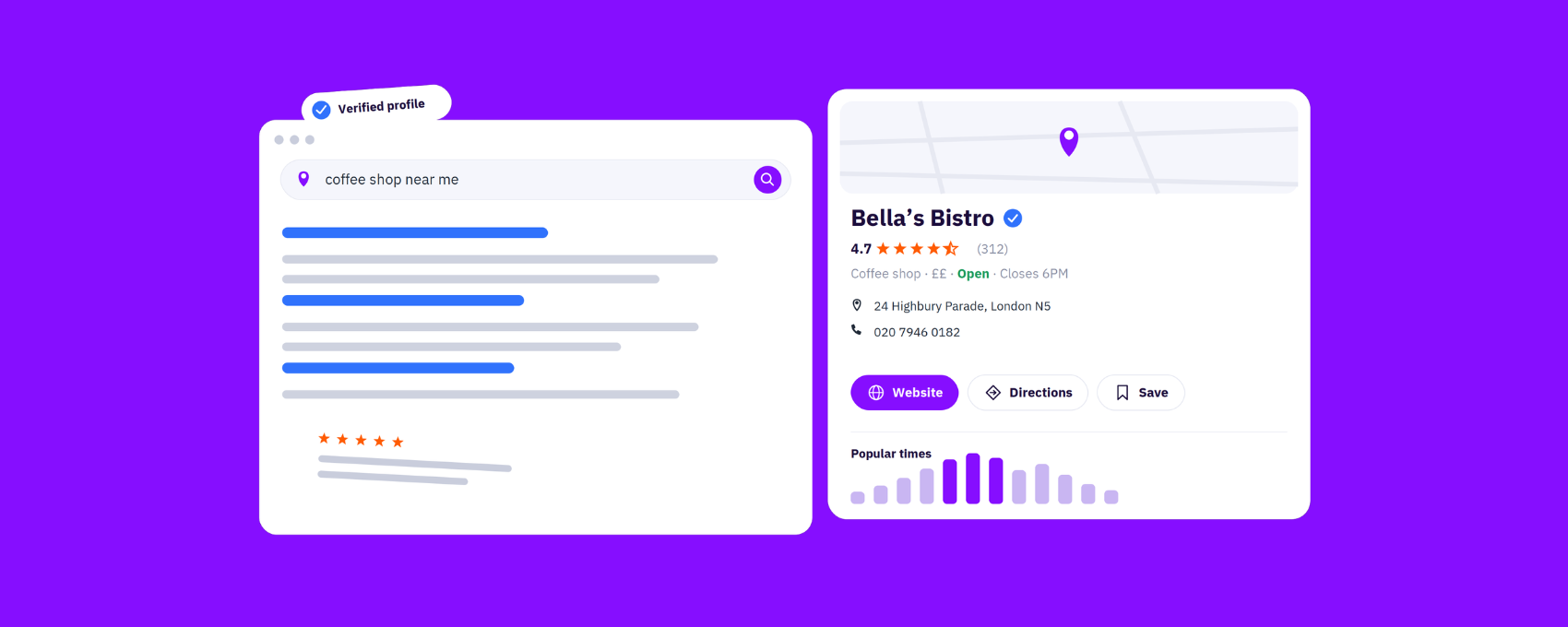
Google remains the number-one source for local intent queries. ChatGPT and most AI tools initiate searches via Google or Bing Search, treating Google Business Profiles (GBP) as authoritative sources for reviews, location data, star ratings, hours, photos, and popular times.
Most models also use GBP data to generate location cards or snippets — the structured blocks that appear alongside a recommendation. Each model pulls different attributes: Perplexity builds the richest cards (name, photos, rating, review count, price range, address, phone, website, categories, and hours), while Grok often reduces a business to just its address.
ChatGPT and Gemini fall somewhere in between, each combining photos, hours, price range, and category data.
This is where profile completeness becomes crucial. If your GBP is missing an attribute that a model uses to build its snippet — say, hours or a phone number — it’s likely that a competitor with a more complete profile will appear instead.
High Tier: Yelp
Yelp is one of the most influential sources for food, retail, beauty, and hospitality queries — and one of the fastest paths to visibility in ChatGPT specifically.
It frequently appears in AI-generated answers thanks to its strong domain authority and rich user-generated content. Yelp rankings, review sentiment, and star ratings are referenced by tools like ChatGPT — and in some cases, the system pulls entire business lists directly from Yelp when responding to “best of” queries.
Yelp also has a direct licensing relationship with OpenAI, which means its data is a known data source for ChatGPT’s local recommendations.
Mid Tier: Industry-Specific Directories and Websites
TripAdvisor, OpenTable, DoorDash, and other delivery and booking platforms are particularly relevant for travel, dining, and takeout queries.
But the directory landscape goes deeper than the obvious names, and it obviously varies by vertical.
In dental, Zocdoc is the only individual review platform where volume significantly predicts AI mention probability. In banking, TrustPilot rating is the strongest single continuous signal for whether a bank gets mentioned at all, and BBB rating is the second — yet almost two in three banks in Katya’s study hadn’t even claimed their TrustPilot profiles.
Not all citation sources are obvious. In the French market specifically, almost half of all AI citations traced back to hundreds of small, niche directories that individually seem unimportant but collectively are the single biggest source type, cited 7× more often than brands’ own websites. These smaller directories often pull data from larger aggregators like Foursquare and TomTom, meaning your listing data needs to be correct to function as a single source of truth across layers of sources you may not even be tracking.
Business websites and blogs also fall here — when they’re well-optimized with structured content like menus, FAQs, schema markup, customer quotes, or store locator pages, LLMs are more likely to reference them.
Mid Tier: News and Media Coverage
Credible external publications, niche editorial sources, and even “best of” lists on travel or food blogs all produce high-domain-authority content that models weigh heavily.
In our research, the correlation between more press coverage and more AI mentions shows up across every vertical studied:
- In banking, brands with 75+ Google News mentions within a 90-day window average 15× more AI mentions than those with fewer than 10.
- In hotels, media coverage has the single largest effect size of any signal for mention probability.
Lower Tier: Bing, Apple Maps, Foursquare
These platforms show up less often in AI responses, but they play a bigger role than you’d think. Bing is understood to be the search engine ChatGPT uses for live retrieval — making Bing Places a direct input for the most widely used AI assistant.
Apple Maps feeds into Apple Intelligence, and Foursquare data shows up across dozens of apps and services.
This profile completeness and data consistency works as a validation layer, reinforcing the signal that your business exists, is active and reliable, and has consistent information everywhere — even if these platforms aren’t the ones getting cited directly.
Other AI Data Sources Worth Monitoring
The signals below aren’t top-tier citation sources on their own, but they show up consistently in our research as predictors of whether a business gets mentioned — and how often. Which ones matter most depends on your industry:
- Google Knowledge Graph and Wikipedia: Wikipedia presence amplifies mention frequency in banking (r = 0.321) and hotels, but doesn’t create mentions on its own. Knowledge Graph presence produces a 3.75× mention uplift in dental. Both are earned authority signals that grow over time.
- Instagram and Facebook: Instagram follower count is a strong predictor of AI visibility in restaurants and hotels. This makes sense because more followers typically signals more frequent posting to keep the audience engaged, which means more likes and reposts, which creates a larger content footprint for model training. And actually, we found that Instagram is the strongest single predictor of mention frequency for boutique hotels (r = 0.568). Facebook followers predict mention probability in dental (4.7× gap between mentioned and nonmentioned practices). We also mentioned earlier that Grok references Instagram content more than other models.
- YouTube: Channel presence nearly triples the odds of a mention in dental — and it’s the existence of that channel that matters, not the subscriber count. Most businesses haven’t bothered yet, which is exactly why it’s such a good opportunity for brands to explore.
- Domain authority: Domain authority above 68 produces 14× more AI mentions than sub-20 in banking.
- Industry awards, editorial “best of” lists, and certifications: In banking, 3+ editorial platform appearances (Bankrate, NerdWallet, Forbes Advisor, WalletHub) are associated with a 100% mention rate. For restaurants, Perplexity references the Michelin Guide in 94.5% of responses.
- Reddit: Increasingly cited by Perplexity in particular, especially for restaurant and local discovery queries. We cover Reddit marketing opportunities for local businesses in a SEJ webinar, summarized in this article.
This hierarchy isn’t static; it does change constantly depending on verticals, model updates, and also as LLM providers sign new data partnerships and expand their real-time search capabilities.
But, generally speaking, and based on our findings from last year and this year, the sources with the strongest domain authority, the richest structured data, and the freshest user-generated content are the ones AI models trust most. This is how businesses are currently “getting” their location data into live search.
What You Can Actually Influence from Today?
So, now you know there’s no vendor able to submit your business data to LLMs, you need to understand what your role as a multi-location SEO manager or PR manager is to absolutely prioritize the following three things, as soon as you can.
1. Data Accuracy Across Authoritative Directories
Good listings management is the foundation, so keep NAP data, hours, categories, and attributes consistent across every directory AI models read. Around 68% of local businesses appear incorrectly in AI results due to missing, inconsistent, or outdated data. When so few businesses have consistent information across AI systems, getting this right is already a competitive advantage.
2. Strong Reputation Signals
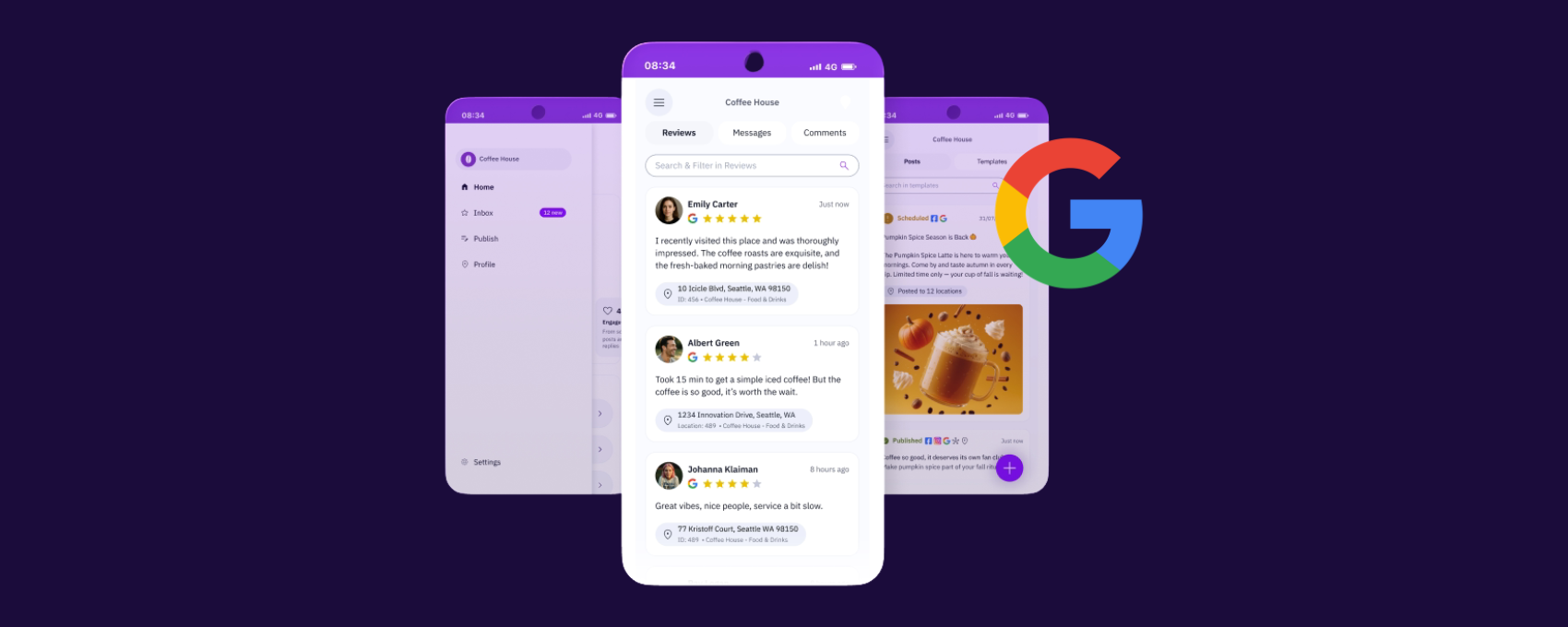
Reviews matter to AI models, but not necessarily in the way we all thought. Star ratings don’t significantly predict AI mentions in three of the five verticals we looked at. The number of reviews matters way more than having only a few five-star ratings. High review counts on platforms like Yelp and Google also imply a business listing has passed spam filters and verification thresholds, adding a layer of validation — a thumbs-up to recommend.
Review text also contains the descriptive language LLMs draw on when generating their recommendations — whether a business has a great outdoor seating area, a dog-friendly space, or super friendly staff.
3. Structured, AI-Readable Content
If you want to make your content visible in ChatGPT and other AI tools, making sure it’s crawlable is the most basic prerequisite. Grounding pages, local FAQs, and schema-optimized local pages give AI systems a single, citable source of truth for each location. Check your robots.txt allows the major AI crawlers (GPTBot, Google-Extended, ClaudeBot, PerplexityBot) to access your site.
Another technical point worth bringing up here is that most AI models can’t read JavaScript or interact with dynamic page elements; they only consume raw text. So, if your local pages are built on heavy JavaScript frameworks without server-side rendering (SSR), LLMs may not be able to read them at all.
What to Ask Your Listings Provider About “Implementing” AI Visibility
Here’s a filter you should use in any vendor conversation about AI search: Ask them to explain, in specific terms, how your business data reaches an LLM.
If the answer involves the word “direct” and the name of a large language model in the same sentence, ask follow-up questions. Ask for the API documentation. Ask for the partnership agreement. Ask what happens when you update a phone number — does it sync to ChatGPT the way it syncs to Google?
In Luma’s words: “The answer will tell you whether you’re evaluating a product or a positioning statement.”
The vendors who are honest about how this ecosystem works, that AI search visibility is built from consistent data, strong review signals, and structured content across the sources AI actually reads, are the ones building tools to help you monitor and optimize your AI visibility at scale. The others are hoping you won’t ask the savvy follow-up questions.
AI models don’t accept your business listings, but LLM visibility is also not random. Like search engines, LLM systems follow patterns you can influence, and there are “ranking factors” of AI data sources in this landscape. GEO Studio shows multi-location teams how to influence these patterns at an individual location and brand level across listings, content, and external mentions and track how each store, branch, or property appears in AI-generated responses.
Biggest takeaway from all our data: Generative engine optimization (GEO) is not about finding direct LLM connectors that ingest your business data; it’s about cleaning up this data at scale so LLMs can accurately connect the dots around your business locations.


1,800 brands trust us to stay visible
— not just show up once or twice in local search.


.png)

Frequently asked questions
You cannot submit your business data directly to ChatGPT or other AI models. There are no official APIs, submission pipelines, or direct integrations between listings platforms and major LLMs. When a vendor claims to push data directly to an AI model, ask for the API documentation — it doesn't exist. What you can do is improve your presence across the sources LLMs actually read: Google, Yelp, directories, review sites, and structured web content.
Local and niche directories do affect LLM visibility, and often more than businesses expect. In one Uberall study of the French market, almost half of all AI citations traced back to hundreds of small, niche directories that individually seem unimportant but collectively were the single biggest source type — cited seven times more often than brands’ own websites. These smaller directories often pull data from aggregators like Foursquare and TomTom, so your listings data needs to be accurate at the source.
The difference is whether the model leads with training data or live search. ChatGPT and Gemini learned about businesses from a fixed snapshot of the internet — food blogs, review sites, editorial lists — and supplement with live search. Perplexity works the other way: It searches what’s currently published and indexed first, using training data as backup. That’s why Perplexity surfaces more businesses and cites its sources, while ChatGPT tends to recommend a narrow, recurring shortlist.
Reviews influence AI recommendations in two ways: volume and language. The number of reviews matters more than a perfect star rating — high review counts signal to AI models that a business has passed spam filters and verification thresholds. And review text contains the descriptive language LLMs draw on when generating recommendations, such as whether a location has outdoor seating or friendly staff. Detailed, contextual reviews far outweigh generic five-star ratings without text.
Structured data, such as schema markup, local FAQs, and well-organized location pages, give AI systems a single, citable source of truth for each location. But there’s a prerequisite most teams miss: AI models can’t read JavaScript or interact with dynamic elements — they consume raw text. If your local pages run on heavy JS frameworks without server-side rendering, LLMs may not be able to read them at all.
You find out whether AI is mentioning your business by running the prompts your customers would type — queries like "best [category] near [city]" — through ChatGPT, Perplexity, and Gemini, and checking whether your locations appear in the answers and which sources get cited. A tool like GEO Studio does this at scale, tracking how each location appears in AI-generated responses and which sources the models used to build their answer.