Reviews Are Franchisees’ Biggest Pain Point and the One They Least Use AI to Fix
Reviews are franchise locations’ #1 pain point — and the task they least use AI to manage. Here’s how to run franchise review management that works.



Key takeaways
- Strong brands often neglect local reviews, but those brands are made or tarnished one location and one reply at a time
- Franchise review management works when HQ builds the process centrally (templates, tone, escalation, cross-location patterns), and locations answer in their own voice, from their own phones
- Reviews are now an AI visibility signal, not just a reputation one, and platforms like Yelp are being cited by ChatGPT and Google AI Mode, so review distribution and freshness affect whether AI recommends your locations
Plenty of franchise brands assume their reputation can look after itself. Their logo is strong; customers are loyal; the reviews will sort themselves out. That assumption is how a good reputation goes bad over time.
Earlier this year we studied 300 franchise brands with industry analyst Greg Sterling, and reviews came up again and again as the pain point locations feel most and manage least.
On a recent webinar with Pizza Hut’s Amparo Gil, Greg made the point plainly: A big brand can be the very reason reviews get neglected. “Maybe brands feel like they don’t have to pay as much attention to them because they’ve got a strong brand,” he said. “But this is something that I think really is very important … you have to really engage the customer and you have to respond to reviews.”
So that’s the job of a franchise marketer. A strong multi-location franchise brand won’t save a location that ignores its customers — these customers and their wallets are won or lost one reply at a time, location by location.
And our Uberall team loves helping busy franchisees run their review management at scale.
The Three Things That Make Franchise Review Management Hard
Managing reviews for a single business is straightforward.
Managing them across a franchise network is a different job, because the reviews belong to two owners at once. Every location serves its own customers and collects its own reviews, but every review also carries the brand’s name.
That structure creates three problems that independent businesses never face when they think about review management for franchises.
- Responsibility is split. A location manager knows what happened last Tuesday night; HQ knows what the brand voice should sound like. Neither can answer reviews well alone. Greg references this tension on the webinar. The trick to how to manage reviews for franchise locations is giving locations the authenticity of a local response while holding them to a shared standard — and the support to actually meet it.
- Brand consistency is on the line. A rude or off-brand reply from one location reflects on all of them. Every response, wherever it comes from, has to sound like the same company — which means clear guidelines and shared templates, not a free-for-all.
- The volume is relentless. A single location’s reviews are manageable without dedicated software. Three hundred locations’ aren’t — not even close — when there are other local marketing tasks to manage. When more and more reviews are left unanswered, customers reading them can see exactly which ones you ignored. Not only that: AI systems will also read your location as less active than your local competitor’s and could end up recommending them instead.
Who Should Own Franchise Review Management: HQ or Locations?
Franchise owners typically don’t sign up to be review managers. They’re running a store, they’re keeping listings current, and running active social channels. Responding to reviews within Google’s recommended time frame of 72 hours is one more item on a long list.
Our client SUNMED (Your CBD Store) had this problem when we spoke with them. Their franchise owners were struggling to keep profiles up to date, replying to reviews across locations was near-impossible at scale, and, to top that off, a previous provider had left store profiles patchy and inconsistent.
The other problem you get with franchise review management is that many multi-location brands pick a side: HQ controls everything (slow, generic, impersonal replies) or locations do whatever they want (and the brand voice HQ cares about d i s s o l v e s). It’s an issue concerning structure and scale. This speed gap is what our research flagged and what the webinar addresses: Locations feel the pain of review volume but rarely bring AI to bear on it.
Amparo Gil, Digital Growth Marketing Lead at Pizza Hut, described their similar model on the webinar: “We build the picture centrally, but we connect locally, and we have those conversations on a regular basis also with our huts — in terms of feedback, in terms of knowledge, what is working, what is not.” HQ sees the whole network and sets the standard; the location handles the moment in its own voice.
Brands like Pizza Hut that get it right gather review intelligence centrally, run one shared process that works at scale, and let the people closest to the customer do the talking (or responding) across every location. That means HQ still owns the strategy — the response templates, the brand tone, the escalation rules for when a review needs a manager — and locations own the on-brand replies, from their own phones.
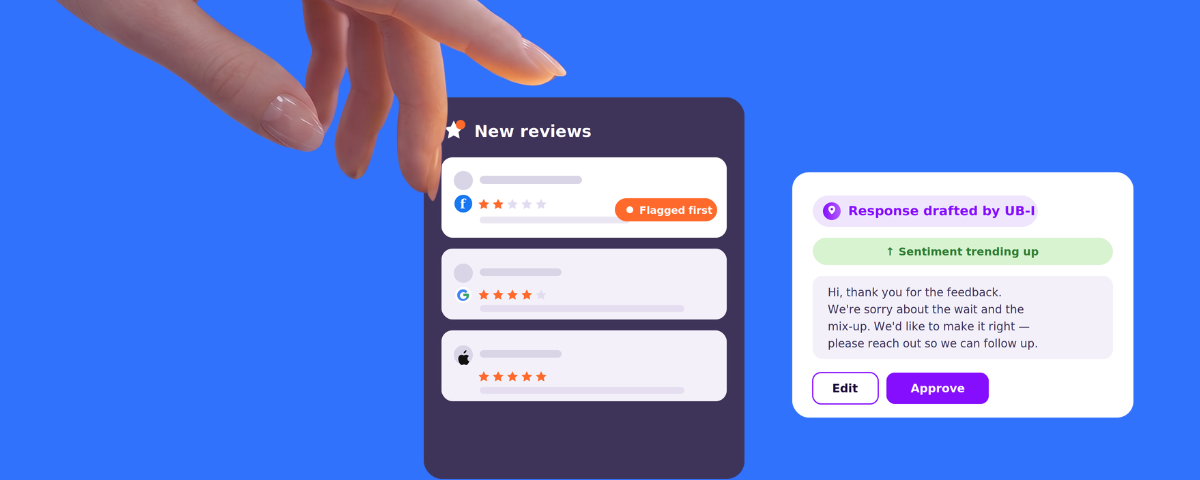
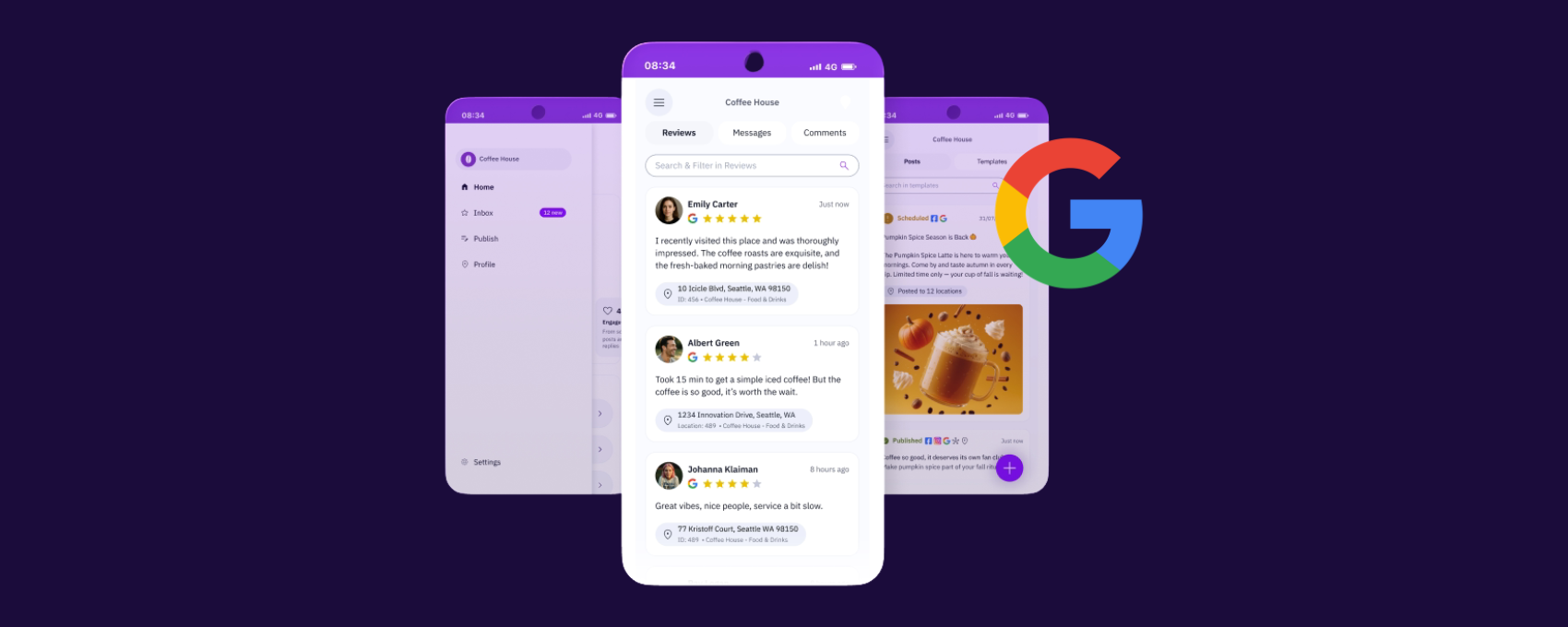
With Uberall’s review management made easy on mobile, this is how this flow looks:
- A franchise location gets an instant alert the moment a review lands.
- The local manager drafts an AI-generated reply, with the HQ-approved brand guidelines baked into it.
- They personalize the reply.
- They send it from wherever they are — on the floor, in the office, between customers.
Hyperlocal always beats head-office-generic in traditional and AI search. Today SUNMED holds a 4.9-star average and answers 70% of its reviews in about three days. That consistency comes from the scaled-up system, the software, not from every owner keeping up with that long task list alone — and it’s part of why they saw a 312% jump in taps on Apple Maps and a 10% lift in Google clicks for directions to their stores.
So, to answer the question of who owns the process: It’s both HQ and location managers together. This is the most reliable of the franchise location review management strategies because it doesn’t force teams to choose between speed and consistency — they actually get both.
Reviews Protect Your Reputation and Your AI Visibility
Sentiment analysis reads across every review and tells you what customers are reacting to. One bad review is usually negligible; they’re natural. But 50 reviews naming the same slow-service issue is a signal HQ and franchise managers can act on.
That’s two things at once:
- Feedback to enhance your franchise customer experience
- An early read on what AI systems might start saying about your locations – this loops back to my earlier point that big brands are at risk of a bad reputation if they don’t get a handle on local reviews
And the more you focus on gathering reviews for franchise locations, the more you can influence both of the above. A location with 12 glowing reviews from two years ago looks pretty abandoned rather than alive.
Amparo uses reviews at Pizza Hut for sentiment analysis, to see whether customers are talking about taste, wrong location info, delivery, or the dining experience.
When Greg walked through what drives visibility in AI search, reviews sat right at the top — ahead of plenty of things brands spend way more time on.
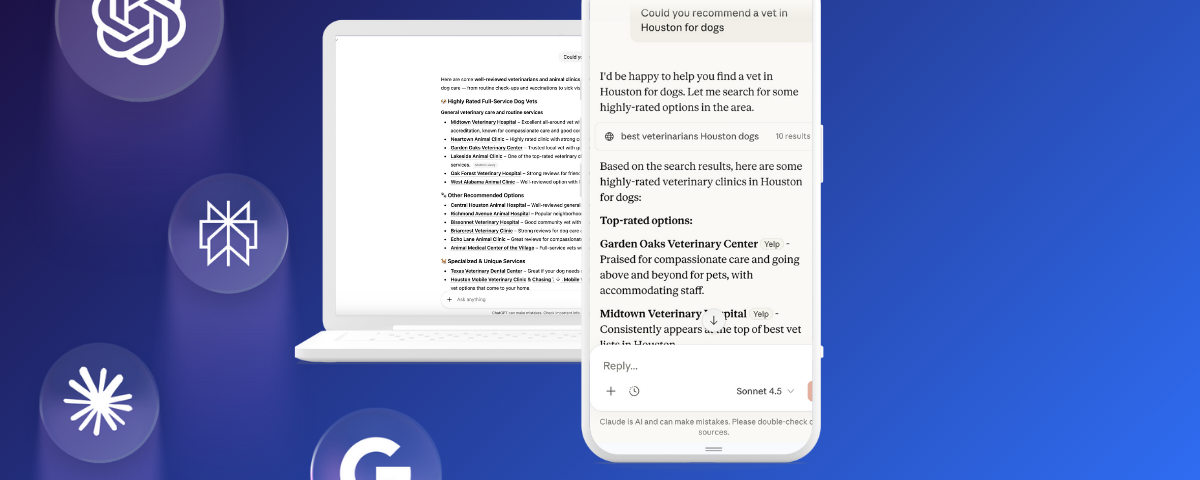
And it’s not just your Google reviews that count now. “Yelp now shows up pretty routinely in ChatGPT, even in Google AI Mode,” Greg points out — so the review platforms you might have written off years ago are cool again, because AI tools cite them when they answer “best pizza near me” or “where should I take the kids for lunch.”
So responding to reviews isn’t only a defensive tactic franchise owners perform to avoid looking bad. They are already influencing whether an AI recommends a location.
What to Look for in Franchise Review Management Software
So reviews really don’t need to be a franchisee’s biggest pain point.
If reading this has convinced you that a strong logo and loyal customers aren’t enough for your franchise brand’s reputation, this is how you pick a solution that resolves the operational friction I discussed above.
These are four things you should look out for in a demo.
- It works from a phone. The person answering the review is on the floor, not at a desk. If your review management tool is a pain to use on mobile, locations just won’t use it.
- It does the heavy lifting with AI. On-brand drafts in seconds, plus a way to respond to your routine positive reviews in one pass with bulk replies — so your team’s time goes to the reviews that actually need a human.
- HQ sets the guardrails; locations keep their personality. The good stuff lets HQ lock in approved language, tone, and escalation paths, while locations still reply as themselves.
- It reads across your reviews for customer sentiment. A review platform for a franchise network needs to surface the patterns — by location, by issue, by trend — that tell HQ what to fix.
Getting these four right is worth the effort and the tool investment. As Greg puts it: “The brand is an abstraction, but on the local level is where the real brand experience happens.” Every review is that experience — and local search tools, whether Google, ChatGPT, or Perplexity, recommend the businesses that reliably deliver it.
Watch the full webinar with Greg Sterling and Amparo Gil or download our franchise report.



1,800 brands trust us to stay visible
— not just show up once or twice in local search.


.png)
