Google Reviews for Businesses: What the New Guidelines Mean for Your Local Reputation
Having issues with your Google reviews? Navigate how to manage Google business reviews in line with the latest Google review guidelines and protect your multi-location brand reputation online.


Key takeaways
- Delayed reviews, slower reply publishing, and disappearing review counts aren’t bugs specific to your business; they’re the result of stricter moderation likely driven by a rise in review extortion and manipulation
- Businesses already asking real customers for honest feedback, responding professionally, and monitoring regularly are well positioned regardless of what Google changes next
- Local business reviews and response rates directly influence visibility in organic search, Maps, and AI search, making reputation management a core part of location performance, not a nice-to-have
"One of my clients [...] just did a major survey of 23,000 locations in their proprietary database and they discovered that local brands which prioritize the aspects of online local business reviews to the degree that they're using reputation management software have an average NPS that is 50% higher than less engaged industry peers."

Businesses around the world have, over the past few months, noticed changes to how Google reviews appear, how review replies are processed, and how long it takes for review-related issues to be resolved.
These shifts have raised understandable questions for many brands monitoring their Google Business Profiles. So, if you’re asking whether these changes are only affecting your business, the answer is “no.”
These are platform-wide updates affecting businesses globally — not issues specific to individual businesses, industries, or tools.
While we can’t state this matter-of-factly, we believe these changes are likely being driven by the first reports of review extortion — triggering gradual updates to Google review guidelines, moderation systems, and documentation. Google’s goal, after all, is to ensure reviews represent genuine customer experiences and improve transparency, while reducing review manipulation or abuse.
Right now we understand these changes feel messy and hard to keep up with (alongside all the other location marketing tasks on your plate) — and especially if you’re managing multiple locations. So let’s walk through your main priorities in reputation management and the key updates to Google's review guidelines.
Why Does All This Matter for Local Reputation Marketing?
Your location review profile isn’t just about being present or about acquiring and retaining customers through the power of electronic word of mouth (EWOM).
Very few consumers skip reading reviews before visiting a local business — it really doesn’t matter if you’re a well-known enterprise brand or one with a handful of locations. Reviews are just as important for restaurant locations, hotels, tire shops, beauty salons, or insurance branches.
And it goes further than that: Local business reviews — and review responses — are a key local ranking factor for organic and AI search.
It’s why reputation sits at the core of Location Performance Optimization (LPO), our framework for connecting local marketing efforts directly to revenue, alongside visibility, engagement, and conversion.
If you’re not actively investing in your review management strategy, or keeping up with Google’s policy updates, you risk a) missing out on positive word of mouth and customers and b) being caught off guard when you see significant fluctuations in your review counts — or anything else strange.
The good news is that most businesses don’t need to reinvent the wheel or overhaul their strategies. The best approach remains to follow these established review best practices:
- Ask real customers for honest feedback
- Respond to reviews professionally and consistently
- Seek resolutions for negative reviews and document the outcome
- Monitor your reviews regularly
- Report reviews that clearly violate Google’s policies
- Use Google’s appeal process when necessary
So, just to reiterate: If you’re already doing these things, you are well placed to navigate Google policy changes with confidence.
Don’t Ignore the Google Review Guidelines
Google review guidelines exist to protect review authenticity and integrity. It’s in everyone’s best interest to follow them; businesses that ignore or try to game them risk losing reviews, facing profile penalties, or being removed from search entirely.
However, we know that sometimes businesses are incorrectly implicated, which is why we recommend continuing to follow these best practices — especially amid these policy updates.
1. Ask Real Customers for Honest Feedback
“Important: Reviews and other user contributions to Google Maps must reflect a genuine experience. Offering incentives, like free or discounted goods or services, in exchange for customers to post reviews, change reviews, or remove negative reviews is considered fake engagement and is strictly prohibited.” – Google
Google’s updated review guidelines now state that you can’t ask customers to mention specific employees in their reviews — a common strategy among local businesses until recently. The update reinforces that reviews should reflect real customer experiences, not feedback that’s been incentivized, prompted, or influenced by the business. Specifically, businesses should not:
- request that staff solicit a certain number of reviews
- request that staff solicit reviews that include specific content, including content that identifies a staff member
That said, it's perfectly fine for staff to introduce themselves and deliver great service. If a customer chooses to mention an employee by name because that person made a strong impression, that reflects a genuine experience and aligns with Google's guidelines.
When asking for reviews, you can still make it easy for customers using QR codes, follow-up emails, or reminders. But the decision to leave a review — and what to say — should always be entirely up to the customer.
2. Respond to Reviews Professionally and Consistently
“Be professional and polite; keep it short and simple; make your replies count; be conversational, not promotional.” – Google
Don’t hide negative reviews, respond only to the bad ones, or reply defensively and without empathy. Where issues are complex, offer to take the conversation offline via phone or email. Every review has value — even those star ratings with no text. Customers trust businesses with a balanced mix of feedback, and that trust is critical for your reputation.
One recent clarification from Google is worth noting: Review responses may now go through moderation before being published, to ensure they comply with content policies. Most are approved quickly, but some may take longer. This is designed to prevent spam and policy violations — so if your reply takes a little longer to appear, that’s probably why. Just continue responding professionally, personally, in your consistent brand voice, and allow time for the process to work.
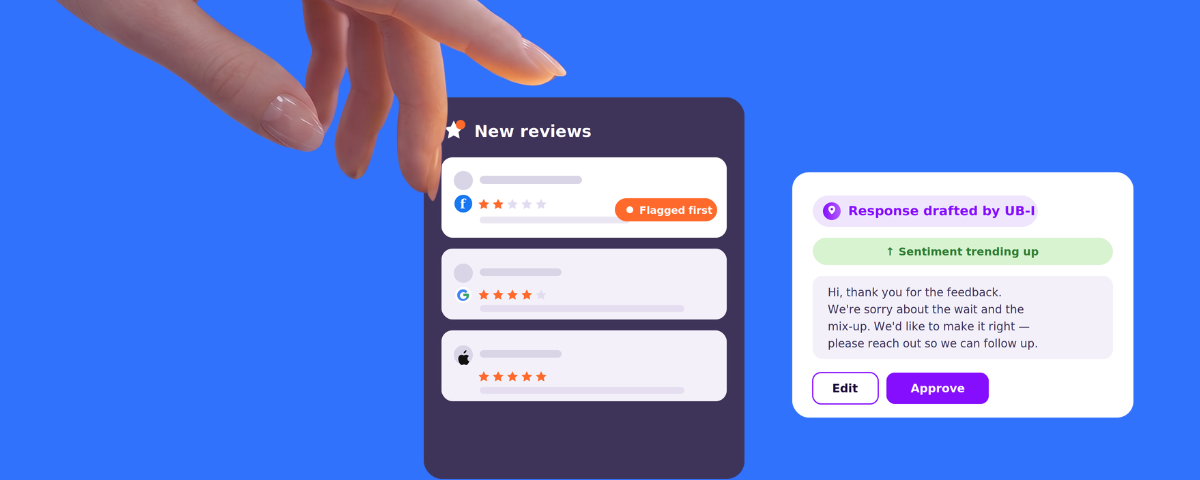
For brands managing reviews at scale — particularly enterprise brands — the right review management tools can make a considerable difference with automation, localization, custom templates — without sacrificing quality.

3. Monitor Reviews Regularly
Incorporate sentiment analysis into your local reputation marketing strategy to identify positive and negative trends across your reviews. This will help you make the changes your customers want to see across your locations.
But besides this, it’s also worth being aware of some platform-side changes that may affect how you monitor reviews right now. Businesses have been noticing a few things that can feel alarming but are largely a reflection of Google’s increased moderation activity:
- Reviews appearing later than expected
- Reviews temporarily disappearing
- Review replies taking longer to publish
- Longer response times when reporting reviews
Review delays are caused by automated spam detection, policy checks, and other moderation processes. Legitimate reviews can unfortunately occasionally get caught in these checks — if that happens, the review appeal process (more below) is your route to flagging it. Google has also acknowledged that review appeals are currently experiencing delays due to increased volume.
4. Report Reviews That Clearly Violate Google Review Guidelines
“You can report any review, but only those that violate Google policies are eligible for removal. Flagged reviews that violate our content policies are removed and will no longer show on Maps and Search.” Google
Businesses should also be aware of a documented rise in review abuse and extortion, where they receive waves of low-star reviews followed by demands for payment to have them removed.
While Google hasn’t explicitly linked its recent policy updates to this trend, we believe the stricter moderation is part of a broader effort to combat manipulation and protect the integrity of the review ecosystem.
You can read through Google’s clarified review guidelines on reporting content, including the steps to follow if you need to report a violation. According to their article, review evaluation typically takes several days, which is something to keep in mind if you’ve reported review extortion for one or more of your locations.
5. Use Google’s Appeal Process When Necessary
As we’ve covered, many businesses are currently confused about what’s happening with their Google reviews. If you are one of these businesses and notice a missing or delayed review, you should appeal this and await Google’s assistance without taking any further action — ensure you don’t submit further appeals.
Google recommends checking the status of your appeal, but has published a reminder that response times to review appeals are currently longer than usual, due to increased volume. It’s frustrating, but it reflects the scale of moderation enforcement happening across the platform right now.
How Do You React to the Updated Google Review Guidelines?
We get it — when your review count shifts overnight or a reply takes longer than expected to appear, it’s easy to assume something is wrong.
If you’re one of the businesses that has experienced and flagged these issues, you can be reassured that they reflect a broader effort by Google to improve their review ecosystem and prevent review manipulation. Consumer trust in the Google platform is, of course, key to its continued success.
So, if you’re already asking real customers for honest feedback, responding consistently, and monitoring your profiles regularly — and even scaling your review management across your locations — you’re set up for success, regardless of whichever Google updates come next.
And while we’ve focused on Google in this post, the same principles should apply across every review platform your customers are using. Authenticity, consistency, and responsiveness are the foundation of a strong reputation — wherever the conversation is happening.



1,800 brands trust us to stay visible
— not just show up once or twice in local search.


.png)

Frequently asked questions
You’re not imagining your Google reviews disappearing or changing, and it’s not just you. Businesses everywhere have seen reviews show up late, briefly vanish, or take longer to resolve. These are platform-wide changes, not a bug specific to your locations. We believe they’re Google tightening moderation in response to a rise in review extortion and manipulation. If you’re already asking real customers for feedback, responding professionally, and monitoring regularly, you’re well placed whatever Google changes next.
Google’s review guidelines exist to keep reviews authentic; ignoring them risks losing reviews, profile penalties, or removal from search entirely. Ask real customers for honest feedback; respond professionally and consistently; seek resolution on negative reviews and document it; monitor regularly; report reviews that clearly break policy; and use the appeal process when needed. It is worth noting that you can no longer ask customers to mention specific employees by name.
You manage Google business reviews with a consistent, repeatable routine rather than putting out individual fires. The framework that holds up regardless of Google’s latest changes: Ask real customers for honest feedback (QR codes and follow-up emails are fine); respond to every review professionally, including the no-text star ratings; monitor regularly with sentiment analysis to spot trends; and report or appeal anything that breaks policy. Consistency is what protects you.
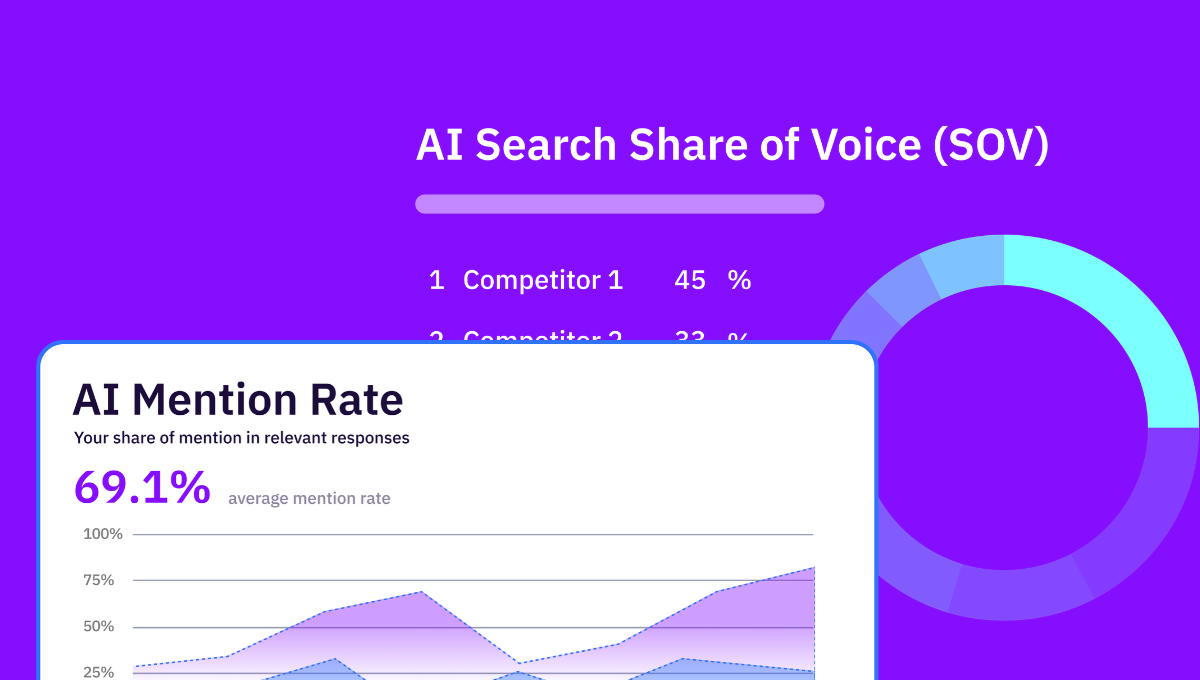
You improve your online reputation in search by shaping the review signals AI reads. Because the quality, recency, and richness of reviews now influence how AI describes and recommends you, focus on earning detailed, specific, photo-enhanced reviews rather than just chasing stars. Encourage customers to name products, staff, and experiences.
You protect your brand’s reputation online by staying consistent everywhere your customers talk about you. This gets harder, not easier, across many locations. The principles don’t change with scale, though: Be authentic, consistent, and responsive across every review platform. What changes is the effort, so multi-location brands lean on review management tools for automation, localization, and templates that keep quality high without a reply-by-reply grind.
Respond to every review professionally and consistently. Keep your response short, polite, and conversational rather than promotional, and take complex issues offline. Don’t hide negative reviews or reply only to the bad ones; a balanced, well-handled mix is what earns trust. Note that replies may now pass through moderation before publishing, so if yours takes a little longer to appear, that’s usually why. Keep responding in your brand voice and let the process work — no need to resubmit.
A listings management platform is the most practical tool for multi-location GBP management. The right platform lets you update business information, publish Google Posts, manage reviews, and monitor data accuracy across dozens or hundreds of locations from one dashboard — eliminating the manual friction of logging into each profile individually. When evaluating tools, look for centralized data management, review response workflows, cross-directory publishing, and analytics that track how profile updates translate into visibility and foot traffic.
Yes, but only reviews that actually violate Google’s policies are eligible for removal. If you spot a fake, spammy, or clearly policy-breaking review, report it — flagged violations are removed from Maps and Search, though evaluation typically takes several days. Watch for review extortion, too — these are series of low-star reviews followed by demands for payment. If a legitimate review goes missing or a report stalls, use Google’s appeal process once and wait. Resubmitting only slows things down.