AI Search Optimization: Here’s How You Remain Relevant as a Business
Worried about how AI search will impact your brand’s visibility? You’re not the first. We’ve got some local marketing tips to ensure you stay discoverable.


Key takeaways
- AI systems cross-reference business data from an average of 10–15 sources per response — and over 80% of businesses have inconsistent information across AI models
- Most AI responses don’t even include the brand’s own domain; they include third-party reviews, PR mentions, directory listings, social proof, and fresh content across multiple platforms
- 95% of ChatGPT citations come from content less than 10 months old, and AI systems increasingly weigh user engagement and social signals when deciding what to recommend

We’re all still sussing out how these new AI search engines work – and how they’ll affect local search strategies.
New data reminds us every day that multi-location businesses are exposed to these speedy AI search developments. Their top challenges are creating quality optimized content at scale that surfaces in answer engines — and measuring the ROI that follows. It’s on us, as marketers, to understand how our clients can stay relevant as this new search reality.
Consumers have increased their use of AI tools in the past years, with most of them turning to ChatGPT and Gemini — so much so that experts estimate $750 billion will flow through AI search by 2028. If that’s where people now go to research brands and local businesses, it raises the question we’re hearing a lot: Should marketers abandon their existing SEO strategies that optimize for SERP visibility?
GEO visibility reports are critical for discoverability — but so is doubling down on the fundamentals strong brands already have in place: authority, trust, and a wide online footprint. Because multi-location brands that are trusted everywhere win customers everywhere, no matter how they’re discovered.
How Does AI Search Work?
If you’re new to search (or just re-educating yourself), you’re welcome here. We’re going to break down the most important information before we move on to the AI search optimization steps multi-location brands need to take over the next few months.
Search Is Becoming an Answer, Not a Click
“AI search” refers to AI-generated answers that synthesize information from multiple sources to answer user questions directly.
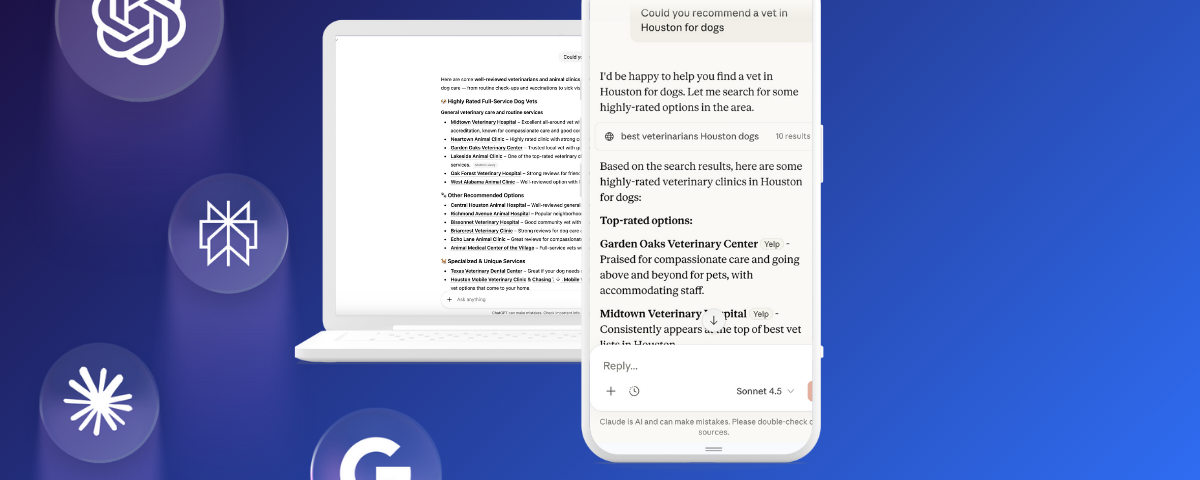
This means that consumers get what they need directly in search results or AI summaries. While traditional search engines return lists of blue links, AI search delivers a single narrative response that can compare options, recommend local businesses, and shape consumer perception without requiring a click.
This shift is rattling SEOs. Their content is, after all, seeing fewer impressions and clicks — especially any informational top-of-funnel content. AI answer engines — like Google AI Overviews, Google AI Mode, ChatGPT, Perplexity, Gemini, and Claude — summarize, compare, and recommend content without always assigning clear credit to the brand that created it.
AI visibility and its ROI is now about these brands being present, represented, and convincing customers within AI-generated responses. And doing all of that better than local competitors.
What’s at stake for brands not prioritizing this AI visibility? Well, to put it bluntly, brand invisibility. If you don’t appear in AI-generated responses as an option or a recommendation,
- You’ll rely solely on other traffic sources, missing the higher-intent audiences that AI search delivers
- This is likely due to inconsistent data about your brands or locations online
- Local competitors who do appear in AI responses will gain an advantage
Multi-location brands don’t want to remove themselves from consideration before the funnel begins. That’s why more brands than ever are putting budget toward Answer Engine Optimization (AEO) — also known as Generative Engine Optimization (GEO).
The AI Search Fundamentals We Know About
AI search is evolving day by day. While we can’t update this article daily, we can walk you through the foundational shifts in AI search — fundamentals that are unlikely to change. I’d also recommend taking a look at our article summarizing the local ranking factors identified in WhiteSpark’s most recent report.
1. AI Systems Pull from Multiple Sources
AI search engines scrape and cross-reference business information from across the internet:
- search engines
- directories
- landing pages
- blogs
- reviews
- metadata
And each AI model pulls from a different number of sources. Gemini cites an average of 9.96 sources, ChatGPT 15.07, Perplexity 9.53, AI Overviews 11.43, and Google AI Mode 11.62. This source diversity helps AI models understand, semantically organize, and connect online business data and mentions.
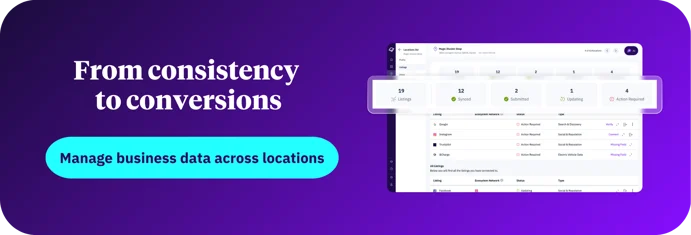
This is why Knowledge Graphs and entities are so important for success in AI search and why location data management is crucial. Any inconsistent or incomplete business data reduces an AI’s confidence and undermines a brand or location’s visibility. In fact, more than 8 in 10 businesses suffer inconsistent information across AI models, according to our latest report.
AI also looks at what people are saying about a business or a specific location. Positive, detailed reviews give AI the context it needs to understand and recommend business locations. The more people talk about specific products or services related to that business, the more that business surfaces in AI responses.
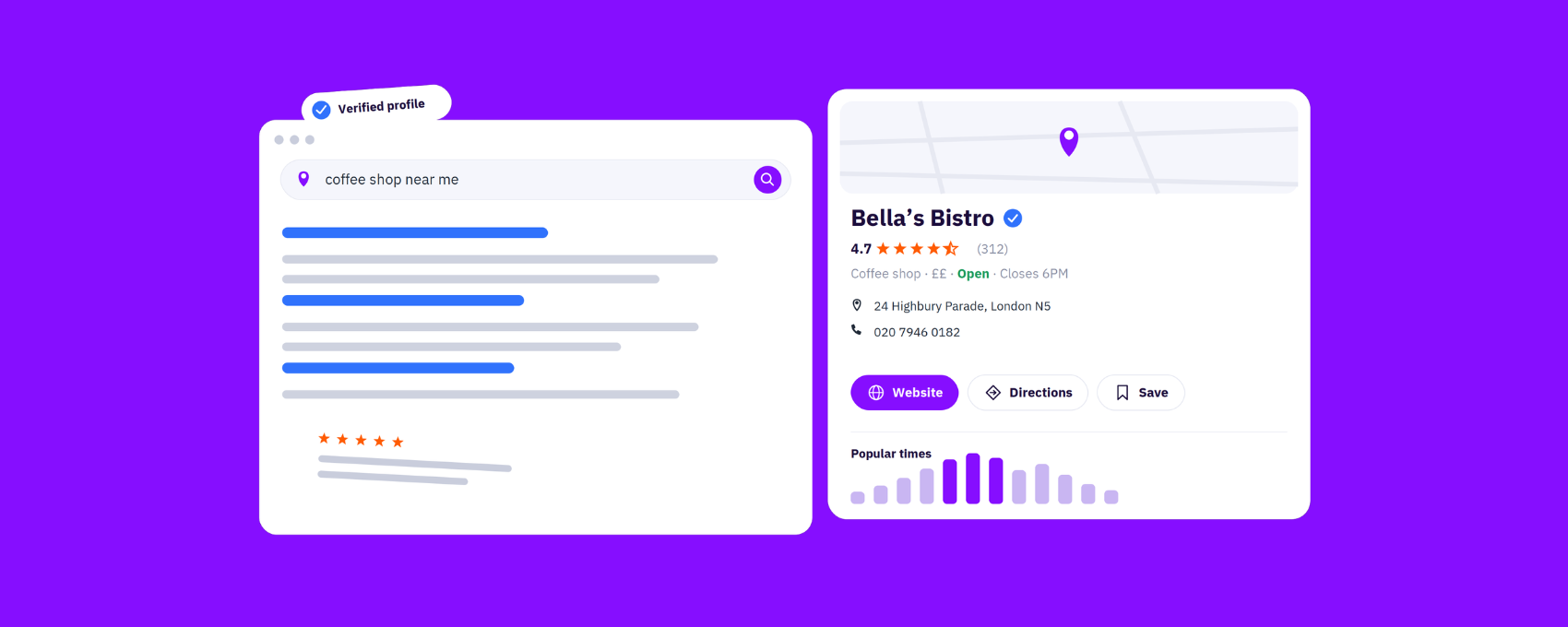
Location marketers: Brand accuracy and context isn’t enough — look at location-specific sources of truth as well on your Google Business Profile and Apple Business Connect. When an AI system is pulling data to match user intent, it will then be more likely to understand what it is you offer — and when, where, how to find you.
Advice: Prioritize Location Data and Review Management
- Standardize core location data: Keep your core business facts: name, hours, addresses, services, and attributes consistent across all platforms.
- Validate geospatial accuracy: Correct map pins and coordinates are essential, since AI weighs proximity and navigation heavily for high-intent queries.
- Create dedicated, indexable location pages: These connect brand entities to local context, services, and neighborhoods, strengthening relevance.
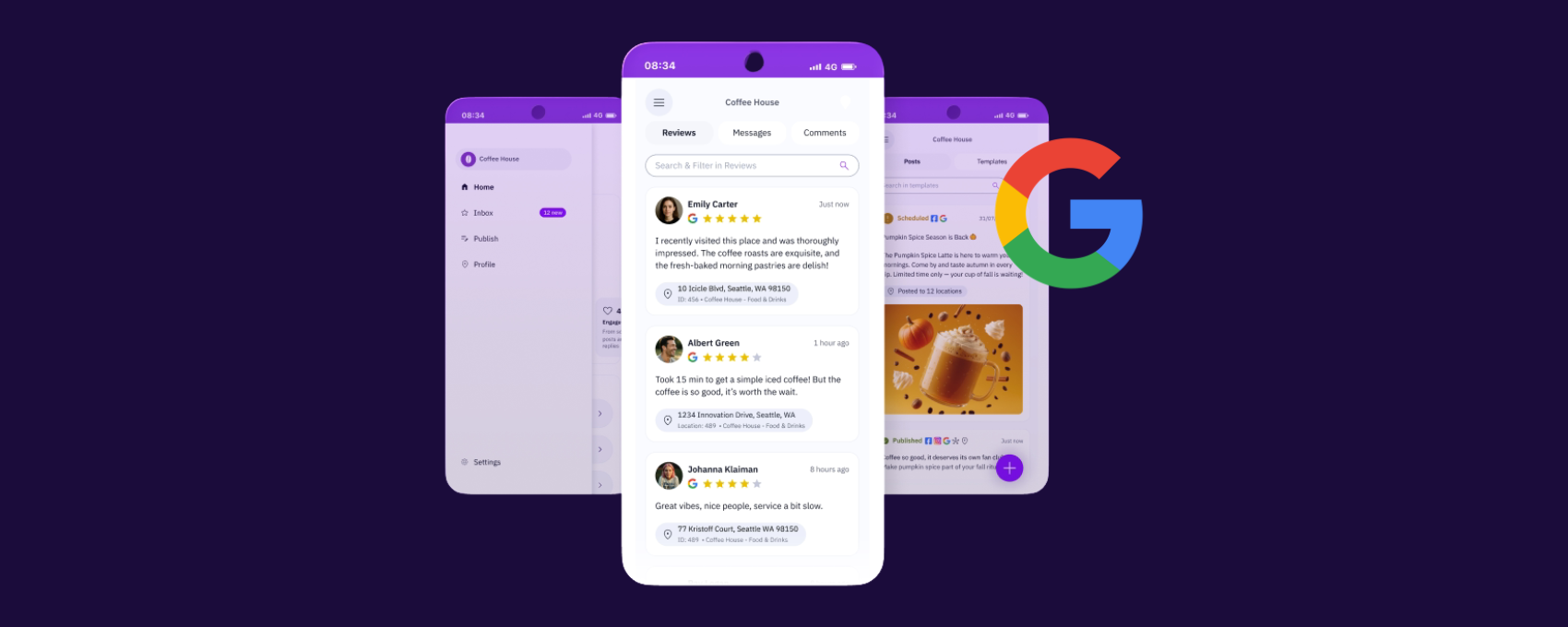
- Encourage positive, detailed reviews: The more high-quality reviews your multi-location brand has on platforms like Google, Apple, and Yelp, the more context AI has to understand and recommend your business.
2. Take Schema Markup Seriously
Schema markup helps AI engines read and understand the content on your website — everything from services and locations to pricing and reviews. This isn’t a GEO strategy in itself per se, but a reminder to revisit an element many local brands underweighted in their SEO strategy.
AI search engines generate answers based on the clear, structured information they can crawl online. That’s why contextual data on your website — such as schema markup and metatags — is going to become more critical.
You seed AI understanding by using schema — it’s the language search engines use to interpret the content on your website, for example:
- What you sell (Product, Service, Offer)
- Who you are (LocalBusiness, Organization)
- Where you operate (PostalAddress, GeoCoordinates)
- When you’re available (openingHoursSpecification)
- What customers think (Review, AggregateRating)
- How your content is structured (Article, BlogPosting, FAQPage)
Google and schema.org offer online resources to help you choose and implement the right schemas, allowing you to structure your site logically and clearly so AI systems can surface what they need to make accurate local recommendations. This foundation will also be key for voice and visual search.
Our Locator & Local Pages tool helps businesses with multiple locations easily implement schema markup and metatags at scale on their location pages. Schema is autogenerated based on business type, eliminating all manual effort.
And images are structured data, too. They should be properly marked up with schema, assigned descriptive filenames and alt text, so AI systems can understand what an image represents and how it relates to that location. This provides critical context for AI to validate relevance and support visual search results.
Although checking and optimizing your schema sounds like another task for your to-do list, you should see it as an opportunity to manage the narrative of your brand in AI search. You’re creating the necessary shortcuts to help these engines better understand and recommend your multi-location business and services.
Advice: Aim for Structured Data Completeness
- Implement LocalBusiness schema at scale: Structured data allows AI to interpret hours, services, pricing, and availability accurately.
- Supply rich visual signals: High-quality, optimized photos and videos help AI validate legitimacy, category relevance, and real-world presence.
3. AI Systems Benefit When You Use “Natural Language”
AI engines don’t just scan for keywords on your website. They interpret phrasing, context, and intent to deliver conversational, relevant results. The easier your content is to understand, the more likely it is to be used in AI recommendations.
That’s why adopting a conversational tone that mirrors how customers actually speak (or search) is incredibly important for AI search optimization.
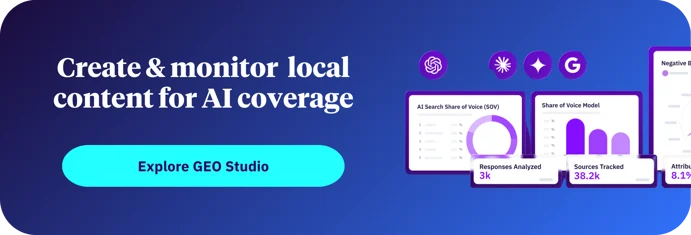
The focus shifts therefore to prompts — that is, the real questions potential customers are asking chatbots and generative search tools. You can find these in GEO Studio’s Prompt Center.
Multi-location brands should then prioritize creating in-depth content clusters around these questions to signal to AI that your content is authoritative and ready to be surfaced — while also showing customers that you’re a trusted expert.
Advice: Speak Like Your Customers
- Structure location content for AI interpretation: Create FAQs, service descriptions, and other content using conversational language and “near me” phrasing.
- Create in-depth content that directly answers prompts: Address specific prompts and doubts comprehensively to ensure the AI has quality material from your brand to include in answers.
4. AI Systems Strongly Consider Brand Authority
Since most AI responses do not include the brand’s own domain — and consumers trust ratings and reviews more than AI-generated summaries — brands must expand their online footprint beyond their own website.
In fact, a considerable amount of authority in AI models is attributed to off-page brand reinforcement, such as third-party PR, listicles, reviews, and active social proof.
Beyond looking at your customer reviews, AI also checks the freshness of your content, such as new blog posts, seasonal menus, or updating local pages. Publishing fresh content—even updates rather than net-new material — signals to AI that your business is active and credible.
For blogs specifically, 95% of ChatGPT citations come from content less than 10 months old — so we know just how much AI systems favor fresh content when surfacing recommendations or citations.
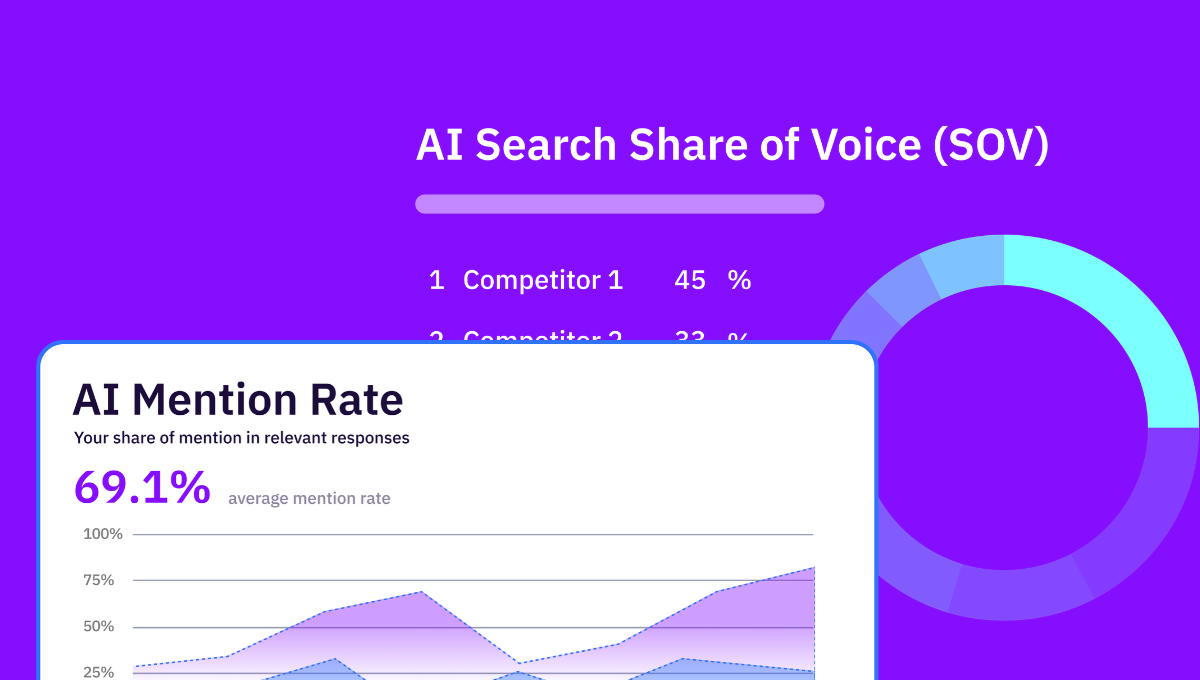
A practical way to measure brand authority in the age of AI search is through GEO metrics such as Citation Rate (how often your locations are referenced), Mention Rate (how often your brand appears across the web), and Share of Voice (how your visibility compares to competitors). Monitoring these metrics helps you track AI visibility over time.
You can also assess customer sentiment using GEO Studio. By tracking the tone and positivity of reviews, mentions, and social feedback, you understand not just how often your brand is cited, but whether it is perceived positively. This is a critical context for AI models when ranking and recommending local businesses.
Advice: Create That Location-Specific “Surround Sound”
- Maintain presence on authoritative directories: Trusted third-party platforms — like local guides, “best of” lists, and features — provide corroborating signals AI uses for verification.
- Refresh content continuously: Update FAQs, attributes, and descriptions as services, seasons, and demand change to keep AI understanding accurate.
- Align social content with location entities: Connect social profiles and posts to specific locations so engagement and proof points reinforce AI’s understanding of local relevance.
- Continuously generate and refresh reviews: Maintain a steady flow of recent feedback to provide AI with up-to-date sentiment, experience signals, and proof of ongoing relevance.
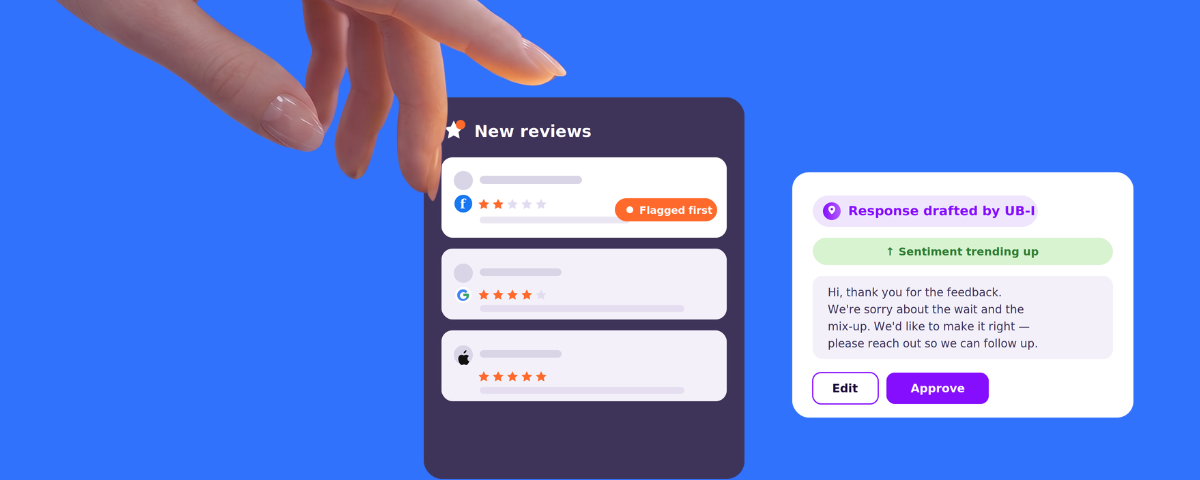
- Respond to reviews at scale: Consistent, timely responses signal operational reliability and customer care, reinforcing trust signals AI uses to evaluate relevance and credibility.
5. AI Systems Look at User Feedback & Interaction Data
AI engines consider how users interact with your local business content. They look at user behavior as a strong signal of content quality, clarity, and website responsiveness.
If a similar search query is typed into Google, search engines typically learn how people interacted with the data provided — for example, if someone searches for a service and bounces quickly or scrolls for alternative options. AI systems can use this behavioral data from organic search to understand which content is most engaging and useful for consumers.
It’s worth stating here that the core principles of SEO — E‑E‑A-T (experience, expertise, authoritativeness, trustworthiness) — still matter in the age of AI. Arguably more now than before. Content that is clear, comprehensive, and trustworthy is more likely to attract higher engagement and will improve how AI models interpret and “rank” your pages, especially when it directly addresses existing prompts about your business.
Hyperlocal content, images, and videos can be particularly meaningful and engaging — they tend to fuel more interactions with brand content, such as views, shares, and likes. Marketing teams should monitor which content formats and topics their potential customers engage most with. I personally predict that social signals are only going to grow in importance, so finding these engagement “sweet spots” here is going to be critical to win both customers and AI visibility.
Advice: Publish Meaningful, Hyperrelevant Content
- Build pages that reflect your expertise: Don’t publish just because there’s search volume. Share original insights, data, quotes, or perspectives your audience can’t get elsewhere.
- Publish hyperlocal content: Highlight neighborhoods, services, and use cases so AI understands where and why a location is relevant — not just what it offers.
- Leverage AI-powered social tools: Repurpose and schedule content across TikTok, Facebook, YouTube, Reddit, or other platforms to reflect your authority and win engagement across formats consistently.
- Expose clear action paths: Include structured actions like call, book, or directions, these are often referenced in AI-generated recommendations.
What to Do When Search Stops Looking Like Search
AI search optimization is paramount for our clients’ local SEO strategy — early adopters of the fundamentals I discussed above are more likely to gain a competitive edge. They’re more likely to dominate that AI Share of Voice.
Amid this disruption, it’s our job as marketers to help multi-location businesses adapt effectively to this evolving environment and optimize their locations’ performance. More than that, it’s our job to reframe this disruption not as another everyday stressor, but as an opportunity to strengthen trust signals, expand online visibility, and connect with customers earlier in their journey — in a search landscape that is increasingly conversational, contextual, and personalized, and ultimately built for conversions.


1,800 brands trust us to stay visible
— not just show up once or twice in local search.


.png)

Frequently asked questions
AI search optimization is the practice of making your business visible, accurately represented, and recommended within AI-generated search responses. Unlike traditional SEO, which focuses on ranking web pages in a list of blue links, AI search optimization — also called Answer Engine Optimization (AEO) or Generative Engine Optimization (GEO) — focuses on being included in the synthesized, conversational answers that tools like ChatGPT, Gemini, Perplexity, and Google AI Overviews deliver to consumers.
Traditional search returns a list of links ranked by relevance. AI search delivers a single narrative response that synthesizes information from multiple sources — comparing options, recommending businesses, and shaping perception without requiring a click. This means consumers get what they need directly in the AI response. For businesses, AI visibility is about being present, accurately represented, and more convincing than local competitors inside that generated answer.
Location data accuracy matters for AI search because AI models cross-reference your business information across multiple sources — directories, search engines, review sites, landing pages, and metadata — before deciding whether to recommend you. Each AI model checks between 9 and 15 sources on average. Any inconsistency in name, hours, address, or services reduces the AI’s confidence in your business. In fact, more than 8 in 10 businesses suffer inconsistent information across AI models.
The most important ranking factors for AI search are data accuracy across sources, structured data and schema markup, natural language content that mirrors how customers actually speak, brand authority reinforced through reviews and third-party mentions, and user engagement signals like click behavior and interaction depth. AI systems weigh these factors together — no single one is sufficient. Brands that cover all five consistently across every location outperform those that optimize for only one or two.
You measure AI search visibility through three metrics: Mention Rate (how often AI names your brand in responses), Citation Rate (how often AI links to your content as a source), and Share of Voice (your brand’s share of AI mentions compared to competitors). GEO Studio tracks these across ChatGPT, Gemini, Perplexity, and Google AI Overviews, showing which prompts trigger mentions, which sources get cited, and where competitors are winning visibility your locations should own.
Traditional SEO is still relevant in the age of AI search — arguably more now than before. The core principles of E-E-A-T (experience, expertise, authoritativeness, trustworthiness) directly influence how AI models interpret and surface your content. Content freshness matters more than ever: 95% of ChatGPT citations come from content less than 10 months old. What’s changed is the additional emphasis on structured data, conversational content, brand authority, and being citable rather than just rankable.