Everybody’s Talking About Query Fan-Out — How Do You Use It As Business Intel?
Discover what query fan-out is in AI search and how to use the query fan-out technique to generate richer, more authoritative local content.


Key takeaways
- Thin content is the real reason brands lose AI visibility — location-specific content must fully answer the questions local customers are asking
- AI systems don’t process a prompt as a single search; they instead break it into multiple micro-questions across different angles and aggregate the best answers
- The SEO fundamentals haven’t changed, but the bar is higher because AI compresses the entire funnel into a single response

I struggle to remember the last time I regularly (and patiently) typed queries into Google and scrolled through a sea of blue links for a good enough answer.
Search agents like ChatGPT, GI struggle to remember the last time I regularly (and patiently) typed queries into Google and scrolled through a sea of blue links for a good enough answer.
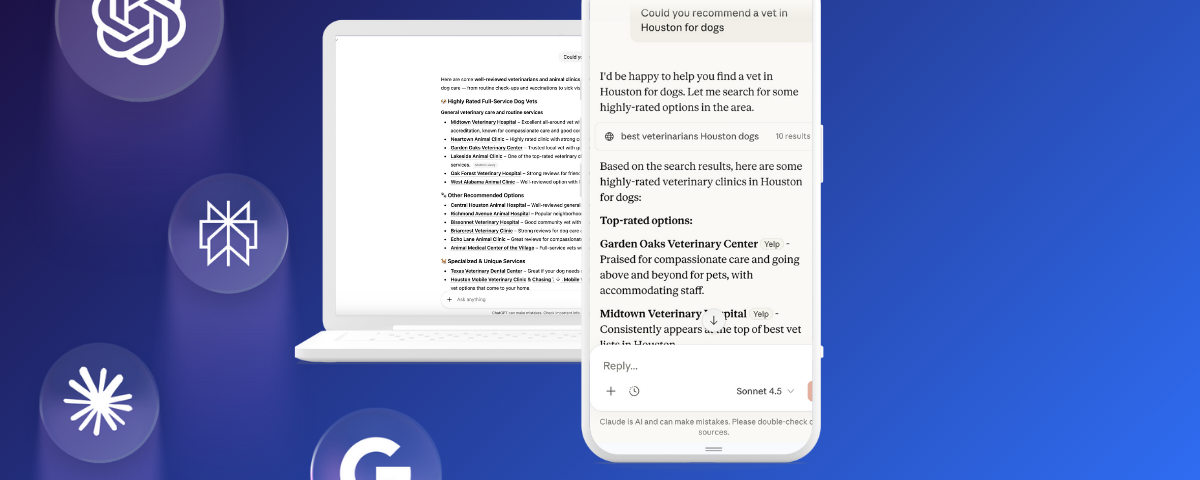
Search agents like ChatGPT, Gemini, and Claude have very quickly added a conversational layer to local search — one that delivers detail, context, and follow-up within seconds. While I still sanity-check AI answers with my own research, and while Google still has its place in my search toolbox — particularly for highly branded local searches — it's rarely now the starting point in my search journey.
And we know I’m not alone. More than half of consumers turn directly to AI systems for answers. Marketing teams and businesses are unsure, even frustrated — they’re targeting the right local keywords on paper; their technical SEO is solid; they’re publishing content frequently. But they still can’t move the needle.
Location marketers, in particular, are asking us the same questions about this new AI search reality: How is my brand showing up? Why are our competitors being recommended instead of us? Can we influence that outcome — and how?
Like we say in search: “It depends,” but a likely answer is thin content and a lack of brand authority — and the solution is query fan-out.
What Is Query Fan-Out in AI Search?
Query fan-out has become a saturated conversation. So, let’s just go through the basics before talking about it in relation to local marketing specifically.
What is query fan-out in AI search, and why is everyone in search suddenly talking about it? Query fan-out is the process in which:
- A query is broken down into smaller, more digestible parts.
- That query is analyzed for semantic intent.
- The system searches for multiple sub-queries across its index or the live web.
- The AI then analyzes the top results for each sub-query and extracts the data it needs to address the original query.
- The AI aggregates this data and delivers the cited facts in a single natural language response.
Let’s look at a query fan-out of a query related to query fan-out. Just for fun.
Maybe everyone is suddenly talking about query fan-out because it’s one reason people think SEO is dead. Because SEOs are asked to no longer expected to optimize for keywords. They’re expected to optimize for relevant “chunks” or passages from their pages to be pulled and surfaced by AI tools like ChatGPT, Gemini, Perplexity, and the like.
The good SEOs will react to this by saying “We’ve been optimizing for long-tail keywords and E-E-A-T content and information gain through comprehensive content for years.” That’s because GEO is just good SEO with higher stakes.
There are many, many technical articles out there explaining how query fan-out works in far greater detail than this. My intention is to give you an actionable way to use query fan-out to boost your locations’ visibility — whether you’re an enterprise, franchise, or smaller business with multiple locations.
What Does Query Fan-Out Mean for Multi-Location Brands?
We can quite confidently say that AI search is evolving to deliver a richer search experience that recognizes, respects, and satisfies consumer intent better than ever. AI responses now influence every stage of the funnel — awareness, decision-making, and conversion — often condensed into a single interface. And query fan-out is the vessel that enables this richer search experience.
Here’s the challenge for many multi-location brands: Your content may be thin, stale, or missing the structure and specificity AI models need — especially for location-specific content. And if your content doesn’t fully answer the questions and intent local customers have, AI is likely going to pull from competitors to fill those knowledge gaps.
In practical terms, this means that the $750 billion expected to flow through AI-driven search by 2028 may not pass through your business unless you optimize your locations for AI visibility and performance. And this is where query fan-out comes in.
Understanding — and operationalizing — query fan-out is critical for showing stakeholders not just where your brand appears (or doesn’t appear) in AI search, but why. By expanding a single prompt (or query) into dozens of connected microquestions, brands can understand how to increase their coverage, authority, and relevance across AI responses.
GEO Studio, the first generative optimization tool built for multi-location brands, helps marketers identify where AI visibility is slipping to competitors and where authority gains can be made. The platform supports creating expert-led content that directly answers the prompts your potential customers are asking — and measures the results through:
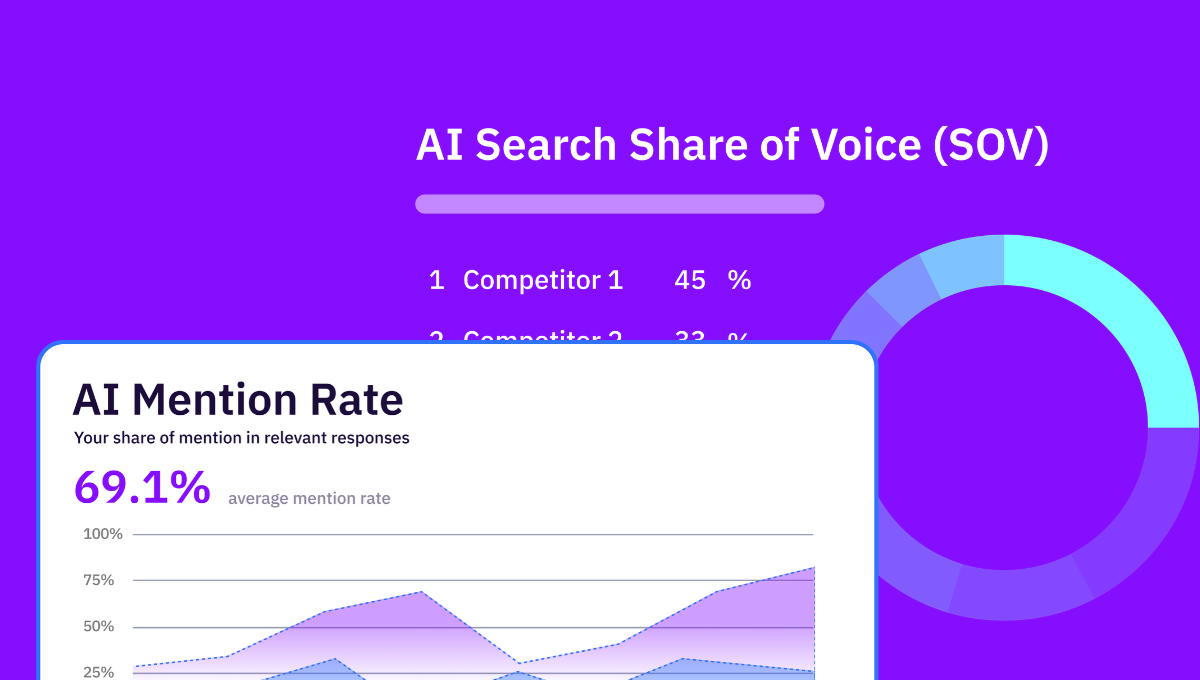
- Higher AI Mention Rate: Your business is referenced more frequently within AI responses.
- Higher AI Citation Rate: Your content is cited as a source inside AI answers.
- Higher AI Share of Voice (SoV): Your visibility outpaces competitors across AI-generated responses.
You can find more detailed information about these key terms in AI search in our article, and you can find out more about this kind of workflow and GEO reporting by requesting a demo from our team.
Maximizing your performance in these metrics over time reduces potential customers’ reliance on local competitors for information, products, or services. You’re ranking as an authority customers turn to, wherever they search.
This is what query fan-out might look like if we now applied it to a multi-location pizza brand wondering how to fix its thin content.
Here’s How to Use Query Fan-Out for Your Strategy
Tools that enable you to see your most relevant queries “fanned-out” will help you build authoritative topic clusters and comprehensive content hubs around your locations. And don’t forget content authority compounds. AI models tend to cite brands that cover a topic holistically, from the main pillar topic “best Italian restaurants in London” to the fan-out subtopics “best-rated Italian restaurant for vegetarians in London.”
I would focus on asking yourself the following questions when finding and addressing content gaps:
- Is my content answering the prompt?
- Is my content full of expert, authoritative, and unique location-specific insights?
- Is my content coherently structured with headings, paragraphs, metadata, schema, tables, listicles, FAQs?
- Am I making sure my content stays fresh?
- Am I monitoring content performance with the right KPIs?
This is how we are telling our multi-location clients to do it in GEO Studio, step by step as follows:
- Identify content gaps and prompt opportunities. See where your brand or location is being mentioned and cited — and where it’s not in the Prompt Center.
- Prioritize content creation. Focus on prompts with the highest value and volume.
- Publish expert-led content. Ensure each piece demonstrates E-E-A-T, delivers information gain, and fully answers the prompt. You can do this directly in the Action Center.
- Track query fan-out. Identify connected prompts that stem from your main prompt to expand your authority across related topics and local intents.
- Repeat step 3.
- Monitor your AI visibility over time. Check the Olympus dashboard for your Mention Rate, Citation Rate, and Share of Voice over time.
Our Technical Product Manager Luma explains: “Once you identify prompts in GEO Studio that produce meaningful results, you can save and schedule them to track Share of Voice (SOV) trends over time and understand how your visibility shifts relative to competitors. Fan-out is especially useful during discovery, when you’re testing variations of prompts to see how wording influences brand mentions, citations, and competitive presence, or when you’re still identifying the prompts that generate the most representative results.”
This ensures you use intel from query fan-out to build your brand authority deliberately, reinforce it everywhere, and ensure it will be chosen over local competitors.
Stay Locally Relevant with GEO Studio
AI visibility will fluctuate, just like traditional visibility did before. But what keeps you ahead (and enjoying a slice of that $750 billion search revenue) is optimizing thin content, prioritizing helpfulness, and encouraging engagement. “Thick” location-specific content that answers real customer questions across every relevant angle is what earns human trust — and AI citations. That’s fully in your control.
With GEO Studio’s Prompt Center, multi-location brands can turn query fan-out into business intelligence — identifying gaps, building authority, and measuring impact through Mention Rate, Citation Rate, and Share of Voice. This stops location marketers guessing: “How is my brand showing up? Why are my competitors being recommended instead of us? Can we influence that outcome — and how?” So they can focus on winning in the new search reality.



1,800 brands trust us to stay visible
— not just show up once or twice in local search.



.png)

Frequently asked questions
Query Fan-Out is what happens when an AI system breaks a single consumer question into multiple sub-queries before compiling its answer. A question like "Where can I walk in and replace my tires without an appointment near LAX?" might become four or five separate searches — covering nearby shops, walk-in availability, cost, and wait times. If your content answers the original question but not the sub-queries, you miss the recommendation even when your intent match is strong.
Query fan-out affects brand visibility because AI systems don’t just answer the question you think they’re answering — they answer every sub-question behind it. If your content covers the main topic but misses the sub-queries, AI fills those gaps with competitor content. For multi-location brands, this means the $750 billion expected to flow through AI-driven search may not pass through your business unless your locations have the depth and specificity each sub-query demands.
You create content that performs well across query fan-out by asking five questions before publishing: Is my content actually answering the prompt? Is it full of expert, authoritative, and unique location-specific insights? Is it coherently structured with headings, metadata, schema, and FAQs? Is it fresh? And am I monitoring performance with the right KPIs? AI models tend to cite brands that cover a topic holistically and with authority.
Query fan-out is not the same as keyword research, but it builds on it. Keyword research identifies what people search for; query fan-out reveals how AI systems break those searches down into sub-queries before generating an answer. SEOs are no longer expected to optimize only for keywords but also for the relevant passages and chunks AI tools extract from their pages. After all, GEO is just good SEO with higher stakes.
You track query fan-out data by identifying connected prompts that stem from your main prompt and monitoring how your brand appears across each one. In GEO Studio, you save and schedule prompts in the Prompt Center to track Share of Voice trends over time. Fan-out is especially useful during discovery — testing variations of prompts to see how wording influences brand mentions, citations, and competitive presence — and then measuring results through Mention Rate, Citation Rate, and Share of Voice.
Multi-location brands use query fan-out to identify where their location-specific content has gaps that competitors are filling. A query like "best Italian restaurants in London" fans out into sub-queries by neighborhood, cuisine type, dietary options, and delivery — and if your locations don’t cover those angles, AI may pull information from competitors instead. Identify content gaps in the Prompt Center, prioritize by value and volume, publish expert-led content, track fan-out, and repeat.