I/O, AI, and Oh: How is Google Search Behavior Actually Changing for Local Businesses?
Google search behavior is changing fast, but the panic about losing traffic is missing the point. These local search experts explain what's actually happening — whether local brands should be nervous — and what to do about it.


Key Takeaways:
- The question local marketers should be asking isn't "Where do I rank?" but "Why would Google recommend me over the 19 other options nearby?"
- AI models are already using review text to explain businesses to users, meaning ratings without descriptive context give them nothing to work with
- Google's strongest competitive advantage over ChatGPT and Claude is local data
Our VP of Solutions at Uberall, Krystal Taing, recently popped up on a two-part podcast episode with Near Media. Together with co-guests and peer local search experts Cindy Krum, Mike Blumenthal, and Greg Gifford, they unpacked the most recent Google I/O announcements and walked through these announcements as local marketers.
And here I am, summarizing the key lessons multi-location brands should take from the conversation, along with the priorities everyone should take from the conversation — and why understanding search behavior right now matters more than your Local Pack ranking.
1. AI Mode Isn't Replacing Search — It's Replacing Search Behavior
Google doesn't have to kill traditional search. If AI Mode answers enough questions, compares enough options, and completes enough tasks, user behavior will shift on its own.
Krystal flagged the deeper shift happening beneath the surface: Google is moving from answers to action. The goal isn't just to help users compare and decide — it's to let them transact inside the search experience itself. Shopping integrations, booking, reservations — all happening without ever leaving Google.
Because consumers don't care about rankings. They care about getting their search done. And if AI Mode helps them do it faster, they won't miss the old traditional experience with all the blue links.
The number of people looking to buy hasn't changed. The path they take to find local businesses has.
Even so, businesses are still clearly panicking about declining traffic when they need to look more closely at what traffic they're losing. Greg's observation was blunt: "If you look at the analytics of the businesses that are complaining about losing traffic, they are losing informational blog post traffic; they aren't losing bottom-of-funnel transactional traffic."
And as Greg put it later in the discussion: "What consumers want out of search experiences is rarely aligned with what business owners want. We have conditioned business owners to believe that traffic volume and clicks are the ultimate winning KPIs for search, but that was never the truth. The true KPI is sales."
2. The Future Isn't Rankings; It's Recommendations
This may be the single biggest shift for local marketing.
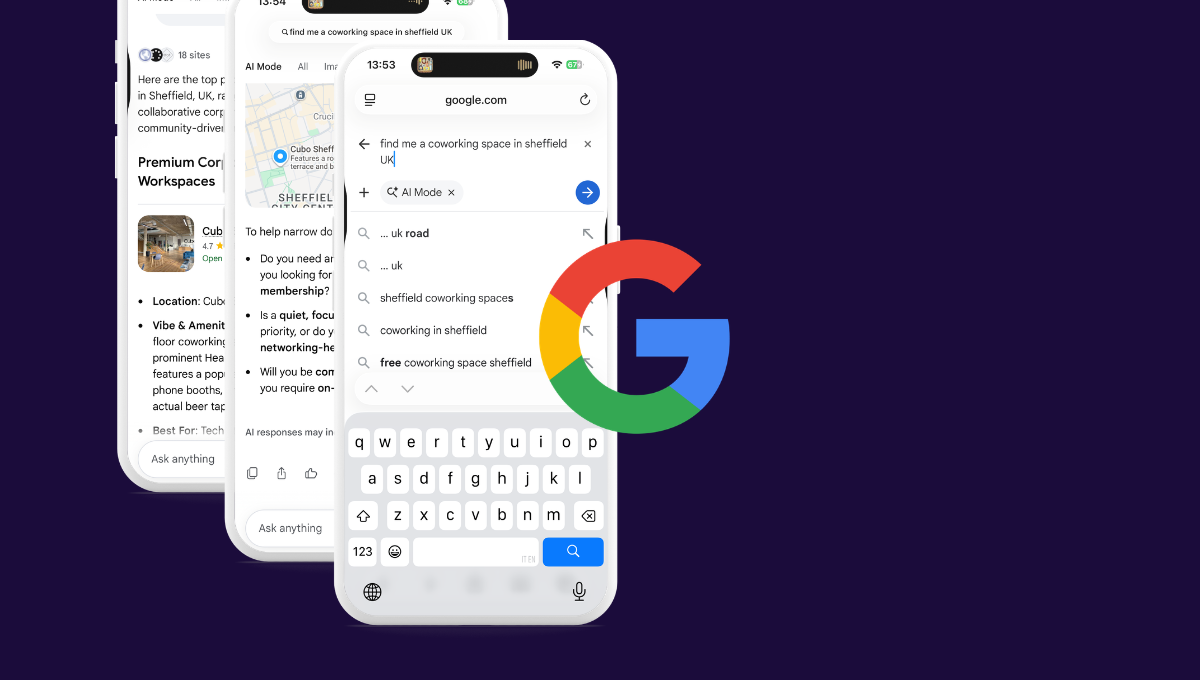
For years, local SEO meant one thing: Rank in the Local Pack. But we're now seeing AI systems recommending, agents selecting, and high-intent consumers accepting. So a location marketer should no longer be asking only "Where did my business rank?" but also "Why did Google recommend it?" Those are now the golden questions.
Krystal was direct about this: "My primary tactical advice is to shift your mindset from 'getting ranked' to 'getting recommended.' That's the ball game. Local businesses must audit the exact evidence they are feeding into these algorithms to ensure they get recommended."
And it's not enough for your own website to make the case for you. Cindy Krum made the point clearly: "Google and the major AI models are not going to trust your website if your website is the only place on the web claiming that your business is great. The entire web needs to be in digital consensus regarding your excellence."
So, yes, when she says "the entire web," the ask is high — but I think we can all agree that the stakes are also high. Businesses must maintain their online presence with consistent and accurate profiles, broad review coverage, and content that lives beyond their domain to earn those consistent recommendations.
Five years from now, we may spend less time talking about rankings and more time talking about recommendation eligibility. The competition isn't for Position 1. It's for inclusion in that AI-generated shortlist.
3. Reviews Are Now Dramatically More Important
This is where multi-location brands have the most to gain — or lose.
Historically, Google looked at star ratings and review volume. AI systems can go much deeper by analyzing context, sentiment, specific attributes.
A review that says "Great dentist" tells an AI (or perhaps a human looking for a great dentist that takes anxious patients) nothing.
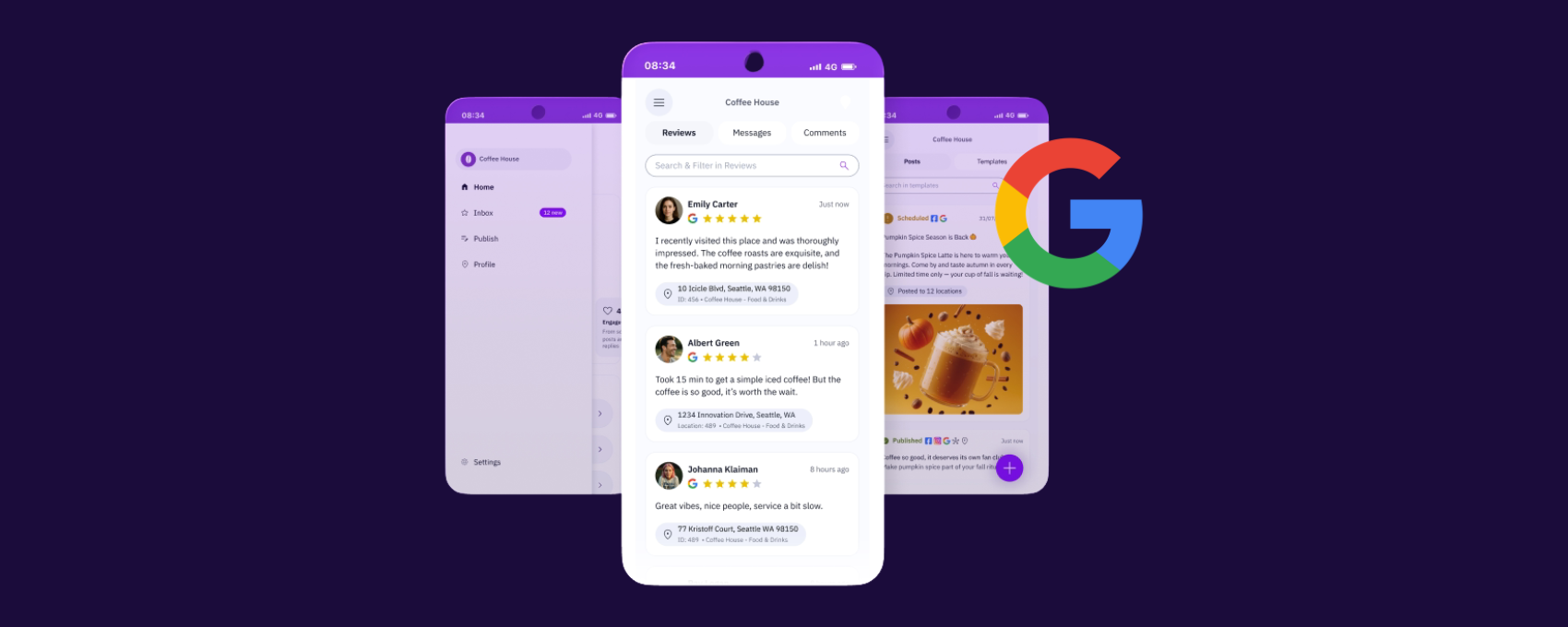
A review that says "This dentist got me in the same day, explained every step, was amazing with nervous patients, and had easy parking." gives the AI and the human a detailed picture of what the business actually delivers.
Krystal described this shift: "Don't look at review management as just a race to get a massive volume of five-star ratings. It's about the semantic content and contextual quality of those reviews."
She also noted that Google is actively encouraging richer reviews: "We are seeing Google roll out interactive review tiles across more verticals, intentionally prompting consumers to highlight specific services, operational features, or products they utilized."
Greg Gifford went further, pointing out that AI models already rely heavily on review text: "When you ask an AI model what it knows about a company, it will explicitly state, 'Customer reviews say X, Y, and Z.' You must be proactive across all review platforms to ensure your brand looks phenomenal."
And there's a practical framework for getting better reviews without crossing any lines. Greg shared an approach that's been generating longer, more descriptive reviews for his clients: Create a dedicated "Leave us a review" landing page with links to your review profiles, then add a short prompt — not instructions, but open-ended questions for customers to consider before they write. Things like: What specific service did we complete for you today? Which neighborhood do you live in? How did our team communicate throughout the process?
"By reading those questions right before clicking a link, the consumer subliminally anchors those themes in their mind while typing," Greg explained. That way, the client wins longer reviews with naturally embedded keywords or prompts, services, and locations, which is exactly what they need in this search climate.
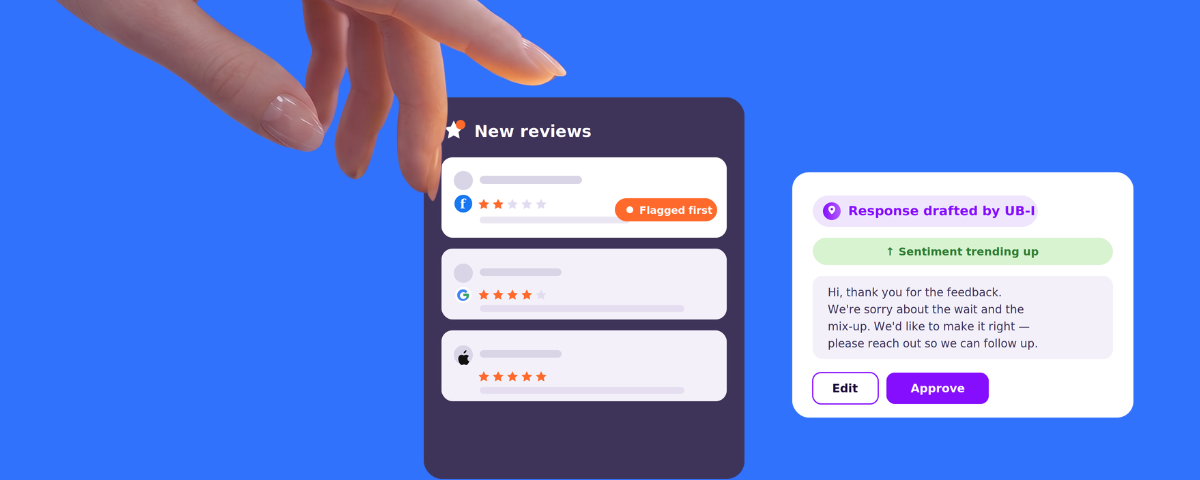
Google isn't just using reviews to rank businesses — it's using them to explain businesses. Businesses need reviews that describe their customers' experiences, not just declare their satisfaction (or lack thereof).
4. Structured Data Is Becoming Infrastructure
One of the recurring themes across both episodes is that websites aren't disappearing (music to my ears), but they're no longer the end destination. They're becoming machine-readable knowledge sources.
Think about what an AI agent needs to recommend and transact with a business: products, services, availability, pricing, hours, locations, FAQs, booking options, reviews. If an agent can't access and understand that information, the business can't make the AI-generated shortlist.
Krystal made the point simply when discussing Ask Maps: "All it is using is content and photos and reviews and videos. That's all that AI understands about local is contextual information." If it's not published, structured, and accessible, it doesn't exist to these systems.
Greg framed this shift: "We are moving toward a Zero-Click or 'Google Zero' reality where standard web visits drop significantly. Your website essentially becomes a structured data feed for external AI engines and conversational endpoints."
The panel also highlighted a gap that even Google hasn't solved — real-time inventory. Mike shared a story about trying to use Ask Maps to find a power adapter in stock near his daughter in New York. Ask Maps could suggest stores — Best Buy, Target, an electronics shop — but couldn't tell him which one actually had it on the shelf. Google acquired a company called Pointy years ago that was solving exactly this problem for small businesses, but never scaled the solution.
That gap is an opportunity. If a retail business can surface real-time availability and make it easy for AI agents to confirm what's in stock, that's a competitive edge most competitors won't have.
And Krystal's closing advice on the podcast tied directly back to this: "Ensure your digital data is clean, structurally complete, and easy for an AI system to parse and transact with. That is the simplest, most effective way to compete moving forward."
This is exactly why listings management, location pages, review profiles, and social content matter more — not less — in AI search. The businesses with complete, accurate, connected data are the ones AI systems find easiest to trust and recommend.
5. Personalization Changes Everything
This is one of the most under-discussed implications of Google I/O.
Google announced deeper integration of personal data — Gmail, YouTube, Photos, Calendar — into its AI experiences. Search personalization used to mostly influence rankings. Now it can influence the answer itself.
Krystal walked through a practical example: "Let's say I ordered something on Amazon a year ago, two years ago, and now I need to get a replacement for that product, but I don't remember that I got it on Amazon. I go do a Google search. Google can now say, 'Well, you've purchased from this retailer before and gotten this thing. Do you want me to just get it for you?'" Sounds pretty useful.
She extended this to local search: "You're looking for a sushi place. You went to this place three years ago and gave it a five-star review and wrote this long review. Do you want to just go back there? You don't even see a map pack anymore."
And the next context where personalization would work: Two people search for "best restaurant for tonight." Google may know that Person A has kids, usually books family restaurants, and drives — while Person B loves fine dining, uses Uber, and eats late. Same query. Completely different answer.
Cindy pointed out that Google has been segmenting this way in ads for years through cohort mapping: "Why wouldn't they be doing it to a larger degree in regular organic search? Especially if they can see a way to monetize it."
This personalization ultimately means that universal rankings are fading. Multi-location brands can't optimize for a single query anymore. They need to optimize for the audience — making sure their location or brand is the right answer for a specific customer in a specific moment.
6. Agentic Search Rewards Operational Excellence
If Google starts booking appointments, making reservations, comparing merchants, and contacting businesses automatically — the winners aren't necessarily the businesses with the best SEO. They're the businesses that are easiest for an agent to transact with.
That means accurate hours, booking integrations, updated inventory, fast response times, strong reviews, and consistent location data. And this benefits the customer as much as the agent.
Greg points out on the episode: "Most of the time when a local business receives a negative review, it isn't driven by a malicious online actor. It's an authentic customer trying to communicate that their actual, real-world experience did not match the expectations set by the company's marketing."
The businesses that deliver a genuinely good experience and make that experience digitally visible — through accurate data, complete profiles, and rich reviews — become the businesses that agents will likely recommend first.
(Sadly) AI agents don't care about your marketing. They care about your operational readiness and how easy you are to recommend or transact with.
7. Google's Motivation: Protecting the Habit
The panel discussed why Google is "pushing" AI Mode so aggressively. They put it down to a defensive play.
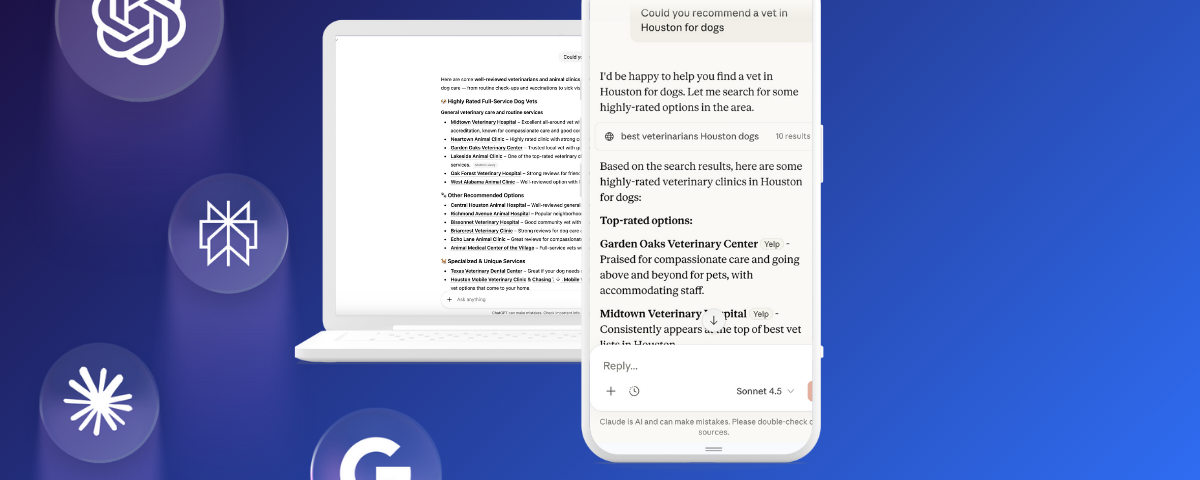
Google sees OpenAI, ChatGPT, Claude, Perplexity — not competing for search market share today, but competing for the next generation of consumer search behavior. Google isn't protecting search; it's protecting the habit of asking Google first.
Mike points out: "Google's true competitive advantage over ChatGPT or Claude or anybody is their local data. It's always been this off-to-the-side thing — oh, it's not really that important. It is the core of their competitive differentiation at this point."
Greg agreed, noting that competing AI models simply don't have the local infrastructure: "The models aren't deterministic. They don't have that local information and none of the companies that run the models are going to go out and try to remap the world. They all have to rely on real-world map data."
The panel also discussed Google's Spark agents — custom AI agents users can build and share. Cindy had a pointed take on their real purpose: "They're getting everyone to help train the models. That's all it is." The idea is that as users build agents that follow specific workflows — check this source, then that one, then take this action — Google learns which processes work and which don't, refining its own models in the process.
And Cindy highlighted another strategic angle: Google is doubling down on video because that's where engagement and ad dollars are headed. "Cable TV is dead. Everyone cut the cord. So where are people getting exposed to new brands? It's through socials, and a lot of the time it's through videos."
For multi-location brands, the platform battle is secondary. What matters is being positioned to win regardless of which AI system is doing the recommending.
What Should Businesses Do Right Now?
So, another Google I/O has passed, and we are still in a world where Google Search has not been replaced by AI Mode. Where does that leave multi-location marketers now? The fact that each of these local search experts agreed on these six areas of focus is compelling enough.
- Fix your data and maximize your Google Business Profile
- Improve your review quality
- Build rich location content — and go beyond your website
- Make specific video content
- Invest in integrations to enable easy bookings, reservations, menu browsing, and inventory checks
- Measure visibility beyond rankings.
Watch Part 1: EP 259 — What Does I/O Mean for Marketers
Watch Part 2: EP 260 — Goodbye Traffic, Hello Sales



1,800 brands trust us to stay visible
— not just show up once or twice in local search.


.png)
