Unify Your Online Reputation with Smart Tools for Brands
Find the best online reputation management tools to unify your brand's reviews, social listening, and listings to build customer trust and drive growth.



Selecting the best review management software is critical for driving better customer engagement and attracting more new customers.
Your brand’s reputation isn't confined to a single website or review platform. It's a complex mosaic of customer feedback, social media conversations, and business directory listings scattered across the internet. For modern brands, managing this fragmented narrative is no longer optional — it’s a core business function.
The customer journey overwhelmingly begins online; in fact, 68% of all online experiences start with a search engine. If potential customers find negative reviews, inaccurate information, or unanswered complaints, the consequences can be severe. A poor or unmanaged online reputation directly leads to diminished customer trust and, ultimately, lost revenue.
To navigate this landscape effectively, brands need to leverage smart online reputation management tools that unify these disparate data points into a single, coherent strategy.
The Core Components of Effective Online Reputation Management
A truly effective review management strategy isn't a single action but a combination of continuous activities. It's built on several key pillars that work together to monitor, protect, and enhance your brand's image.
Online reviews are the modern-day word-of-mouth, and they are a powerful force in the customer's decision-making process.
A comprehensive strategy involves two key actions: actively generating a steady stream of new, positive reviews and responding promptly to all feedback. Responding is particularly critical, as 89% of consumers are likely to use a business that responds to all of its online reviews.
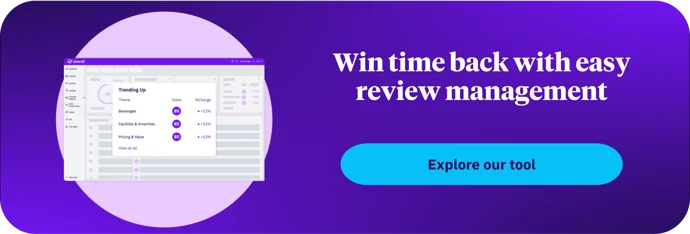
For multi-location brands, managing feedback across hundreds or thousands of locations can be overwhelming. This is where dedicated review management software becomes indispensable. The best software streamlines this entire process, offering features like AI-powered response suggestions and the ability to send bulk review generation invites to customers.
How to Choose the Right Online Reputation Management Tools
Here’s what to look for when evaluating different platforms.
Essential Features in a Modern Review Management Platform
The best online reputation management tools act as a central command center for your brand's digital presence. Look for a platform that includes these essential features:
- A centralized dashboard: A single interface to monitor reviews, social media mentions, and listings across all locations and platforms.
- Advanced review management: Capabilities like automated response templates, AI-powered response suggestions, and approval workflows.
- Sentiment analysis: Tools that analyze feedback to gauge overall customer opinion, identify recurring themes, and spot emerging trends.
- Social media monitoring: The ability to track brand mentions and engage directly with customers on social platforms.
- Review generation tools: Features that make it easy to request new reviews from satisfied customers via email, SMS, or QR codes.
- Robust reporting and analytics: Dashboards that track key performance indicators (KPIs) like response rates, average star rating, and sentiment trends to measure ROI.
Special Considerations for Multi-Location and Franchise Brands
Franchises and multi-location businesses face unique reputation management challenges. They must maintain brand consistency on a national or global level while allowing for the local nuance that makes each location special. A one-size-fits-all approach simply doesn't work.
These businesses need a platform that offers a hierarchical structure. This allows corporate marketing teams to set brand-wide standards and gain oversight, while empowering local managers to respond to reviews and manage their specific location's reputation. A unified platform like Uberall is designed to solve these issues of decentralized responsibility and high volumes of customer feedback, making it an ideal solution for both franchise review management and retail brands.
The Tangible Impact of a Unified Reputation Strategy
Investing in a robust ORM strategy isn't just about managing perceptions — it's about driving measurable business results. A well-executed strategy delivers a tangible impact on both your top line and your overall customer relationships.
Driving Revenue and Enhancing Customer Trust
There is a direct and powerful link between a positive online reputation and financial performance. Since most customers start with a search, visibility is paramount. Positive reviews are a major ranking factor for local search, meaning a better reputation translates directly into more visibility and traffic.
Furthermore, actively engaging with customers by responding to reviews builds trust and loyalty, fostering a sense of community around your brand. This leads to higher conversion rates, increased customer lifetime value, and more repeat business. A comprehensive SEO reputation management guide can show how even a small increase in your average star rating can significantly boost conversions.
Improving the Hybrid Customer Journey
Today’s customer journey is rarely confined to a single channel; it's a "hybrid" experience that blends online research with offline interactions. However, many businesses struggle to connect these two worlds. A recent Uberall study revealed that 70% of businesses believe they are delivering suboptimal hybrid customer journeys, exposing a significant gap between brand intentions and customer reality.
Online reputation tools provide the critical data needed to bridge this gap. For example, if reviews for a particular store frequently mention long checkout lines or unclean facilities, that feedback can be routed directly to the operations team to address the issue. This creates a powerful feedback loop where online conversations lead to real-world improvements, enhancing the entire customer experience.
Take Control of Your Brand’s Narrative
Your brand's online reputation is one of its most valuable assets. While managing it can seem complex, it is entirely possible with the right strategy and the right online reputation management tools. By unifying review management, social listening, and listings management into a cohesive strategy, you can move from a reactive position to one of proactive control.
Instead of just responding to what’s already been said, you can actively shape your brand’s narrative, build trust, and drive growth. It’s time to take control of your online presence and turn your reputation into a competitive advantage.

1,800 brands trust us to stay visible
— not just show up once or twice in local search.





.png)
