How to Optimize for the Season When Clicks to Your Website Are Down, But Retail Store Searches on Google Are Up 141%
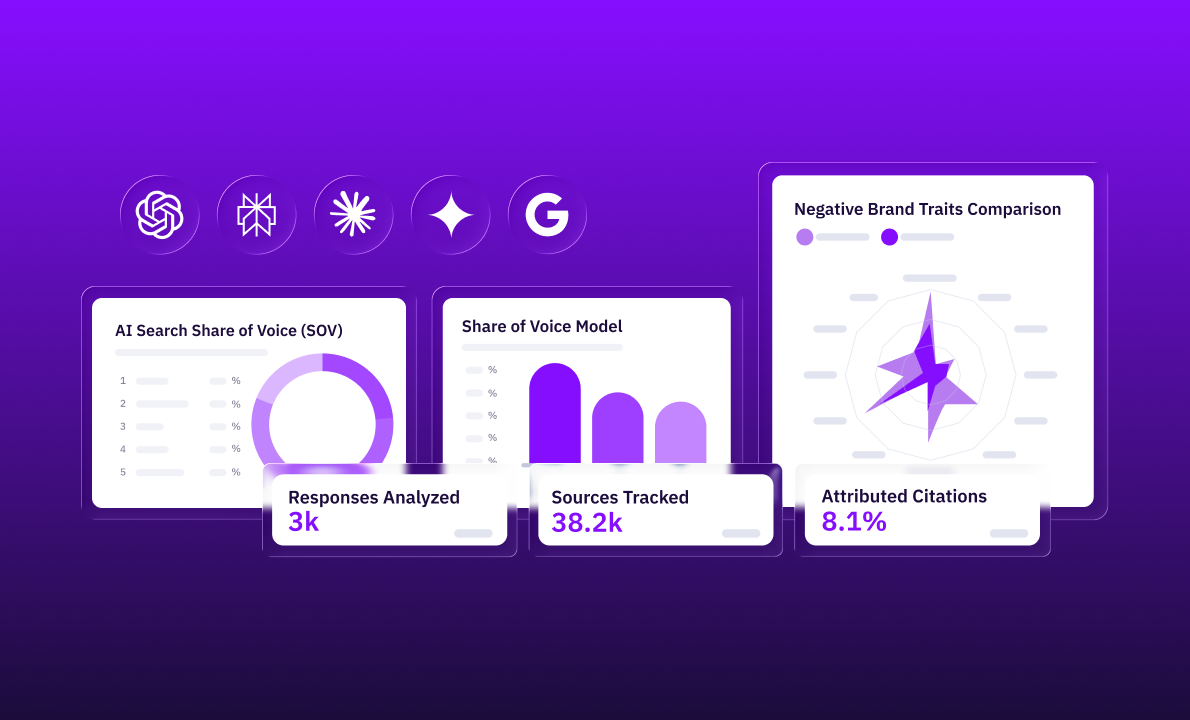
93% of AI Mode impressions in retail generate zero outbound clicks — yet store searches are surging. Our proprietary data from 33,000 US locations reveals where the retail customer journey actually starts today, and what marketers should measure instead of website traffic.


Key takeaways
- Track directions and calls alongside website clicks — website traffic alone no longer tells you whether customers are finding your stores
- Treat your Google Business Profile as a conversion page — 93% of AI Mode impressions in retail generate zero clicks, so the profile itself has to close the visit
- Audit how each store location appears in AI search responses — incorrect hours, missing attributes, or outdated descriptions can cost you foot traffic

Mobile Search views for retail store locations more than doubled between January and August 2026 — that was before the busiest retail season of the year.
This number comes from 33,000 US retail store locations tracked through the Uberall platform, comparing the same period year over year.
More people searching for stores sounds like good news — great news, in fact — until you look at what happens after the search. Website clicks across those same 33,000 locations increased by just 2%. For some retail brands, phone calls dropped 11%.
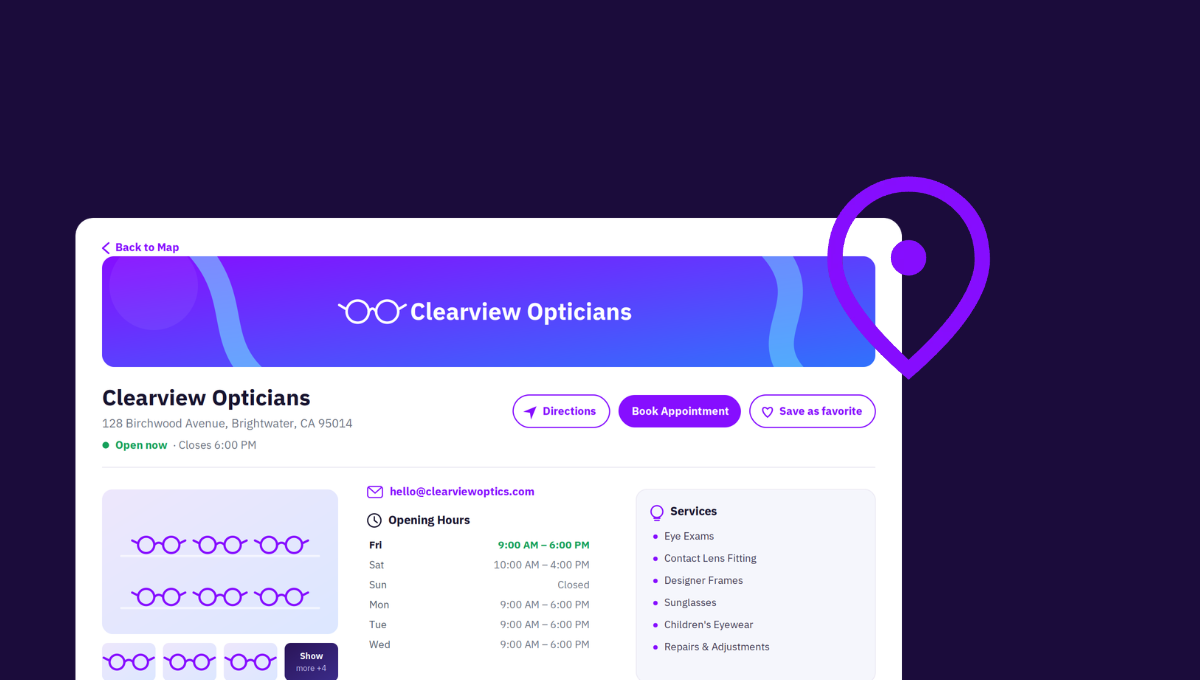
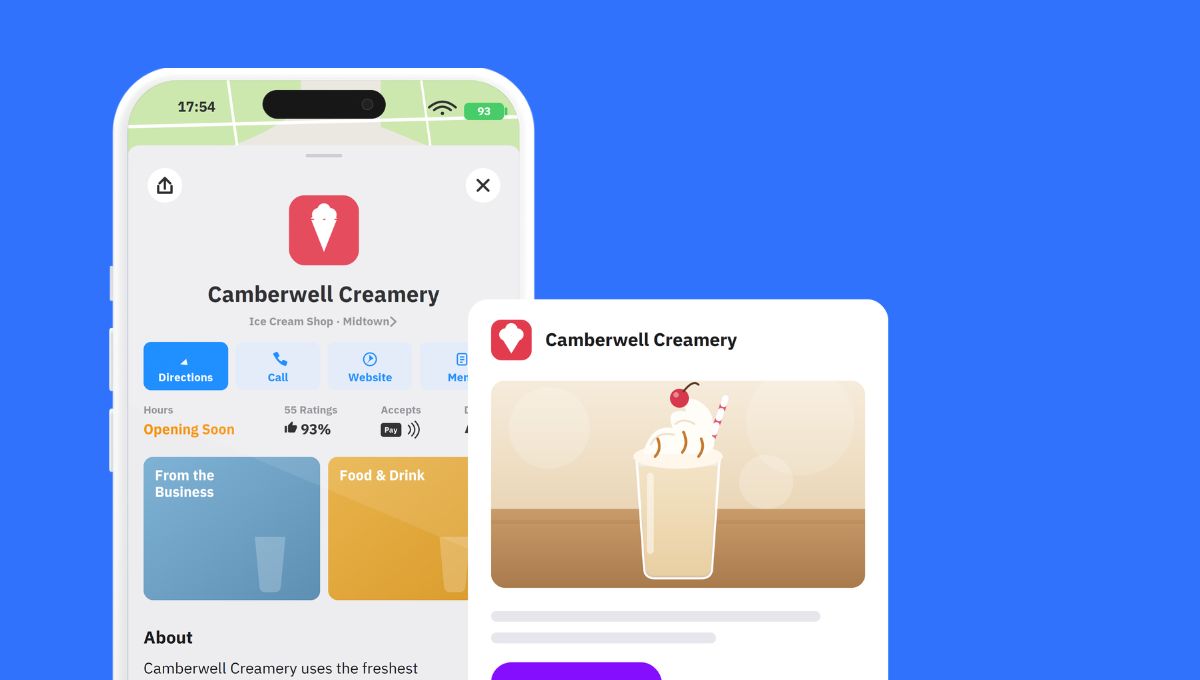
Google's AI Mode rollout, which started reaching US users in 2025, explains this drop. AI Mode pulls hours, directions, reviews, and photos straight into the search result — so a shopper searching "running shoes near me" sees a store card with everything they need to visit, without needing to click through to the website. In fact, out of around 25 million AI Mode impressions across these retail locations, 93% resulted in zero clicks.
I guess the very valid question for marketers managing multiple locations — and not just in the US, since this pattern will follow everywhere AI Mode rolls out — are your stores actually losing customers, or are customers just arriving at your doors without visiting your website?
Google Search Is Replacing Maps for Store Discovery
How retail customers find stores has changed; the store information that customers used to tap for on Google Maps now shows up in Search.
And despite the decline in Maps usage, our analysts saw that direction requests stayed above last year's numbers every single month from January through August over these 33,000 store locations.
So, shoppers are still getting to the store — they're just starting from somewhere else, with the same visit intent.
Your store data is now part of the first impression that may never lead to a click. Wrong phone numbers or closing times were only really hurting businesses on Google Maps — on one "platform." But now that AI Mode (and other AI tools) pulls that store data into its answers, there's a real risk of customers receiving the wrong answer to an important question in the retail customer journey. And it appears in that search window with confidence, not with a disclaimer about double-checking real-time store information.
One brand we spoke with told us they had incorrect phone numbers, duplicate listings, and wrong geopins bouncing around 200 locations on Google — all being shown to customers before anyone internally noticed.
That's why being able to a) notice conflicting information and b) update hours, categories, or attributes in one place and syncing those changes to Google, Apple Maps, and 200+ other directories is so critical to AI visibility.
Our team is out there talking about clean location data nonstop — and it's for good reason. When AI Mode pulls your store into an answer, the information it uses is usually the information you tell it.
AI Mode Impressions Are a Big Deal for Retail Brands
Your Google Business Profile (GBP) is now doing the awareness, decision-making, and conversion job your website used to do. And in other AI tools, like ChatGPT, Claude, and Perplexity, this goes for your other off-page listings, too.
If a shopper sees your Denver store in an AI Mode answer, and the profile shows the correct hours, a 4.3-star rating with recent reviews, and maybe a promotion post, with some in-store photos, our data indicates that they'll trust that answer enough to drive there. Fewer than 1 in 10 shoppers will actually see your website before they head to your store.
And that's okay — the local pages on your website have a different function now. They're there for the traditional searchers visiting your website to discover and convert, and they're there to validate the information AI tools get from your business listings.
Before the busy retail season, before Christmas and Black Friday, do a quick consistency and accuracy audit of your GBP specifically, as well as across your other listings:
- NAP
- Attributes — missing a “wheelchair-accessible” tag
- Opening hours (including special opening hours)
- Recent photos
- Google Posts (seasonal promotions, events)
- Frequent, detailed reviews
And then ensure this information matches what's on your individual local pages so that there's no conflicting information when search systems are pulling across different sources to recommend you.
Direction Requests Still Tell You Whether Customers Are Coming
Website clicks used to be the number that settled every performance argument. If your traffic was up, you'd know things were working. When traffic was down, you'd look for something broken — like a URL. But you can't diagnose like that today.
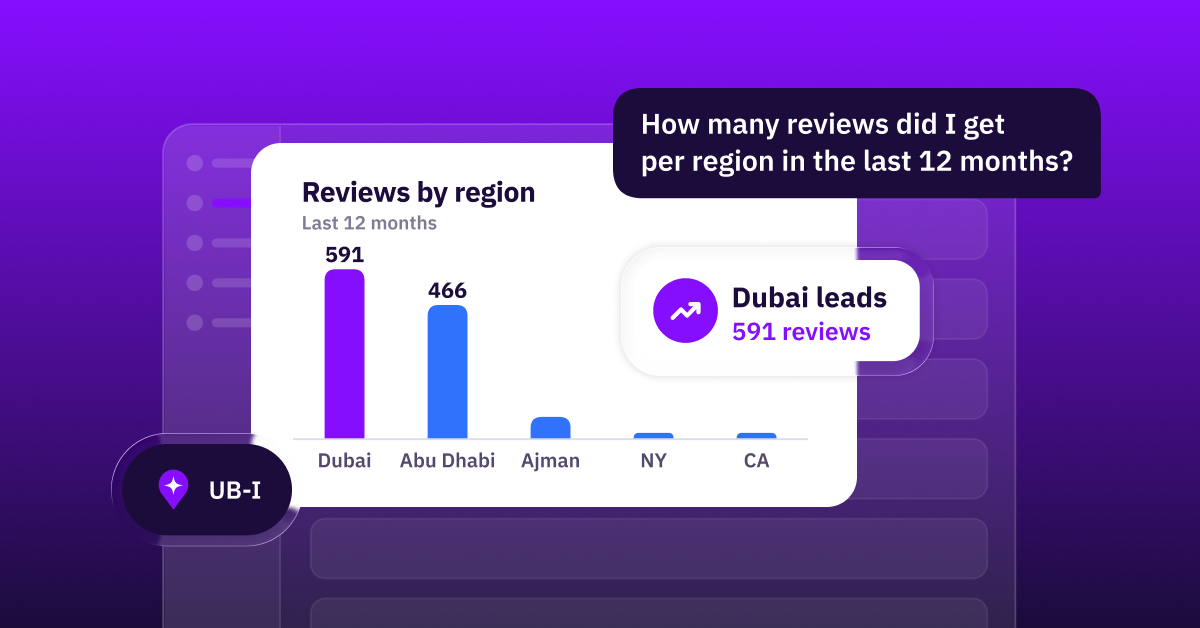
There's an almighty performance puzzle to put together, now made a hell of a lot easier with UB-I, our in-platform AI. It can pull information about direction requests, calls, website clicks, and AI impressions into one view per location from Uberall's analytics dashboard — so all you have to do is just ask about performance across your locations.
Direction requests are the clearest performance signal left. A direction request is an intent signal that's pretty hard to fake — it's unlikely any customer taps "get directions" to a store they're not planning to visit.
The 11% year-over-year drop across 20 retail brands doesn't mean fewer customers are interested — it likely means AI Mode is answering the questions people used to call about. "What time do you close on a Sunday?" and "Do you stock this brand?" are the queries AI Mode answers before needed to scroll through blue links. If your store information is squeaky clean, those customers don't need to call.
What to Do Before the Busy Retail Season
We've seen store searches more than doubled this year, and the busiest retail season hasn't even started yet. But whether those shoppers find your stores — and find the right information when they do — depends on what's in your location data. Is it clean? Is it up to date?
Here's what we'd prioritize before the holiday traffic peaks — and you can scale it all across our listings management platform:
- Run an audit across every store location. We covered this above — hours, categories, holiday hours, photos, accessibility tags, payment methods. AI Mode serves whatever is saved in your profile — accurate or not. If you’re on Uberall, UB-I can surface inconsistencies across locations so you’re not manually clicking through hundreds of profiles.
- Fix your reporting. If your dashboards only show website clicks, you’re really, really not measuring performance. Add direction requests to understand whether customers are still coming to them.
- Spot-check your top stores in AI answers. Pick your 20 highest-traffic locations and search for them — by name, by category, by “near me.” Compare what the AI tool says to what your profile says, and you’ve found what you need to fix quickly.
Nobody knows exactly how far clicks and calls will fall beyond this busy season as more shoppers get their answers inside AI search tools, but the data echoing not just from our platform but from across the search industry is clear enough to plan around.
Every quarter, a bigger share of store discovery will happen in places outside a website — so multi-location brands must audit how they're appearing everywhere, starting with their Google Business Profile.


1,800 brands trust us to stay visible
— not just show up once or twice in local search.