Why Businesses Should Stop Overlooking Google Posts
What are Google Posts? Discover why our experts recommend posting with your Google Business Profile for greater results in today’s search landscape.
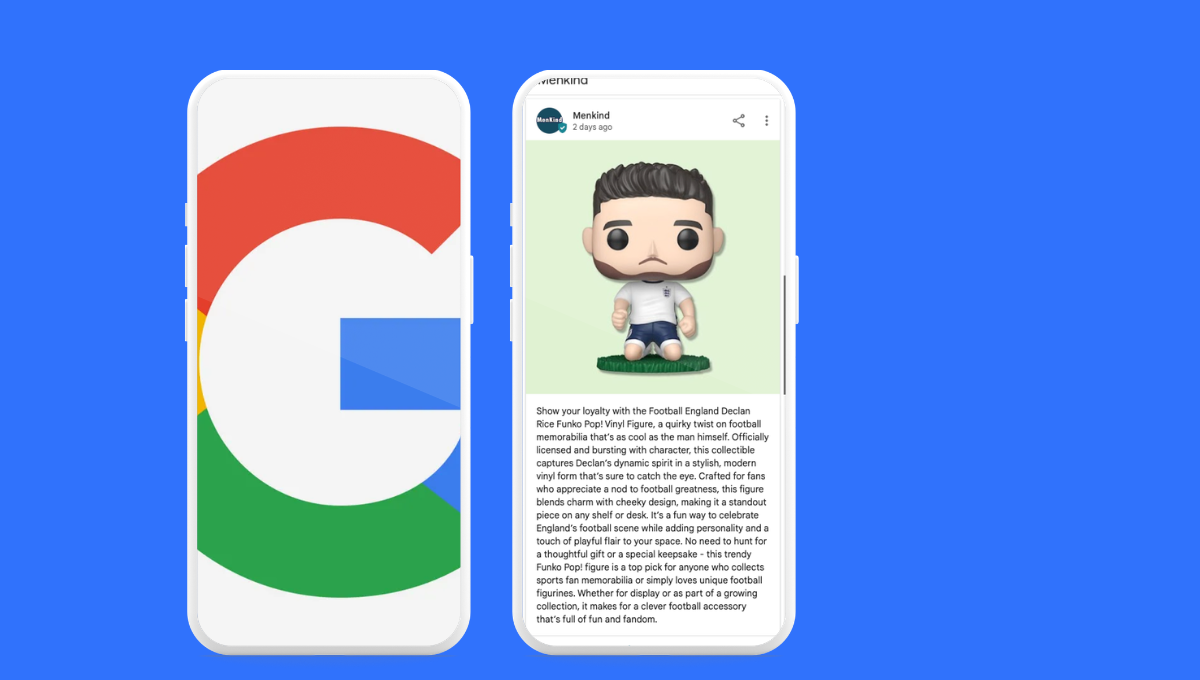


As Google’s Ashley Nhien Do told us in our podcast episode with her, “Your GBP is a living, breathing online storefront that should be updated.” It’s your digital storefront — at a time when 91% of consumers find local businesses online.
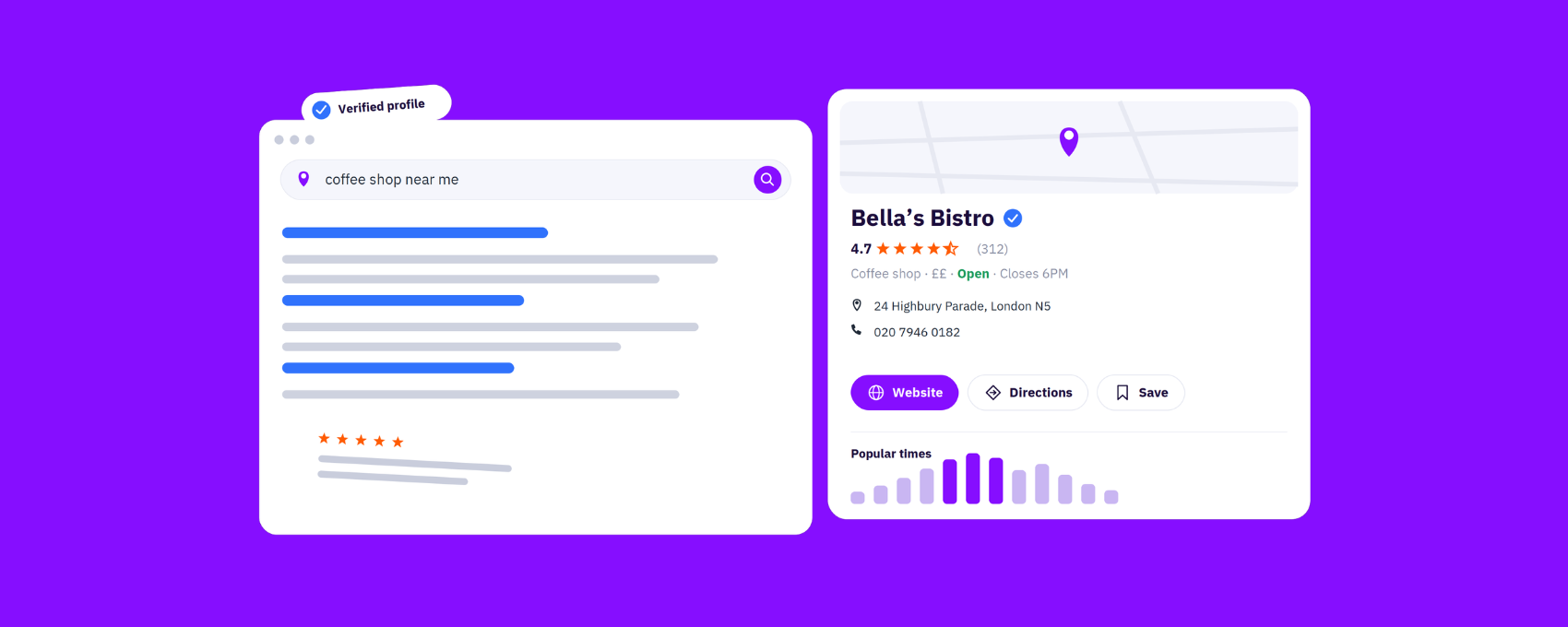
Many businesses now make sure to showcase their hours, address, and phone number on their Google Business Profile. Fewer ensure their information is consistently complete and up to date across all locations. And even fewer actually stand out in search results with personalized, engaging posts to highlight location-specific updates and promotions.
The reality is that more than two billion monthly users worldwide use Google Maps. And almost nine in ten people use Google Maps to find local businesses.
Whether you’re managing a multi-location business or a single location, you absolutely can’t afford to overlook posting to your Google Business Profiles. You don’t have to get overly creative with copywriting or graphic design — regularly sharing simple, concise, and exciting updates from each location delivers impactful results.
What Are Google Posts?
Let’s talk about the basics before the benefits — and define what Google Posts are.
They appear in the “Updates” tab of a business’ Google Maps listing. Well-maintained Google Business Profiles will have a running timeline of business information (in the form of Google Posts), ready to build trust and connections with the customers searching for them.
Google Business Profile posts let you share fresh, relevant, and local content that attracts customers. These updates show up on both mobile and desktop — in organic and AI-driven search results, voice search, and Google Maps. This helps potential customers discover your business and find timely information to help them understand what to expect when they visit one of your locations.
There are various types of Google Posts you should make space for in your content calendar, including:
- Offers can include promotional sales or offers with a specified duration.
- Updates provide general information about the business.
- Events promote specific events at the business with start and end dates.
- Q&As ensure users find valuable information about the business quicker.
No matter the type of post, adding photos, videos, descriptions, or action buttons makes them more engaging. A great example comes from our partner Sprouts Farmers Market, whose regular timeline of updates is both eye-catching and designed to keep potential customers exploring their profile — and curious about their offers.

How Important Are Google Posts for Local SEO?
Google Posts, when the strategy is solid, can increase website traffic to transactional product pages, conversion pages, or location pages. Revenue is therefore often impacted. However, this feature is underutilized because marketers are juggling many other local SEO tasks and channels — and many teams still don’t realize how impactful Google Posts can be.
But by using UTM tracking, businesses can measure clicks, traffic, and revenue from their Google Posts.
By utilizing Google Posts effectively, businesses can improve their visibility in organic and AI search results, increase user engagement in a natural way, and drive more traffic to their website or physical locations. But if you’re already active on location-based social media like Facebook and Instagram, you might be wondering why Google Posts — and why now?
Regardless of the search shakeup with AI, Google is still one of the top-tier data sources – LLMs use Google Business Profiles to recommend local businesses. Besides this, posting consistently with Google Posts helps local businesses build authority and connect with consumers while they’re at the discovery stage.
The more organic clicks you get from your Posts’ CTA buttons, the more it will signal to Google that your content is relevant and your business offering is attractive, meaning in the traditional sense, this will help signal authority.
Google Posts Matter for Location Performance Optimization (LPO)
Posts offer you a chance to stand out from your local competitors and provide timely, relevant content to local buyers in a crowded market. But their real value becomes clear when you view them through a location performance optimization (LPO) perspective.
Google Posts strengthen four key LPO pillars:
- Visibility: Every post adds structured content to your Business Profile, giving Google (and customers) more to surface when people search locally. Regular updates signal freshness and relevance — both crucial for ranking in local results and AI-generated content across generative engines, LLMs, and voice search.
- Engagement: Compelling visuals, timely offers, and clickable CTAs give consumers a reason to interact with your business when they discover you. That interaction sends strong engagement signals back to Google.
- Reputation: Posts help you shape your own narrative. Instead of letting reviews or third-party sources define your brand story, your posts let you highlight your voice, values, and differentiators — directly in search.
- Conversions: A well-timed post can nudge a customer from interest to action — whether that’s booking an appointment, visiting a location, or trying a new product. And when updated consistently across all your locations, Google Posts help drive conversions at scale.
Even one thoughtful update per week or every other week can have a cumulative impact across hundreds of profiles. That’s why for multi-location brands, Google Business Profile posts aren’t just nice to have — they’re one of the most underused yet powerful local marketing activities.
Will Google Posts Really Bring Customers to Your Door?
We know that trust is what drives customers to visit locations. But beyond that, our latest Uberall Consumer Survey found that nearly 30% of consumers say they choose a business based on special events and promotions — and 47.5% say they’ll revisit that business if there’s a special promotion or discount. That’s exactly where this Google update shines.
Another thing to remember: Business profiles with fresh, relevant, and regular posts tend to perform better — not just in traditional search, but in AI search too. But it’s not just about algorithms. These updates give potential customers a preview of what your business offers — and show that you’re active, current, and worth visiting.
It’s similar to how social media works — you’re reaching people who are actively looking for something. The difference? This is a one-way interaction. You’re not expecting likes or comments — just giving searchers the right information at the right time. And when done well, that can be just as powerful.
While platforms like Facebook, Tiktok, and Instagram are designed for two-way engagement and community-building, Google Posts are there to meet high-intent local consumers right in the search moment — with content that’s timely, relevant, and designed to drive action.
Who Should Be Responsible for Your Google Posts?
Empower your local and regional managers to shape your Google Post strategy — after all, they know their customers best. At the same time, maintain oversight at headquarters with platforms that facilitate posting at scale, ensuring brand consistency while still enabling location-level flexibility.

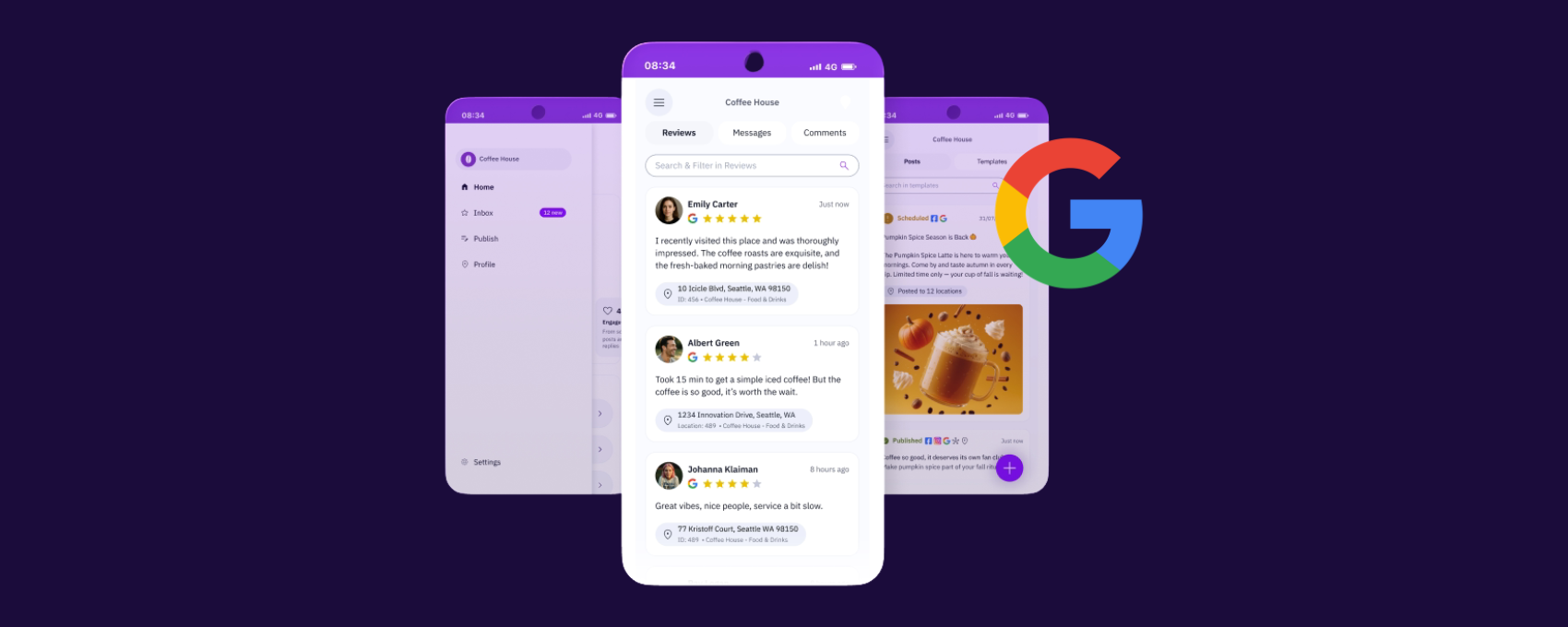
With Uberall’s Local Social Media Management platform, teams can create, edit, and publish Google Posts to one location — or thousands — in just one click. They can also post to Instagram, Facebook, and other platforms simultaneously. For businesses and teams that need to post on the go, the Uberall mobile app makes it easy to schedule, publish, and reply to comments from anywhere.
For teams looking for inspiration amid their busy days, the built-in AI-Social Writer and AI-Tone Adjuster are designed to help them stay productive and connected with consumers by localizing posts and maintaining the brand’s tone of voice. Using the platform’s dynamic text fields, posts can be instantly tailored with location-specific data — making every post hyperlocal, engaging, and conversion-ready.
Google Posts Are a Conversion Booster Tool
Most local businesses overlook Google Posts — don’t be one of them. Stay top-of-mind when customers search by showing up with fresh, relevant content in key places they’re already looking.
In fact, with recent Google algorithm updates, these posts are showing up more prominently across both traditional and AI-powered search experiences. They’re one of the simplest ways to increase your local reach, drive engagement, and boost real-world conversions — without spending more on ads.
By following best practices and posting consistently, your business won’t just be found — it’ll be chosen.


1,800 brands trust us to stay visible
— not just show up once or twice in local search.


.png)

Frequently asked questions
GBP posts are free updates you publish to your Google Business Profile that appear in the "Updates" tab of your listing on Google Search and Maps. They let you share timely, local content — offers, announcements, events, new products — with photos, videos, and action buttons, right where high-intent customers are searching. See our guide on how to post on Google.
Google Posts come in three main types. Update ("What’s Happening") posts share general news and announcements; Offer posts promote a discount or deal with set start and end dates and an optional coupon code; and Event posts promote something time-bound with start and end dates. Each type supports a description, a photo or video, and an action button — so you can match the format to whatever you need to say.
Google posts aren’t a direct ranking factor — publishing them won’t by itself move you up the Local Pack. But they help your SEO indirectly: Fresh, regular posts signal an active business, lift click-through and engagement on your listing, and reinforce relevance for the keywords and services you mention. They also feed the AI and LLM systems that increasingly recommend local businesses — so consistent posting strengthens how, and how often, you get surfaced.
Yes, Google posts are worth it, especially for the effort involved. Several consumers choose a business based on special events and promotions and revisit a business that offers a promotion or discount. Posts put exactly that kind of timely, high-intent content in front of people at the moment they’re searching — a low-cost way to turn discovery into a visit.
Yes, AI search tools draw on Google posts. Large language models and AI search experiences lean on Google Business Profiles as a top-tier source when recommending local businesses, and fresh, relevant posts give those systems current signals about what each location offers. Google has also been surfacing posts more prominently across both traditional and AI-generatedresults — so consistent posting shapes how AI describes and recommends you.
Google posts appear on your Google Business Profile across Search and Maps. On mobile, customers find them in the "Updates" (or "Overview") tab; on desktop, they show in the "From the owner" section of your profile. Posts can surface in organic results, Google Maps, and increasingly AI-driven and voice search — so a single update can reach customers in several places at once.
Your local and regional managers should shape Google posts — they know their customers and communities best — while headquarters keeps oversight for brand consistency. For multi-location brands, the practical answer is a platform that lets HQ and local teams create and publish posts to one location or thousands at once. Uberall Local Social does this, with AI drafting and location-specific fields to keep every post on-brand.
Yes, you can schedule and automate Google posts across multiple locations. Rather than posting to each profile manually use Google’s Business Profile Manager to publish to several locations at once, or a tool like Uberall Local Social to schedule, bulk-create, and even AI-draft location-specific posts across dozens or hundreds of profiles. This keeps every location active and on-brand without the manual grind.