Why E-E-A-T Is Going to Become More Powerful in AI Search
What changes for local businesses in AI search? Brand authority — that’s the golden ticket to brand awareness, engagement & returning customers.



Trust has long, long, long been an important currency in customer engagement and retention. But in the face of zero-click searches and AI search, local businesses need to place it at the center of all their marketing activities.
The criteria for visibility has shifted. In traditional search engine optimization (SEO), it’s about achieving high rankings in the traditional blue-link search results. In generative engine optimization (GEO), it’s about appearing in AI-generated answers. In large language model optimization (LLMO), it’s about being included as a trusted source in the data LLMs are trained on — so brands are referenced, even when no direct link is shown.
Optimizing for one can certainly benefit the other, but they require slightly different focuses.
- Google’s 10 blue links (SEO): Focuses on on-page SEO, backlinks, and strong local signals.
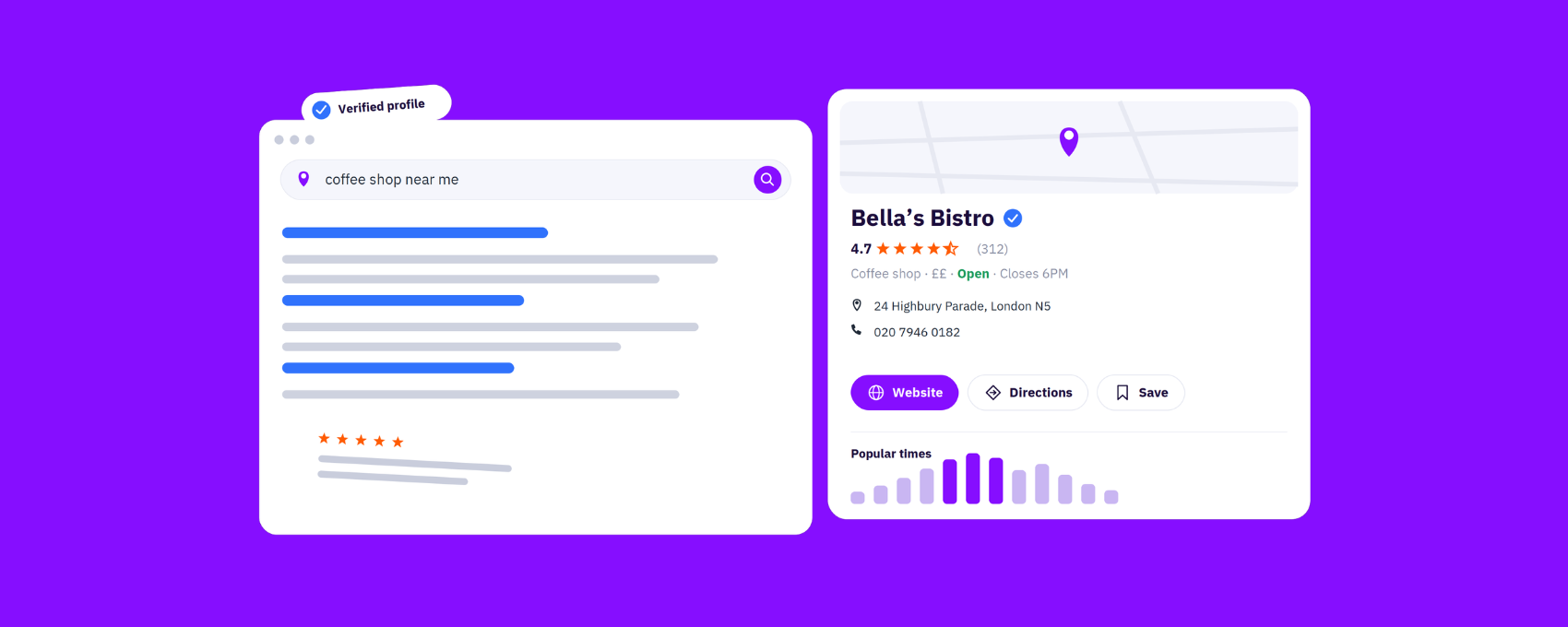
- Google’s AI Overviews (GEO): Relies on structured content like FAQs, a well-optimized Google Business Profile, and schema markup.
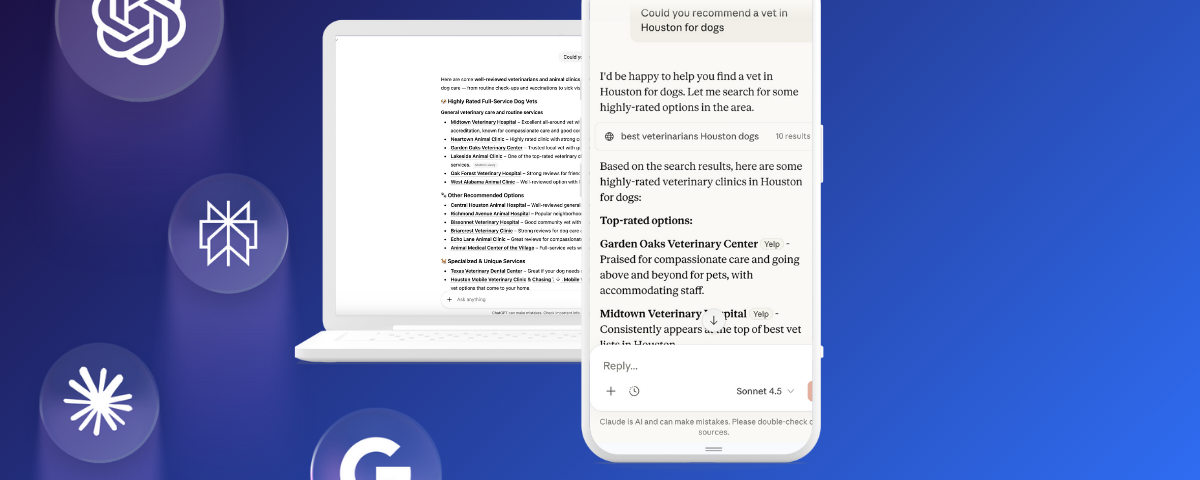
- ChatGPT Query (LLMEO): Demands strong citations, positive reviews on ingestible sources, and presence in trusted listicles or forums like Reddit.
One factor of online search visibility that hasn’t changed — but has become more critical — is signals of experience, expertise, authority, and trustworthiness (E-E-A-T).
This is what multi-location marketers need to double-down on over the next months – if they’re not already doing this.
Why Is E-E-A-T Crucial for Multi-Location Businesses?
What is E-E-A-T anyway?
It’s a Google concept, designed to drive marketers to focus on publishing helpful content, but multi-location marketers need to demonstrate all four pillars of E-E-A-T to win visibility and be recommended by LLMs.
These are some examples of how businesses can (and should) demonstrate E-E-A-T across their online channels:
- Experience: Share hands-on knowledge or firsthand use of your product or service
- Expertise: Highlight qualifications and industry skills via bios, testimonials, or case studies
- Authoritativeness: Gain recognition from trusted third parties through mentions and backlinks
- Trustworthiness: Show security (HTTPS), transparent policies, and customer reviews
To appear in AI-powered responses, your business must be visible on the sites LLMs actively ingest — such as Google, Yelp, TripAdvisor, Reddit, and local blogs. The more prominently your brand appears across these platforms, the greater your trustworthiness, and the greater your chances of being surfaced as a recommended brand. It’s like organic backlink-building but more focused on signal-building.
How Do Businesses Demonstrate E-E-A-T in AI Search?
To appear more prominently in search results — in traditional and AI search — focus on building a strong digital foundation. Here are a few ideas on how to do this on your own website content as well as across the web. To give you better context and examples, we’re going to mention frozen yogurt a lot, based on our experiment.
1. Audit Your Existing Presence
This part sounds simple: Confirm your business is accurately listed on key directories. When you have hundreds of locations, however, it’s far from easy, which is why we would suggest managing your locations’ presence with listings tools.
You can (and should) also look for external mentions and citations of your brand. You can do this via normal Google query or searching via an AI tool like ChatGPT or Perplexity.
2. Create High-Quality, Comprehensive Content
To win customer engagement over your competitors, you need to cover your specialist topics deeply. High keyword density just won’t cut it anymore — which can only be a good thing.
Think:
- A product page is good; a product comparison guide is better.
- Fact-check your content and cite trustworthy sources.
- Include rich, informative guides related to your offerings.
- Write helpful articles such as:
- “How to Create the Perfect Yogurt Parfait”
- “Guide to Different Types of Frozen Yogurt”
- “The YogurtCenter Experience: What to Expect”
3. Highlight Your Brand’s Uniqueness
Do this via your About Us and Story pages.
Emphasize your mission, ingredients, or process. You can include information about your team or founders if it adds to your brand story and expertise. Add LLM-friendly summaries on your About or Homepage like: “YogurtCenter is a locally-owned frozen yogurt shop in Riverview, FL 33579. Known for our rotating flavors, fresh fruit toppings, and friendly staff. Family-friendly and loved by locals.”
When it comes to our YogurtCenter example, take these ideas as inspiration for your business — whether you’re selling services, food, beverages, or experiences.
- Flavor and topping pages: Include detailed descriptions, ingredients, and pairings.
- Nutritional and dietary info: Provide clear data for dietary-conscious consumers.
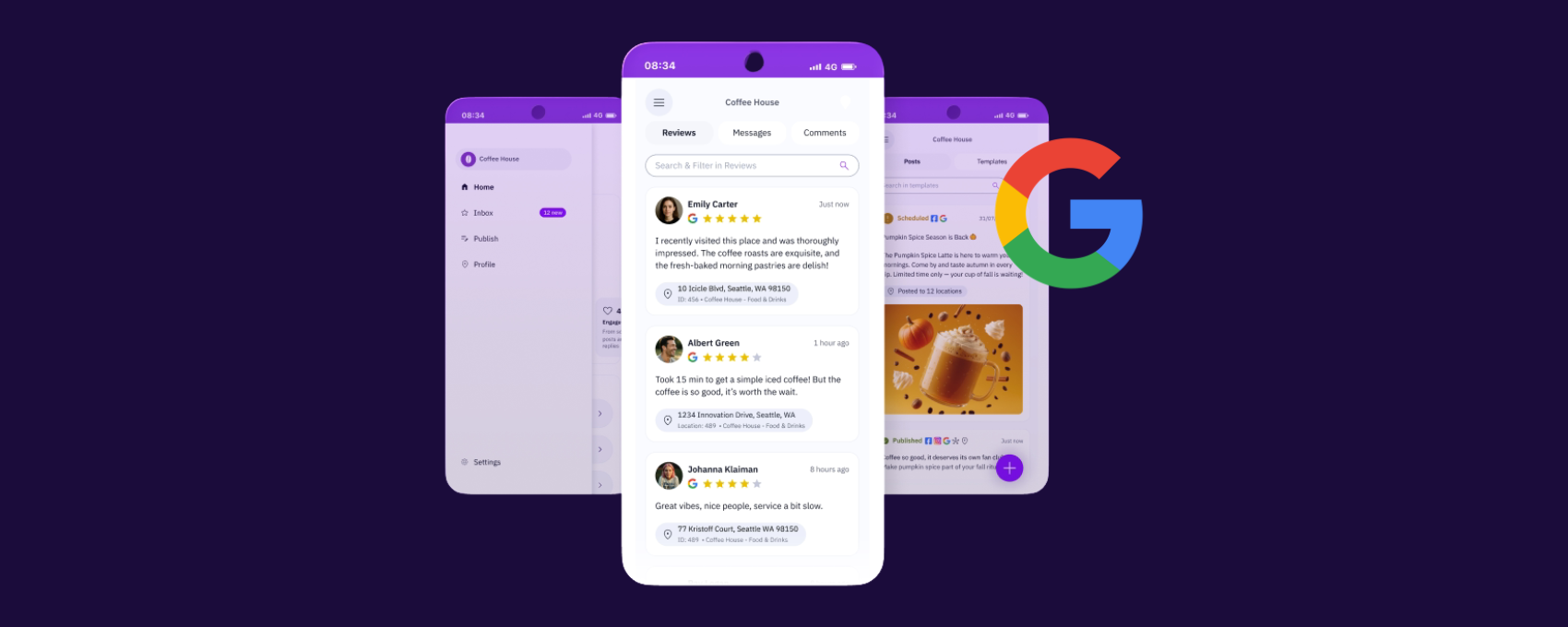
- Customer reviews: Encourage and showcase positive feedback. Positive reviews on your Google Business Profile, Yelp, and even testimonials on your website can signal to the AI that customers consider your yogurt “good” or “best.” Encourage satisfied customers to leave reviews.
- Awards and accolades: Mention any “best of” lists or community praise.
4. Add Conversational and Structured Elements
We’ve brushed on this in another article — and it’s important to note that this advice isn’t new, but you should approach this with a new sense of urgency.
Make sure your website includes the following:
- Use structured data and schema markup.
- Use clear formatting: logical headings (H1, H2, H2), lists, bullet points, and tables.
- Build out an FAQ section that answers location, menu, and product questions. In the context of frozen yogurt, these FAQs may address common queries about your menu, locations, catering, nutritional information, etc.
- Speak in natural language that matches user search queries.
- Use a store locator or clearly display all your locations. Your website should clearly state your locations, ideally with a store finder feature. This allows the AI to understand your geographical reach.
6. Expand Your Presence Across Top AI Data Sources
Your business needs strong local SEO and visibility on review sites and directories. Again, your success in search is now going to be determined more by your reputation than your keyword rankings.
Get your brand mentioned by creating or contributing to content on platforms or forums that LLMs frequently ingest, such as Wikipedia, Quora, Reddit, GitHub, and news outlets or blogs. If you have the resources or opportunity, seek out coverage or features from industry publications and influencers.
It doesn’t have to be in this order – as a multi-location marketer we understand that your workload is tough right now. Focus on incremental optimizations. Aim to build your authority over time.
Does E-E-A-T Really Affect How You Appear in Search?
AI search is new for many — the rules are still evolving, and nobody has all the answers. But based on emerging industry guidelines and our experiment findings, one thing is clear: Showcasing your E-E-A-T matters more than ever.
The more trusted, cited, and high-quality your content is, the more likely AI systems are to reference it in their answers. That builds not just visibility, but credibility — which, in turn, drives more customer trust and loyalty.
While E-E-A-T’s impact is harder to measure than impressions or clicks, its value lies in long-term brand authority. These optimizations for generative engine optimization may not always result in immediate traffic, but they strengthen the recognition and trust that leads to more organic searches, stronger engagement, and ultimately, conversions.
Think of it as momentum. The more AI systems surface your brand — even without a click — the more familiar and reliable you become to customers. And that trust compounds.
Maintain Brand Authority with E-E-A-T in AI Search
E-E-A-T isn’t new — but it’s now nonnegotiable. There’s absolutely no way around it.
This isn’t just a Google ranking factor anymore — it’s fundamental for visibility across AI-driven search experiences. By optimizing for AI search, businesses future-proof their digital presence and make sure their brand surfaces wherever and however people search.
Now is the time to audit your presence, improve your content, and become the brand AI trusts to recommend.


1,800 brands trust us to stay visible
— not just show up once or twice in local search.


.png)
