Stratégie GEO : 5 façons pour les marques multi-sites de maximiser leur visibilité dans les réponses IA
Qu'est-ce que l'optimisation générative des moteurs ? Cela aura-t-il une incidence sur votre stratégie marketing locale actuelle ? Nous avons ce qu'il vous faut.


“For years we’ve focused on SEO, which was used to make sure your books have the right title, and they’re placed correctly on the shelves in this library so people can find it using a catalog, etc. Now, we have GEO. Instead of just finding your books on this shelf, you’re now using AI as a librarian and you’re asking it questions: ‘What’s the main idea in this book? How do I find this type of book that I'm looking for?’ AI reads the cover. It reads all the content. It reads the first chapter, the second, and the third, and it gives you a summary of everything that you're looking for based on what you prompted, what you’ve asked it, etc. So, GEO is about making sure your content is so clear, so structured, and authoritative that AI, the librarian, summarizes you accurately and favorably to the end user.”

Nous vivons un tournant majeur dans la façon dont les consommateurs trouvent des entreprises et des informations en ligne.
Mais à mesure que la recherche bascule vers l’IA, une question essentielle se pose : qu’est-ce que cela change réellement pour les équipes SEO et les marques qui cherchent à rester visibles localement ?
Aujourd’hui, tout le monde parle – beaucoup plus sérieusement – de Generative Engine Optimization (GEO). Et surtout, de son potentiel à devenir le nouveau terrain de jeu concurrentiel pour capter des clients locaux.
Une chose est sûre : il nous faut une compréhension concrète et actionnable de ce que signifie réellement une stratégie GEO – et de savoir si elle implique (ou non) une rupture totale avec le SEO traditionnel. Pour les marques multi-établissements, l’enjeu est clair : comment s’adapter, sans repartir de zéro ?
C’est précisément là que les marketeurs et les agences ont un rôle clé à jouer.
La recherche continue d’évoluer — et les comportements locaux aussi
Cela fait presque un an que nous avons lancé notre formation GEO sur l’Uberall Academy. Et en très peu de temps, nous avons vu la recherche évoluer rapidement — au point de bousculer de nombreuses équipes marketing.
La montée en puissance de l’IA, combinée à de nouveaux comportements consommateurs, remet en question les stratégies traditionnelles. Les équipes savent que quelque chose a changé. En revanche, elles ne savent pas toujours par où commencer lorsqu’il s’agit d’une stratégie de recherche qui inclut désormais des moteurs de réponse.
La recherche locale ne se limite plus à taper une requête sur Google et cliquer sur un lien bleu. La découverte se fait désormais via des moteurs IA comme ChatGPT, Claude, Perplexity ou Gemini. Elle passe aussi par la recherche visuelle sur TikTok, Instagram, Pinterest, Reddit — sans oublier les assistants vocaux comme Siri ou Alexa.
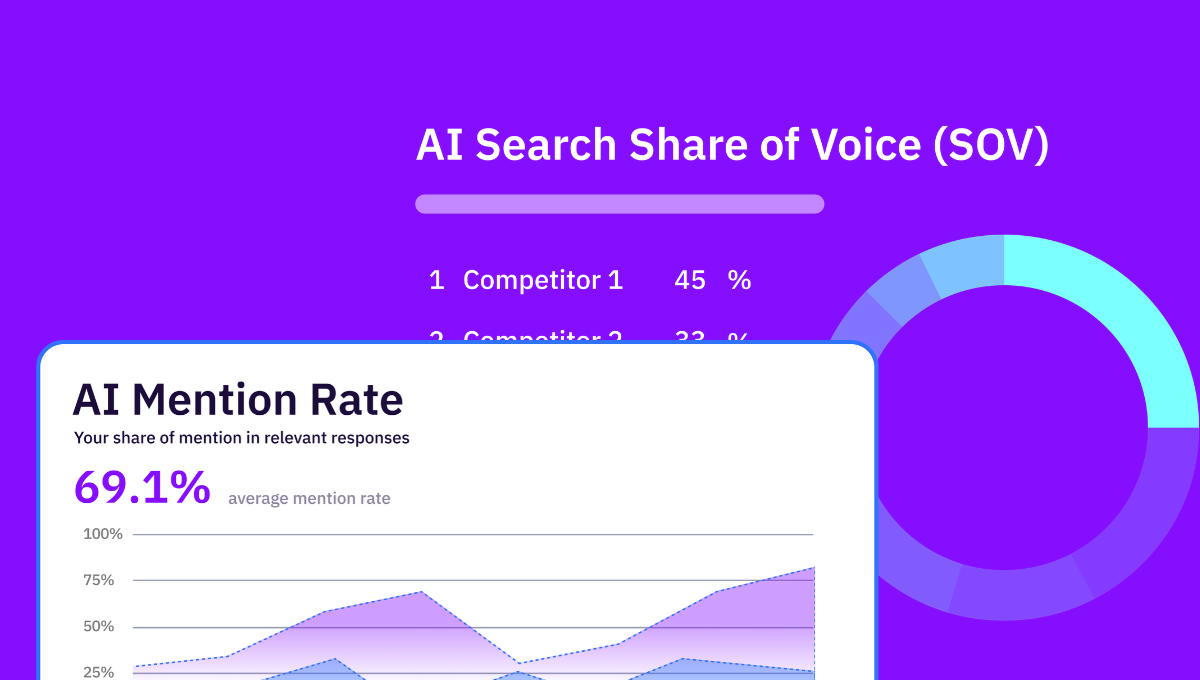
Pour les marketeurs, une question devient urgente : comment votre marque apparaît-elle lorsque les consommateurs ne recherchent plus “à l’ancienne” ? La visibilité – pilier fondamental de la performance locale – reste liée au classement, mais plus uniquement au rang dans la SERP. Elle se mesure désormais avec des indicateurs comme la Share of Voice.
Et au-delà de ces nouveaux indicateurs GEO (que nous approfondirons dans un prochain article), voici ce que vos équipes doivent déjà prendre en compte pour bâtir une stratégie GEO efficace.
Qu’est-ce que la Generative Engine Optimization (GEO) ?
Beaucoup se posent encore la question : qu’est-ce que la GEO ? Commençons donc par là.
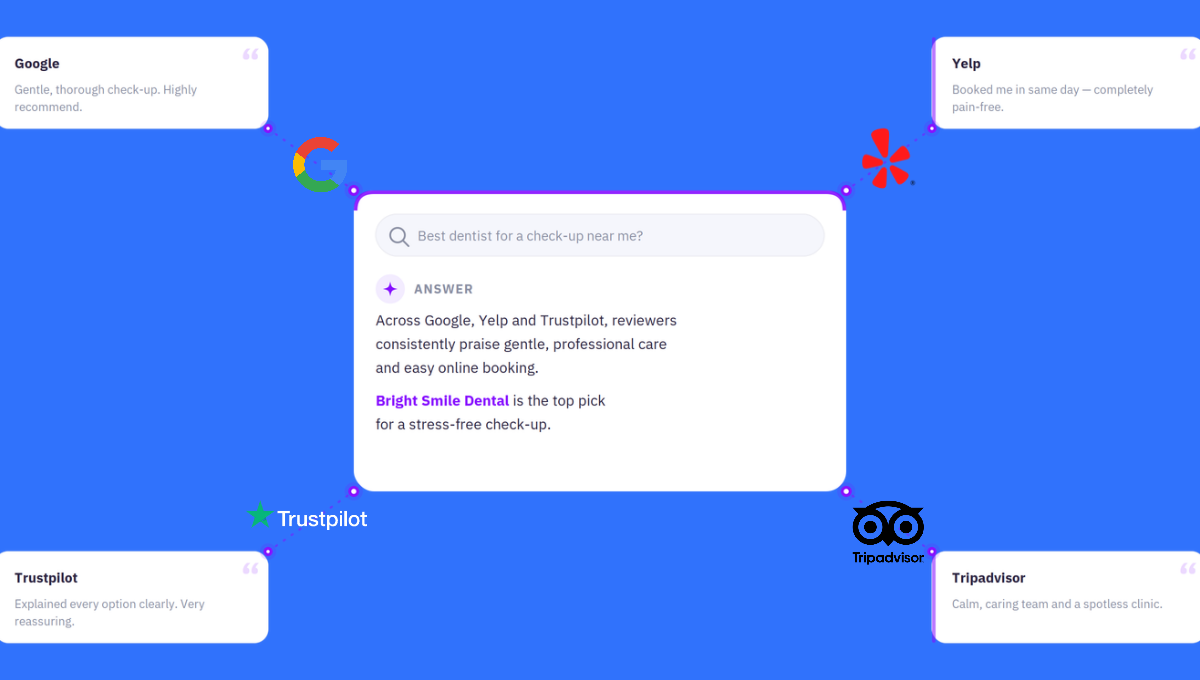
La GEO désigne la pratique consistant à influencer la manière dont les moteurs d’IA incluent, décrivent et recommandent les marques dans leurs réponses, plutôt que d’optimiser uniquement pour les clics ou le classement.
Autrement dit, la GEO consiste à préparer vos contenus pour qu’ils soient intégrés dans les réponses générées par l’IA — et pas seulement affichés sous forme de liens bleus. Mais la GEO ne se limite pas à votre site web. Elle englobe l’ensemble de votre empreinte numérique : site, réseaux sociaux, fiches locales, annuaires, plateformes d’avis, etc.
Une stratégie GEO efficace suppose donc de s’adapter à une nouvelle réalité de la recherche, où les utilisateurs interagissent de plus en plus avec des résumés et recommandations générés par l’IA — sans forcément cliquer vers un site.
Notre experte technique en recherche IA, visibilité et pages locales, Luma, explique très bien les différences entre SEO, GEO, AEO et LLMO à travers une analogie parlante : celle de la bibliothèque.
« Pendant des années, le SEO consistait à s’assurer que vos livres avaient le bon titre et étaient bien rangés sur les bonnes étagères, pour être trouvés via un catalogue.
Avec la GEO, l’IA devient le bibliothécaire. On lui pose des questions : “Quel est le message clé de ce livre ? Où puis-je trouver ce type de contenu ? L’IA lit la couverture, le contenu, les chapitres — et synthétise ce que l’utilisateur cherche, en fonction de sa question.
La GEO consiste donc à rendre votre contenu si clair, structuré et crédible que l’IA vous résume de manière fidèle et favorable. »
Un épisode à écouter absolument.
Maintenant que le cadre est posé, voyons ce que la GEO signifie concrètement pour votre stratégie marketing multi-sites. Pour les équipes marketing et les agences, c’est le moment d’enseigner une nouvelle forme de visibilité : être “répondable”, pas seulement “référençable”.
Comment “faire” de la GEO : 5 axes clés
Pour réussir, il faut aider les marques à passer de contenus simplement « rankés » à des contenus prêts à répondre aux prompts.
Si vous suivez déjà les bonnes pratiques SEO, vous pouvez respirer : il suffit de doubler vos efforts sur ces cinq axes de votre stratégie GEO.
1. Mots-clés sémantiques et prompts
Pendant longtemps, les équipes se sont concentrées sur des mots-clés à fort volume, en haut de l’entonnoir. Cette approche ne suffit plus en GEO.
Si quelqu’un demande « Qu’est-ce qu’une chaussure ? », l’IA fournit une définition – sans citer de marques. Ces requêtes génériques n’apportent ni visibilité, ni autorité, ni trafic. En GEO, les mots-clés comptent toujours, mais ils ne sont qu’un signal parmi d’autres.
L’essentiel réside dans les prompts : les questions précises que votre audience pose aux moteurs génératifs.
Dans GEO Studio, le Prompt Center vous permet d’identifier ces questions clés, d’analyser la couverture concurrentielle et de prioriser les opportunités à forte valeur. Des prompts tels que « Où acheter des chaussures de pickleball ? » peuvent ensuite être traités dans l’Action Center, en créant de nouveaux contenus approfondis ou en optimisant des contenus existants pour combler le mention gap et garantir l’inclusion de votre marque dans les réponses générées par l’IA.
Enfin, écrivez pour les humains et pour l’IA. Adoptez un ton conversationnel, proche du langage de vos clients. Le traitement automatique du langage naturel (NLP) est au cœur des moteurs génératifs : il analyse le contexte bien plus finement que les moteurs traditionnels. Des contenus clairs, structurés et humains sont donc plus facilement compris et inclus dans les réponses.
2. Cohérence et contenu structuré et contextuel
Cohérence de l’information
Si les informations sur une entreprise sont incohérentes entre les sources, votre client ne sera pas inclus dans les résultats, ou pire : des informations erronées seront présentées par l’IA comme des faits. Cela peut semer la confusion, nuire à la confiance et réduire les conversions.
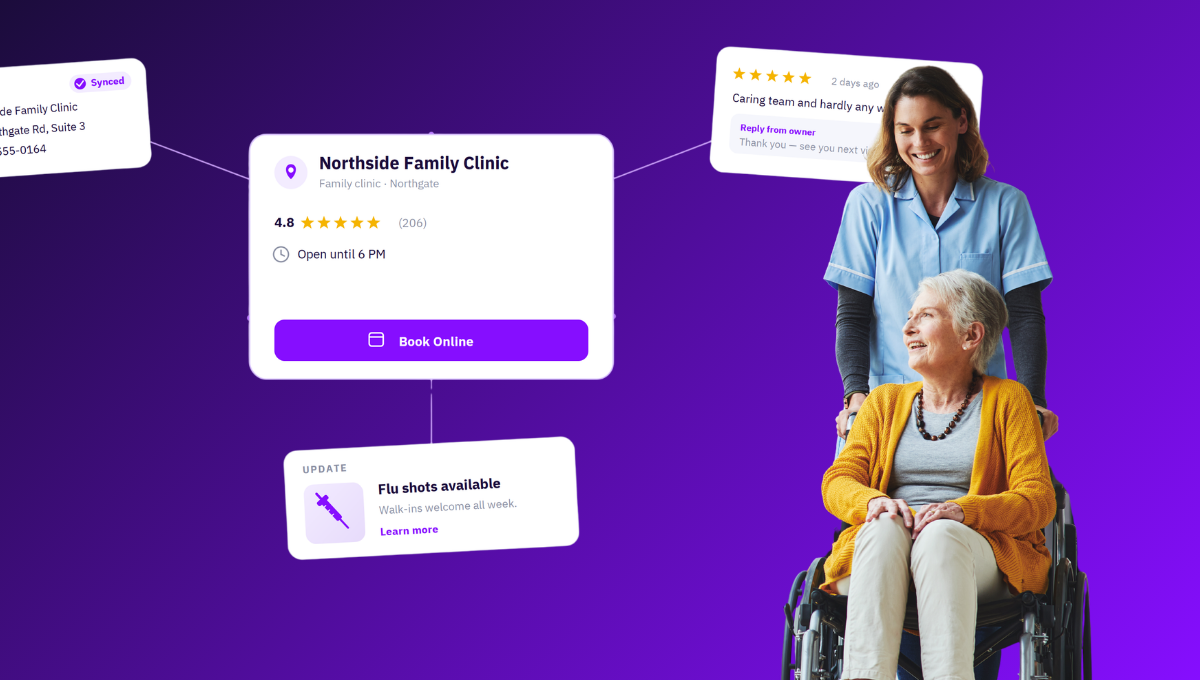
Les marques multi-sites peuvent rapidement gagner la confiance en nettoyant les listings, en choisissant des catégories pertinentes et en unifiant leur présence en ligne.
Structure et balisage
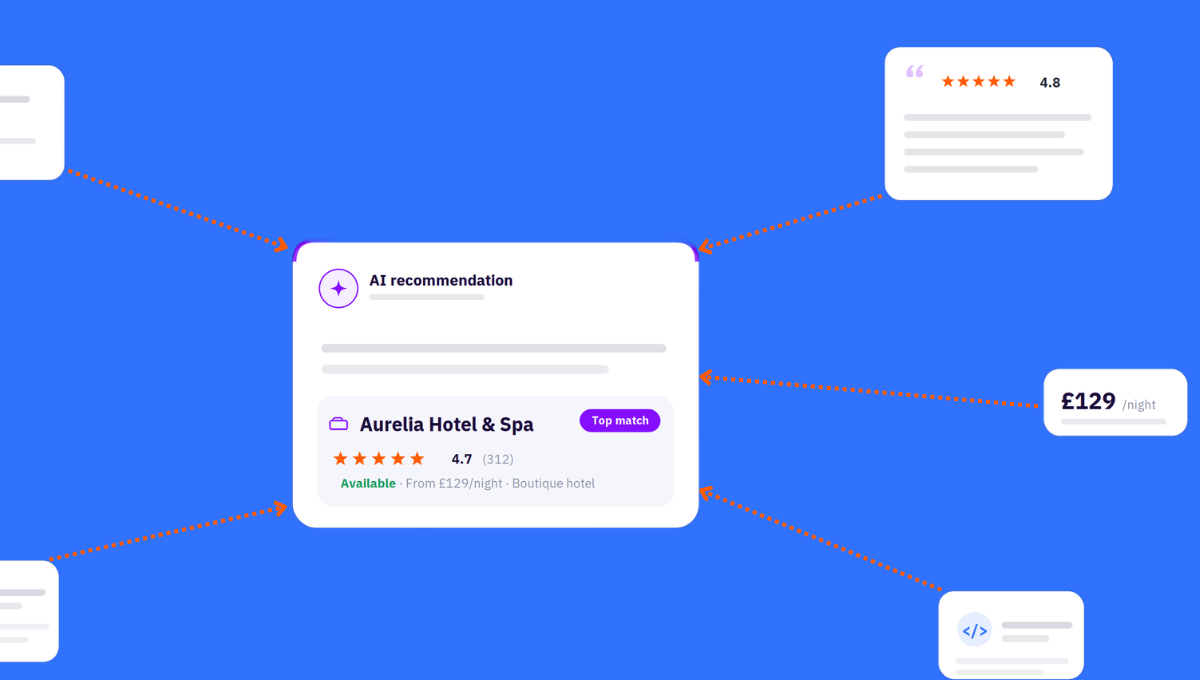
Un schéma markup correct et une cohérence NAP rendent vos données lisibles par les moteurs classiques et génératifs. Les entreprises multi-sites doivent également ajouter tags, métadonnées et libellés cohérents pour mettre en avant produits, magasins locaux ou événements à venir. Cela permet à l’IA de parcourir et citer votre contenu facilement.
Les contenus blogs représentent 44,6 % des points d’entrée, suivis de la page d’accueil (19 %) et des pages produits (13 %). Ces pages sont les “portes” par lesquelles l’IA découvre et cite les marques. D’où l’importance d’hubs éditoriaux solides et d’une navigation claire. Maintenez les informations clés accessibles, évitez les formulaires ou paywalls, et fournissez un contexte clair pour que l’IA comprenne et fasse confiance à vos données.
Information contextuelle
Ajoutez des photos et vidéos nommées contextuellement, des catégories précises et des attributs. Ces derniers sont particulièrement utiles pour enrichir le contexte business.
Assurez-vous également que les avis clients ne se limitent pas aux étoiles, mais contiennent des histoires détaillées : l’IA tire des insights de la façon dont les gens parlent de votre marque.
3. Contenus riches, uniques et à jour
Le contenu ne doit pas exister juste pour exister.
Les consommateurs posent des questions plus complexes et attendent des réponses plus pertinentes. Ils comparent, posent des questions de suivi, et passent souvent toutes les étapes d’attention, de considération et de décision dans l’outil IA avant de convertir — si conversion il y a.
GEO consiste à être la meilleure réponse aux prompts. Comprenez ce que vos clients demandent ou doutent, puis ajustez votre contenu pour montrer pourquoi votre marque ou votre site est meilleur que les alternatives.
Comment créer des réponses “rankables” ? Utilisez :
- Statistiques, photos et vidéos
- Contenu généré par les utilisateurs
- Avis et témoignages
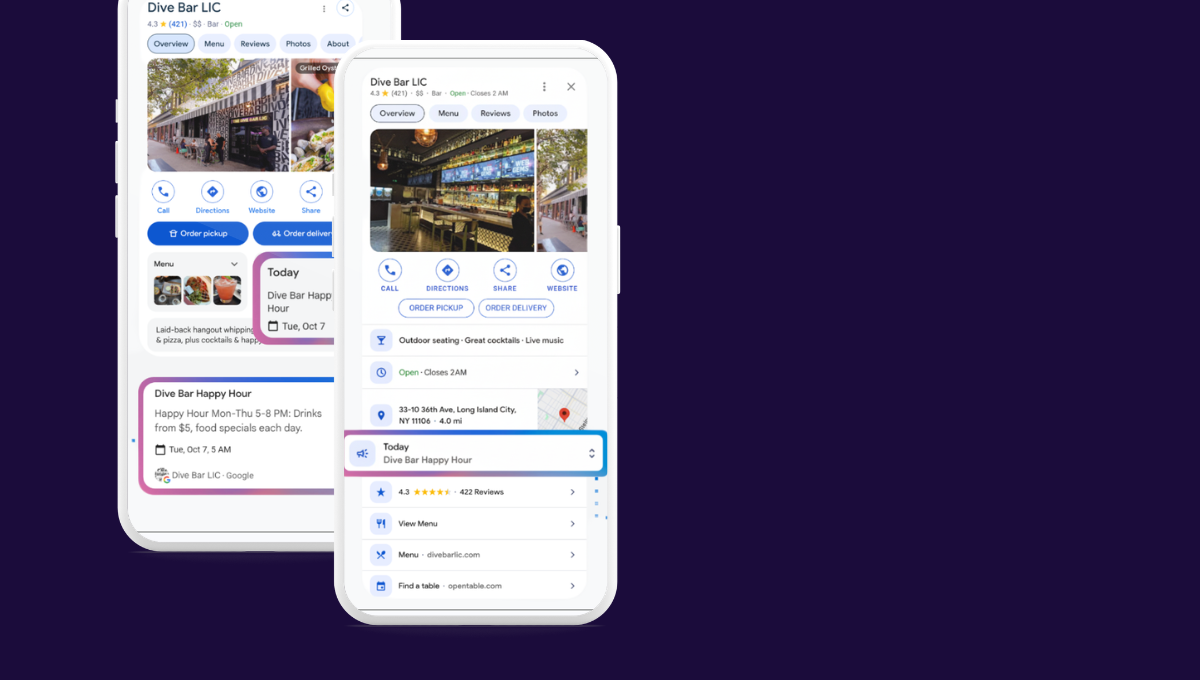
- Promotions et mises à jour en temps réel
- Blogs et forums
Ces éléments différencient votre marque, renforcent l’engagement et signalent votre expérience, expertise, autorité et fiabilité (E-E-A-T) à l’IA. Utilisez des sources crédibles et récentes pour positionner votre contenu comme référence fiable.
Les LLM accordent aussi de l’importance à la fraîcheur du contenu. Publiez régulièrement des mises à jour produits, promotions et histoires clients — pas seulement sur Google Business Profiles, mais aussi sur Apple, Facebook, Instagram et autres réseaux pour garder votre marque active et visible.
4. Mentions de marque et signaux d’autorité
La construction d’autorité est essentielle à la GEO pour les marques locales.
Les citations fiables et backlinks comptent davantage dans GEO, surtout lorsque l’IA valide les informations. Plus votre marque ou vos sites sont perçus comme sources fiables, plus l’IA les citera.
Travaillez sur les initiatives on-page et off-page pour vous établir dans des écosystèmes externes autoritaires : annuaires sectoriels, plateformes d’avis, etc. Les backlinks et statistiques crédibles renforcent la réputation de votre marque et attirent l’attention des moteurs génératifs.
Les experts d’AthenaHQ notent : « Les modèles mettent souvent en avant de nouveaux contenus concurrents, mais cet avantage disparaît si ces contenus ne peuvent être appuyés par des sources tierces fiables. »
Même des mentions non liées de votre marque sur le web sont des signaux d’autorité : l’IA évalue la prévalence et le contexte des mots associés à votre marque pour déterminer sa crédibilité.
Créez un surround sound autour de vos produits via différents formats : Reddit, YouTube, TikTok, et autres sources très citées par l’IA.
5. Suivre et piloter votre stratégie GEO
Marketeurs, CMOs, dirigeants d’entreprises : le déclin du trafic nécessite une action immédiate.
Le trafic n’a pas toujours directement fait bouger l’aiguille, mais il influence la réussite d’autres piliers de l’Location Performance Optimization : visibilité, engagement, réputation, conversions. Ce qui devient clair : GEO est l’antidote à ce déclin de trafic.
En surveillant régulièrement vos métriques GEO, vous pouvez ajuster votre couverture, renforcer votre visibilité et optimiser pour les prompts qui comptent le plus pour vos sites ou vos marques. Les indicateurs clés sont : Share of Voice (SoV), Mention Rate, Citation Rate, Prompt Opportunities.
- Comprendre les prompts locaux
- Créer du contenu pour combler les gaps
- Itérer et améliorer ce contenu pour gagner citations et backlinks
- Remporter le SoV sur vos concurrents locaux
GEO va-t-il remplacer le SEO traditionnel ?
Tout le monde sait qu’il faut performer en recherche IA, mais peu savent comment. Il y a de nouveaux indicateurs à suivre et des stratégies à mettre en place.
Spoiler : GEO ne change pas fondamentalement les bonnes pratiques SEO (pour l’instant). Les métriques sont différentes, certes, mais le SEO n’est pas mort — juste plus complexe. Ignorer les cinq axes présentés ci-dessus met votre marque en difficulté. Les suivre permet de contrer le déclin du trafic et d’attirer des clients à forte intention.



1 800 marques nous font confiance pour rester visibles
— pas seulement apparaître une ou deux fois dans la recherche locale.