How To Analyze the Local Pack: Metrics, Your Competitors, and Performance Gaps
Discover how to deconstruct the Google Local Pack — measuring rankings, engagement, and conversions across locations, auditing competitors on category, profile quality, and reviews, and knowing which fixes to ship now versus build for the long term.

Key takeaways
- Combine local keyword tracking with GBP engagement data (clicks, calls, direction requests) and tie it back to traffic and conversions using UTM parameters and GA4 to get the full picture of how each location is actually performing
- Deconstruct who ranks in each local pack and why — look at primary categories, profile completeness, review volume and recency, and NAP consistency to identify specific, actionable gaps you can close
- Longer-term efforts like review generation programs, photo refreshes, and website-to-GBP alignment require sustained investment but compound over time

For multi-location brands, visibility in the Local Pack is essential.
Teams track keywords, monitor listings, and report on rankings, but they often don’t have a clear view of what’s actually happening in the Local Pack itself, especially across their full portfolio of locations.
One location performs well, another struggles, and there’s no consistent way to explain why. Especially because every location operates in a different market with its own unique competitive landscape.
When it comes to the Local Pack, how do you measure performance at scale, identify struggling locations, and audit competitors effectively to uncover opportunities, especially in low-performing locations? This is a common challenge for multi-location businesses.
Teams can lose sight of struggling locations when the overall trend seems positive or steady. Deconstructing the Local Pack changes that. It allows you to evaluate performance in context, understand who you’re really competing with at the local level, and identify where your local strategy may be falling short.
Where Google’s Local Pack Appears in Search
Local intent searches are queries in which Google determines that a user is looking for a nearby business or service. Local searches typically include geo-modifiers, such as a city name or “near me.” Some keywords will trigger localized results based on proximity without the modifiers — think “coffee shop” or “oil change.”
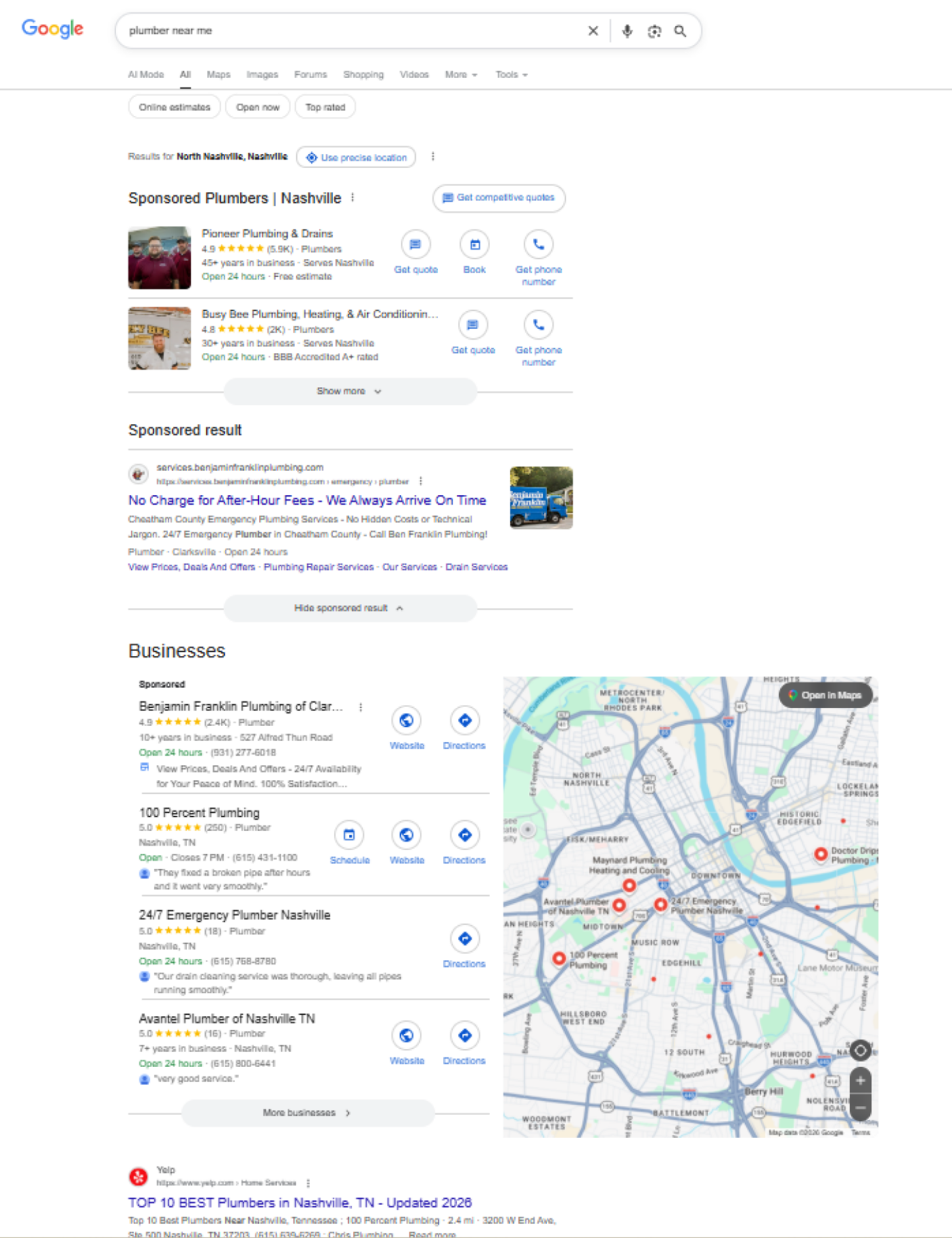
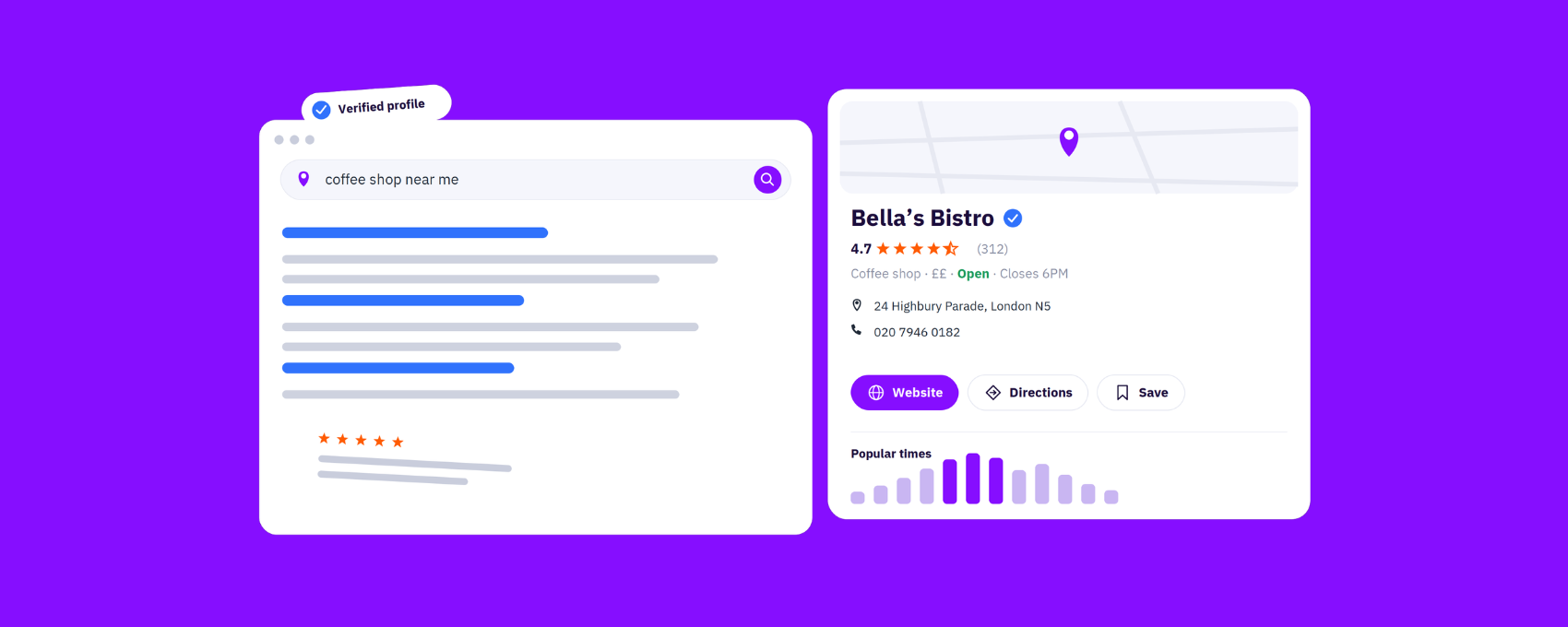
For local intent keywords, Google will show the Local Pack (Map Pack, 3 Pack), typically above organic results, showcasing several Google Business Profiles (GBP).
While the Local Pack remains a highly visible feature, the search results page continues to evolve and become more competitive, with new features and ads taking up more real estate before organic results.
This year alone, we’ve seen various iterations of local search results and ongoing tests from Google, including increased ad placements and AI-generated Local Pack experiences similar to AI Overviews.
Even with these changes, local intent searches signal high intent. Users are actively seeking a nearby solution and are often ready to act, which is why capturing visibility in these searches is essential for local businesses.
How Do You Evaluate Local Pack Performance?
Performance in local search shouldn’t be measured in just one way. Instead, businesses should focus on multiple metrics to understand visibility, engagement, traffic, and conversions, depending on their business goals.
On top of that, using tools like GA4, Google Search Console, and UTM tracking can help show how GBP performance impacts traffic and drives on-site conversions. This is especially useful when segmenting data from traditional organic search or other channels.
1. Local Rankings and Visibility
Focus on keywords that reflect real search behavior and have business impact.
Tracking keywords across locations can help identify where visibility in strong and certain markets are underperforming. For local-level ranking, focus on local-intent keywords rather than generic terms or head terms.
Keywords to track in local markets or zip codes might include:
- “Near me” terms, such as “plumber near me.”
- Geomodified product or service queries, such as “waxing studio in Nashville.”
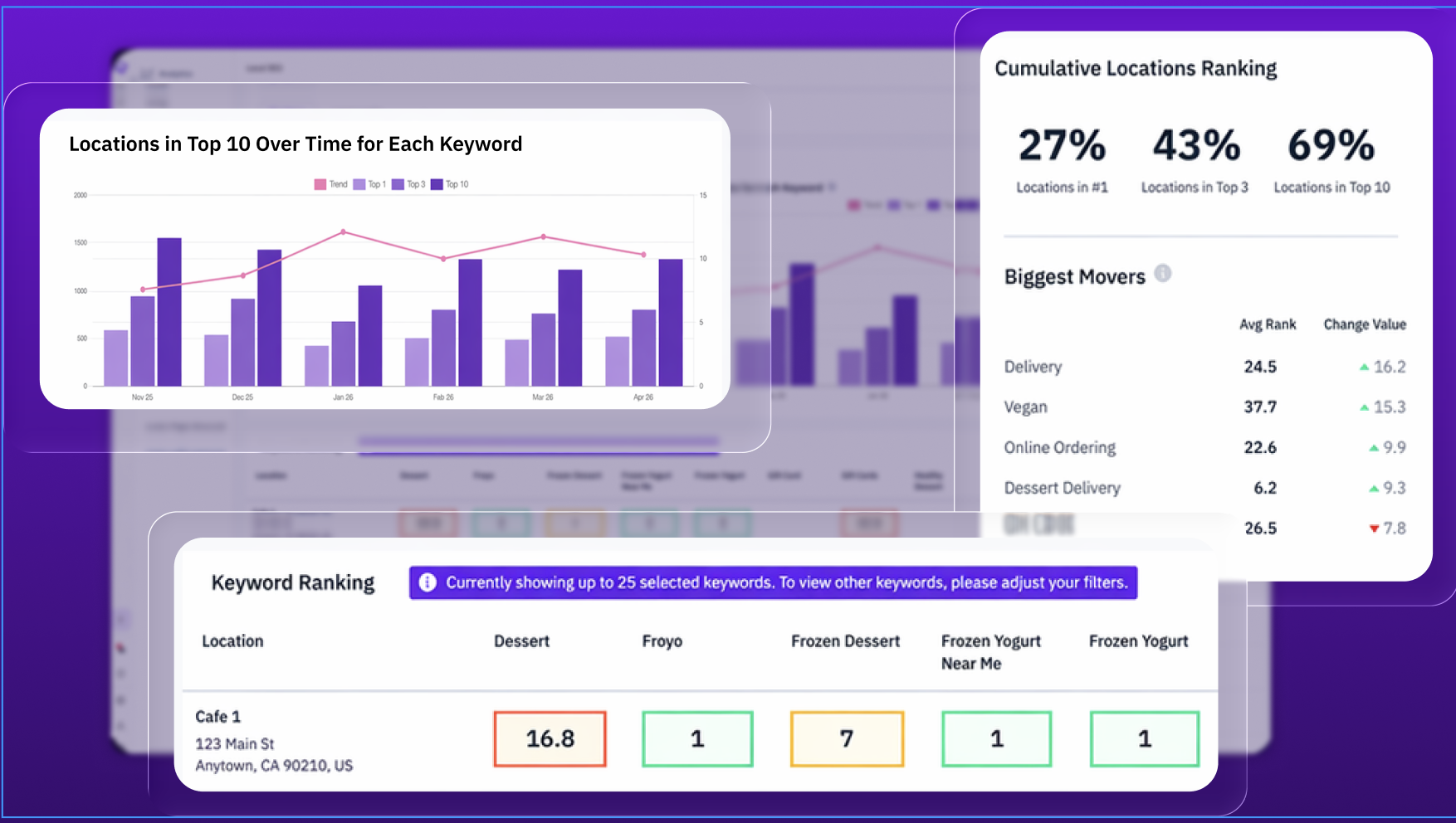
Review your rankings to understand frequency and consistency in the Local Pack, track average position across locations, and identify outliers that fall short of the average.
From there, compare high-performing locations with those struggling to uncover any missed opportunities. For underperforming locations, take it a step further by analyzing in-market competitors to identify specific gaps impacting visibility (more on how to do that later).
2. Engagement
Visibility — and keywords — are only part of the picture. To understand performance, it’s important to look at how users interact with your listings and what actions they take directly in the SERP.
GBP engagement data, such as website clicks, phone calls, and direction requests, helps show which locations are driving interest and customers to action.

Here are some things to consider when reviewing GBP insight data:
- Rankings versus engagement: Are profiles visible for important keywords based on local keyword tracking but not driving actions? This could point to competitive differentiators such as reviews, photos, or overall profile completeness.
- Trends over a period of time: Are engagement metrics improving or declining alongside ranking changes?
3. Traffic and Conversions
To fully understand performance, it’s important to connect local visibility and engagement from GBP back to traffic and conversions.
Ensuring all profiles use UTM parameters on call-to-actions lets businesses track how GBP interactions translate into on-site activity.
Leveraging tools like GA4 and Google Search Console, you can validate what you’re seeing in GBP insights and tie profile performance to metrics like clicks, impressions, and on-site conversions, such as form fills. Additionally, UTM parameters allow you to break down organic data to better understand how GBP performance compares to traditional organic results and even other channels.
This type of data dive can help identify which presence is driving traffic and engagement, highlight gaps, and inform where to focus SEO strategy, whether that’s optimizing listings or improving on-page content to strengthen visibility in organic results.
Review Which Businesses Rank and What They Have in Common
When it comes to local rankings, Google has been clear that local results are mainly based on three factors: relevance, proximity (distance), and prominence.
These three factors combine to help connect users to the businesses that best match their search. When it comes to reviewing what businesses show up in the Local Pack (either alongside yours, or instead of), it’s important to keep these things in mind:
- Which businesses are frequently appearing in the pack and why?
- What do they have in common?
- Compared to your business, what’s different? Is there an area where your business is falling short?
- Do the results make sense if you were searching for a business?
- Are all of these businesses close by, and is yours out of the city center?
Check Primary Business Categories
Your primary business category in GBP is a key signal of relevance and an important ranking factor.
The primary category helps Google understand what your business offers and which searches you should appear for. When reviewing Local Pack results, patterns often emerge in the categories top-ranking businesses use. If your categories don’t align, it can limit your visibility.
Testing different primary categories, when relevant, and adding supporting secondary categories can help improve alignment with high-intent searches.

When auditing Local Pack results, consider:
- How does your primary category align or differ from top-ranking competitors?
- Which alternative primary categories are competitors using, and which are worth testing based on relevance, frequency, or search demand?
- Which categories could be added as relevant secondary categories to support additional services?
If any of the above findings result in updates to your GBP, whether it’s a full-scale change or isolated test, always monitor performance afterward to understand the impact. This can help tie that optimization back to results or give you ammo to roll out the change to all locations if it was an initial test.
Investigate Profile Information
When reviewing Local Pack results, don’t overlook ensuring that basic profile information when comparing your business to others. Inconsistent or incomplete profiles can impact both visibility and user trust.
Look at these key areas:
- NAP consistency: Ensure your business name, address, and phone number are accurate and consistent across listings, your website, and social media. Inconsistent information can confuse and frustrate users, leading to lower engagement.
- Business Name: Identify if competitors are using keyword-stuffed names. If they don’t reflect the real-world business names, they may be in violation of GBP guidelines and flagged to Google.
- Profile completeness: Review hours, attributes, and services to ensure listings are fully built out. Attributes and services can help align with what users are searching for and also trigger profile justifications, which can increase engagement.
- Photos: Review photos to see if they are outdated, generic, or not reflective of the business. Strong, relevant images can influence user decisions and drive engagement.
It can take time to gather and maintain this information, but it’s worth the effort to keep your profile accurate, consistent, and competitive within the Local Pack.
Look at Review Details: Average Star Rating and Total Review Count

Reviews are increasingly becoming more important in Local SEO. Not only do 51% of consumers claim that reading reviews is the first thing they do, but reviews serve as a trust signal for your brand.
In terms of visibility and pack ranking, Google’s Tips To Improve Local Ranking documentation clearly states how reviews impact rankings in its Prominence section:
“Prominent places are more likely to show up in search results. This factor’s also based on info like how many websites link to your business and how many reviews you have. More reviews and positive ratings can help your business's local ranking.”
If your business has fewer reviews, less recent reviews, or a lower star rating than most competitors in the area, they are less likely to surface in the Local Pack. On the flip side, if your business is consistently ranked in the pack, has a star rating that’s on par with other businesses, but has some negative reviews that stand out, it could indicate that, while visibility isn’t an issue, these negative reviews may be impacting engagement or conversions.
Having a solid plan in place to generate more authentic customer reviews and respond to them is not just an important factor for local search but is becoming a must-do for AI search and LLM visibility when it comes to branded and local searches. Many platforms are using customer reviews to help shape the narrative around businesses in those experiences.
What Should I Change Now and Over the Long Term?
As with most SEO efforts, changes in local search often don't happen overnight, which is why it’s important to plan for both near-term updates and longer-term efforts to drive consistent results.
When thinking near-term, focus on changes that can be tested quickly and implemented at scale, such as:
- Categories: Primary category updates or testing alternative categories
- Optimizations: Profile updates that can be rolled out across locations via listing management tools
- Attributes: Updating and testing business attributes
- NAP consistency and cleanup: General profile review for accurate information (hours, services, basic information) across locations
Long-term efforts focus on changes that take more time to implement and often require ongoing effort or additional resources, such as:
- Photos: Auditing current profile images and collecting new ones from locations, for example
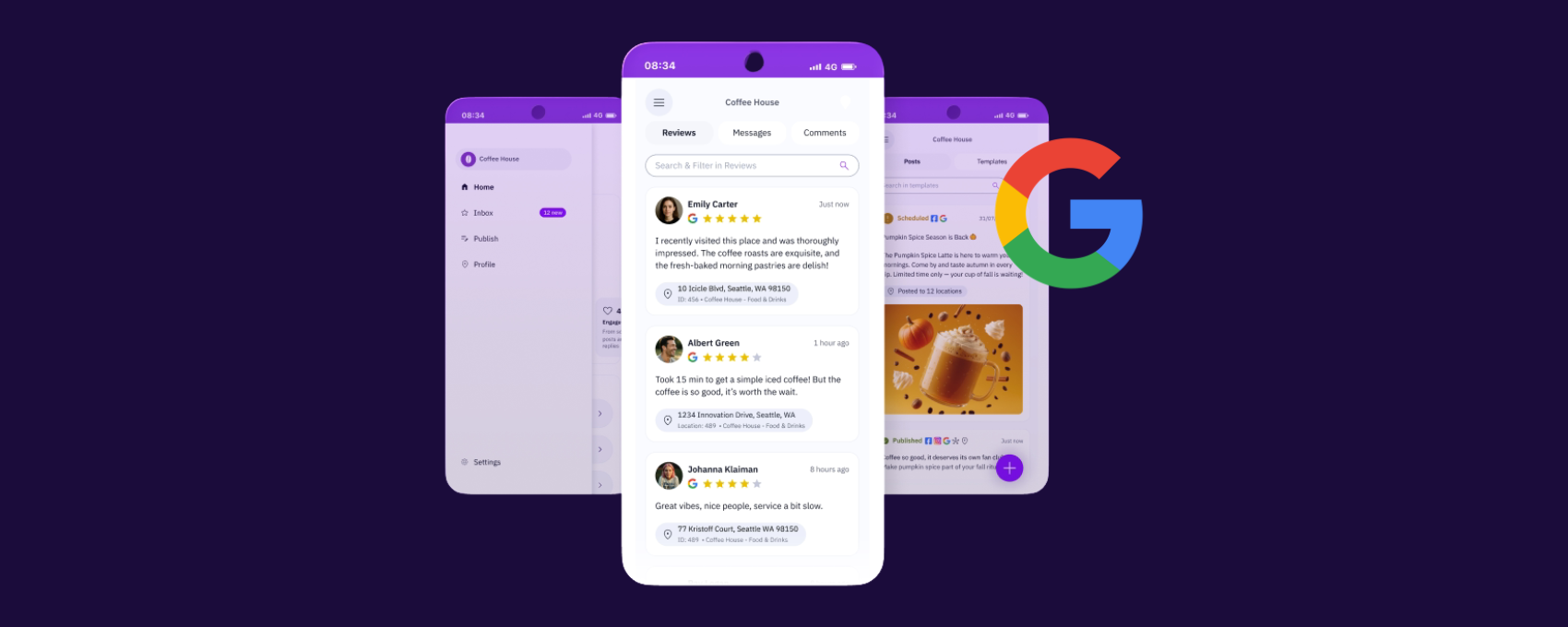
- Reviews: Monitoring, responding, and building a consistent review generation process
- Website updates: Auditing NAP consistency, improving content, or implementing schema — for example — to reinforce alignment between GBP and your website to support local relevance signals
Monitor, Optimize, and Test Your Local Pack Performance
Local Pack performance is constantly changing. Rankings shift, competitors make updates, and Google continues to change how local results are displayed, making it difficult to maintain consistent visibility, especially across multiple locations.
To stay competitive, businesses need to continually monitor performance, identify outliers, test tactics in response to opportunities, and adapt what works. Regularly reviewing performance, identifying changes in the Local Pack, and adjusting your approach based on what you’re seeing can help maintain and improve visibility over time — and drive more customers to your locations.


1,800 brands trust us to stay visible
— not just show up once or twice in local search.



.png)

Frequently asked questions
The Google Local Pack typically shows three Business Profiles, which is why it’s often called the 3-Pack. For some queries and on mobile the layout varies, and users can expand the map to see more businesses. Because only about three spots are visible without extra clicks, competition is high — ranking fourth or lower means far fewer people find you.
The Google Local Pack typically shows three Business Profiles, which is why it’s often called the 3-Pack. For some queries and on mobile the layout varies, and users can expand the map to see more businesses. Because only about three spots are visible without extra clicks, competition is high — ranking fourth or lower means far fewer people find you.
Google decides which businesses appear in the Local Pack based mainly on three ranking factors it states publicly: relevance, distance, and prominence. Relevance is how well your Business Profile matches the search (your primary category is a key signal); distance is how close you are to the searcher or the area they name; and prominence reflects how well known and trusted your business is, including how many reviews you have and your rating. No single factor guarantees a spot — the pack reflects the best overall match for each search.
Yes, reviews affect your Google Local Pack rankings. Google states that prominence, one of its three local ranking factors, is based partly on how many reviews you have, and that more reviews and positive ratings can help your local ranking. Beyond ranking, a strong, recent review profile — and consistent, thoughtful responses — builds the trust that turns Local Pack visibility into clicks and calls.
Yes, service-area businesses can appear in the Google Local Pack. If you serve customers at their location rather than yours (like a plumber or cleaning service), set up your Google Business Profile as a service-area business, define the cities or postal codes you cover, and remove your street address if customers don’t visit you. You’ll then be eligible to show in the Local Pack for searches within your service area, though Google won’t display a pin address.
You get your business into the Google Local 3-Pack with the following: a complete, accurate Google Business Profile with the right primary category, consistent name, address, and phone number (NAP) across the web, and a steady flow of genuine reviews. From there, track your rankings by keyword and location, compare strong locations against weaker ones, and audit the competitors who consistently rank to find gaps you can close. For multi-location brands, listings management keeps this accurate and consistent at scale.
Your business may not be showing in the Local Pack for a few common reasons: an incomplete or inconsistent Business Profile, a primary category that doesn’t match the search, being outside the searcher’s immediate area, or fewer and lower-rated reviews than nearby competitors. Confirm your profile is complete and your NAP is consistent everywhere, then compare your category and reviews against the businesses that do rank. If you’re visible but not getting clicks or calls, the issue is more likely engagement — photos, reviews, completeness — than ranking.
The Google Local Pack is changing, and it’s definitely worth watching. Google continues to test the local results page, adding more ad placements above the pack and rolling out AI-generated local experiences similar to AI Overviews. The three core ranking factors still apply, but visibility increasingly depends on a complete, well-maintained profile and a presence that AI search can pull from. Keeping your listings accurate and your reviews current is the best hedge as the format keeps shifting.