All About Making the LBE: Location-Based Engagement
Broadly defined, an LBE is any action a person takes to engage with a specific location via their mobile device. These can take many forms.


Smartphones have ushered in the next phase of brand and product engagement. The checkin is just the beginning.
We've entered a new era in marketing and advertising. The mobile medium is changing everything, and location is leading the way. In particular, the Location-Based Engagement (LBE) has created an entirely new channel on par with billboards, digital out-of-home, and point-of-purchase. It is driven by the the smartphone revolution and powered by location-aware applications. It represents a new way for consumers to connect with brands and products and for brands to connect with consumers---in the moment.
What's an LBE?
Broadly defined, an LBE is any action a person takes to engage with a specific location via their mobile device. These can take many forms, but each shares three qualities: time, place, and action. The latter differentiates the LBE from simply being present and receiving unsolicited ads based on your location. With an LBE, one must actively engage with the place. This action grants a minimum level of permission on the part of the consumer (not unlike a search query but more specific), which opens to door to a branded response in the form of promotions, coupons, or just valuable information.
We like to think of each LBE as a unique moment. When a person engages with a location using their mobile device, it happens in the context of a particular moment i.e. a personal experience attached to a specific place and time. These moments are where select marketers can find a compelling opportunity to connect and become a meaningful part of that unique moment.
The most basic type of LBE, of course, is the checkin, where a person simply states their presence or associates themselves with a place. They are saying, "I'm here," which soon becomes, "I was here." The checkin was pioneered by Brightkite and made popular by Foursquare and Gowalla. It's the foundation of the LBE channel. In the following, we'll explore how this space is evolving and the opportunities afforded to consumers and marketers alike.
Business Intelligence
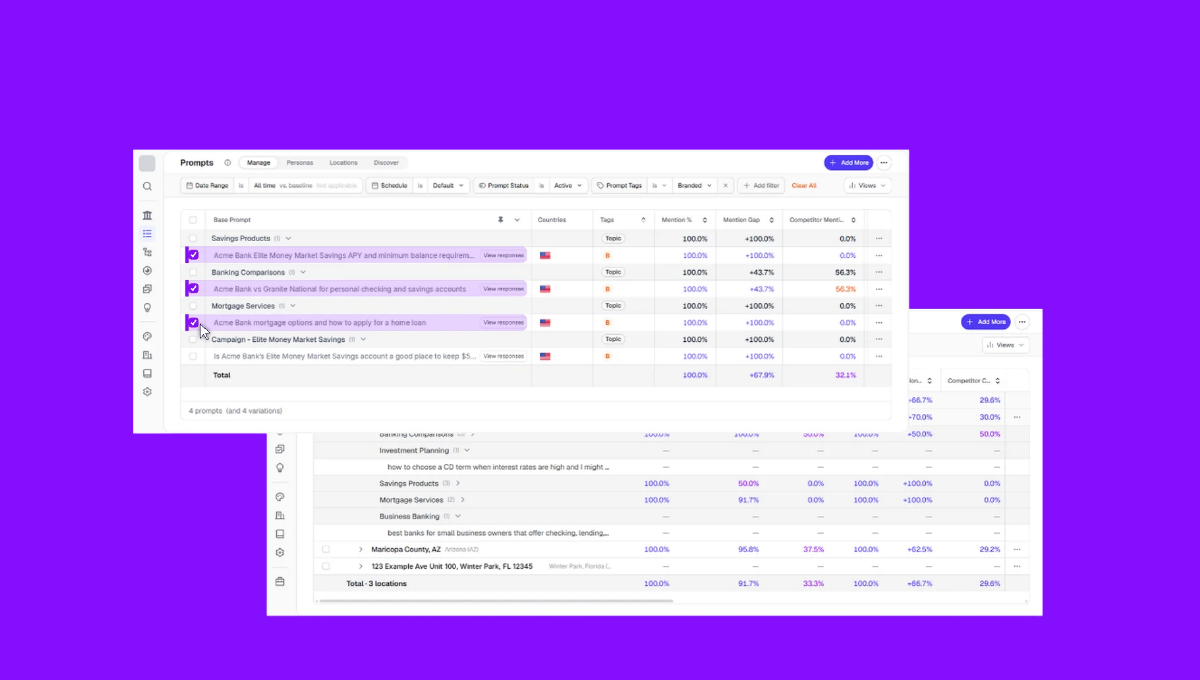
Location-based engagement data is the basis of the MomentFeed platform, which provides location-based monitoring and campaign management across the entire LBS market. We call it the Location-Based Engagement (LBE) platform. To effectively leverage this new channel, brands first need to quantify and understand the full extent of these engagements for their given set of locations. If it's a retailer, then it would be all of their stores. If it's a consumer packaged good, then it would be its entire distribution network. Because it's new and emerging, the LBS market is highly fragmented. And because the world is such a big place, so are most large brands. Which is to say they aren't all in one place. The MomentFeed LEA platform offers that one place.
The LEA platform provides visibility. It enables marketers to measure engagements and make sense of them in order to efficiently utilize the LBE channel. The platform is designed to measure both quantity (traffic) and quality (level of engagement).
Types of Location-Based Engagements
The below examples break down a handful of the basic types and how they might be valued. By no means is this comprehensive.
The Social Checkin: At the moment, this is the most popular type of LBE. It is the foundation of Foursquare and Gowalla, where a person's checkin can be broadcast to their social graph or, depending on privacy settings, anyone who happens to be listening. It is a simple statement of presence, the primary purpose for which is to alert others. In this sense, the location is a means to an end. It is coincidental, which makes this a weak engagement in terms of the location itself yet still valuable in terms of exposure to the individual's social graph.
The Solo Checkin: It is possible to check-in to a location without sharing that information with anyone but the app maker and possibly the location itself. The CauseWorld app from ShopKick does essentially this. The incentive is driven by points (Karmas) that can be redeemed for tangible rewards such as planting a tree or donating a book. This is a deeper engagement than a social checkin because the location itself is the primary objective (notwithstanding earning the rewards). However, the absence of social sharing may reduce its net value. In the case of CauseWorld, users can opt for a social checkin by pushing it to Facebook. Overall, the non-social checkin (with the social option) has more mainstream potential and more readily lends itself to loyalty-rewards programs.
The Deep Checkin: The simple action of checking in represents a shallow engagement. While it is magnitudes greater than a non-checkin, there are many ways to go deeper. With Foursquare, one can leave a tip about the food, service, or local knowledge. With Gowalla, one can include a photo. With Yelp, one can write a truncated review. These additional steps signal a deeper connection with the location and offer corresponding opportunities to respond and reciprocate.
The Product Engagement: Smartphones are changing how consumers can interact with physical goods. For example, Stickybits enables one to scan a barcode using a phone's camera, which prompts access to additional information. This might be provided by fellow consumers in the form of a critical review or a coupon offer from the company that makes the product. More often than not, these product engagements will occur at the locations where the products are found. Additionally, the location itself can have a barcode for the purpose of directly engaging with it as the product.
The Purchase: Services like Blippy and Swipley enable one to share their purchases with friends. When this occurs at a physical place, as opposed to ecommerce, it's a clear form of location-based engagement. For this type of LEA, the purchase itself is not the engagement, per se. Rather, it's the action (automated or not) of sharing that information with friends and associating it with a particular place. Ultimately, mobile commerce applications will enable much more direct purchases from a given location, such as a Starbucks, where the user can choose to share it with their social graph or the broader public.
The Moment Capture: This type of LEA is driven by content creation and information sharing. It consists of any combination of text, photo, audio, or video that is expressly associated with a specific place and time. This content ostensibly refers to the location or what's happening there in some meaningful way, such that it is geographically relevant. Given the debut of Twitter Places, the popular microblogging platform offers the most widely adopted method for engaging locations with rich-media content. Unfortunately, the level of noise makes it difficult to sift for relevance.



1,800 brands trust us to stay visible
— not just show up once or twice in local search.