Brand Authority for Local Businesses: Tips & Tricks for Today’s Search
What does brand authority really mean for local businesses? Here’s how to leverage branded searches, your Google Business Profile, and social channels to build trust and brand visibility in both traditional and AI search.

Key takeaways
- Branded search volume is one of the strongest signals for AI visibility
- Complete profiles, consistent review responses that reflect your brand voice, regular posts, proactive Q&A, and high-quality photos and videos help both consumers and AI systems decide whether to recommend you
- Authority is built through consistency across every touchpoint — not just your own website and GBP but through directories, social media, Reddit, LinkedIn, and review platforms

When it comes to visibility in LLMs, AI Overviews, for example, brand authority is a nonnegotiable part of the strategy. Keywords alone are no longer enough; you need a brand that people trust. But what does that actually mean? How can you, as a local business, optimize for brand authority? And how do you measure your success?
What Is the Difference between Branded and Unbranded search — and Why Does It Matter for Local Businesses?
Non-branded searches are generic queries like "dentist london islington" or "best bakery near me". Branded searches, on the other hand, contain the brand name: "dentist dental beauty islington" or "bakery gails opening hours".
For local businesses, the ratio between these two search types is especially revealing.
Non-branded searches bring reach and new customers — but they’re highly competitive and heavily dependent on local SEO. Branded searches, however, are brand authority in action: They’re a direct signal that people already know your brand, trust you, and are actively searching for you. They convert significantly better and — here’s the kicker — have a positive impact on nonbranded searches and therefore your local visibility.
Studies show that brand search volume is one of the factors most strongly correlated with visibility in AI search. If you have a local presence but barely register any branded searches, you’re essentially an unknown to search engines and AI systems — regardless of how well your website is optimized.
So let’s look at how you can strengthen branded searches and, with them, brand authority for your business.
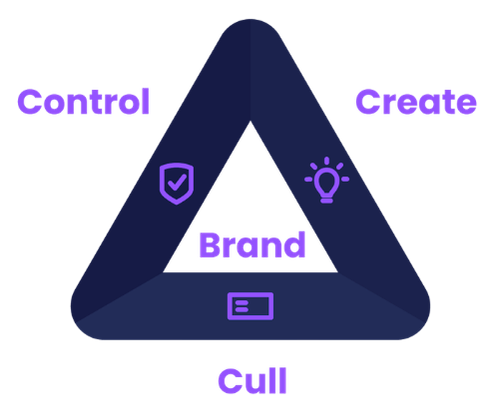
For this, I’ve created the Brand Authority Triangle.
It builds brand authority along three axes:
- Create content
- Control the narrative
- Consolidate content
For local businesses, the following components come into play:
Google Business Profile as a Brand Authority Lever
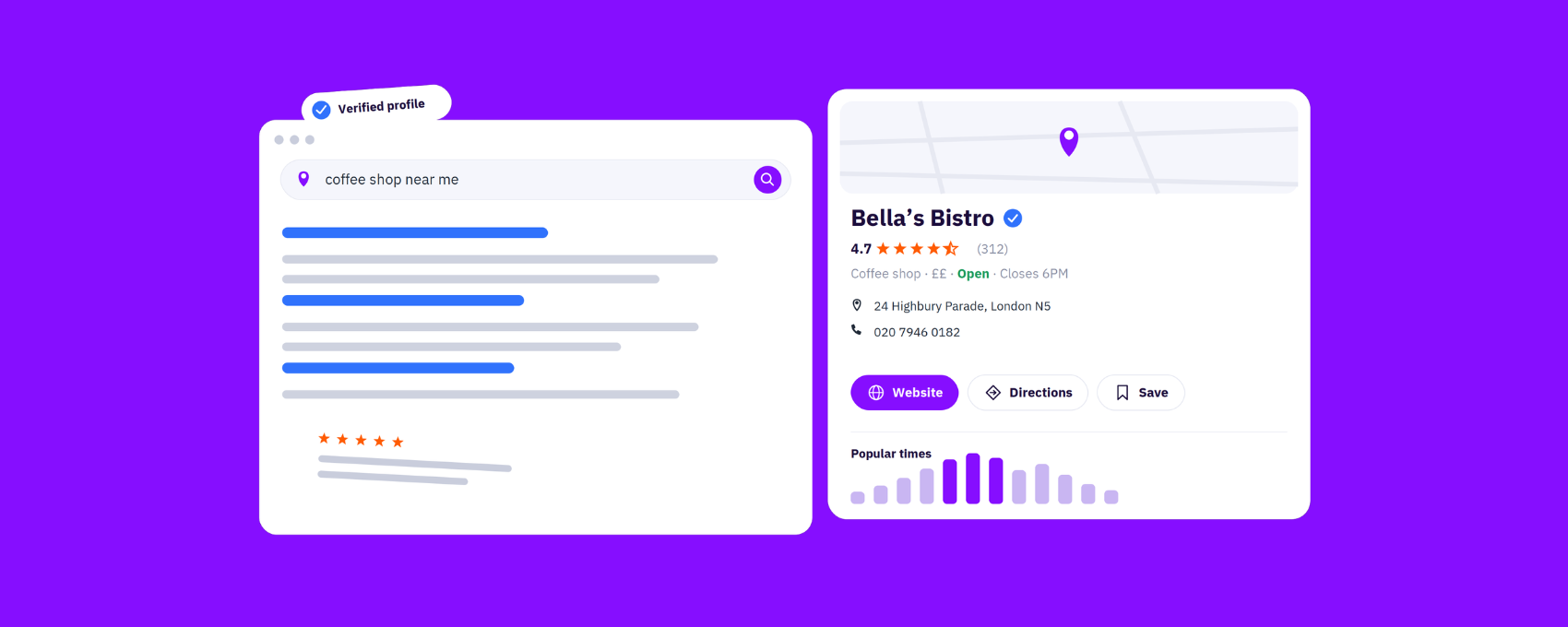
Your Google Business Profile (GBP) is the linchpin of brand authority for local businesses. It’s often the first thing potential customers see about you — even before your website.
When optimizing your GBP, I recommend focusing on the following:
- Completeness. In my view, this is the most obvious tip — yet one you almost never see followed “in real life” with Google Business Profiles. Enter all relevant information: opening hours (including holidays), services, products, photos, description with your brand voice. For multi-location businesses, this applies to each and every profile.
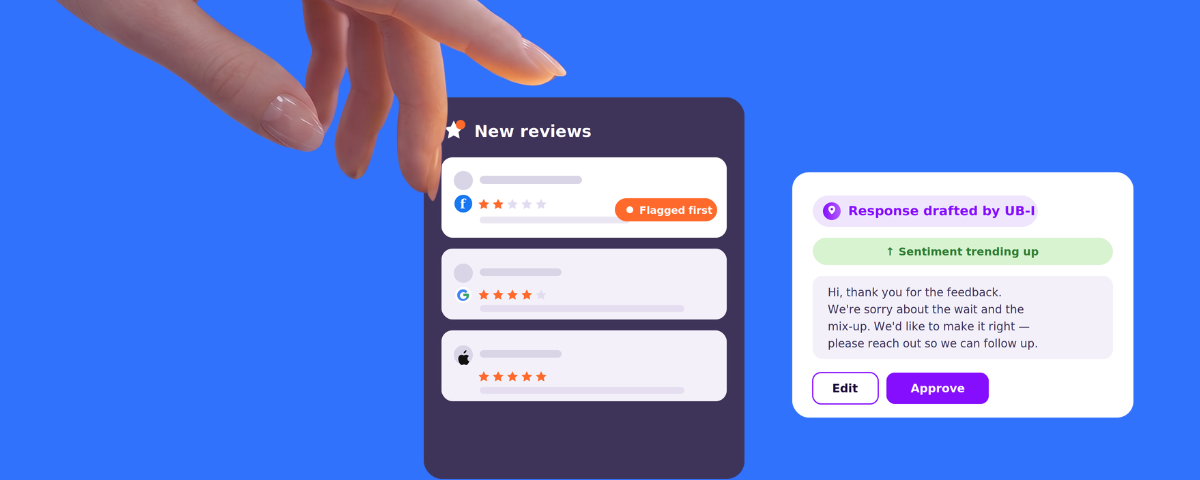
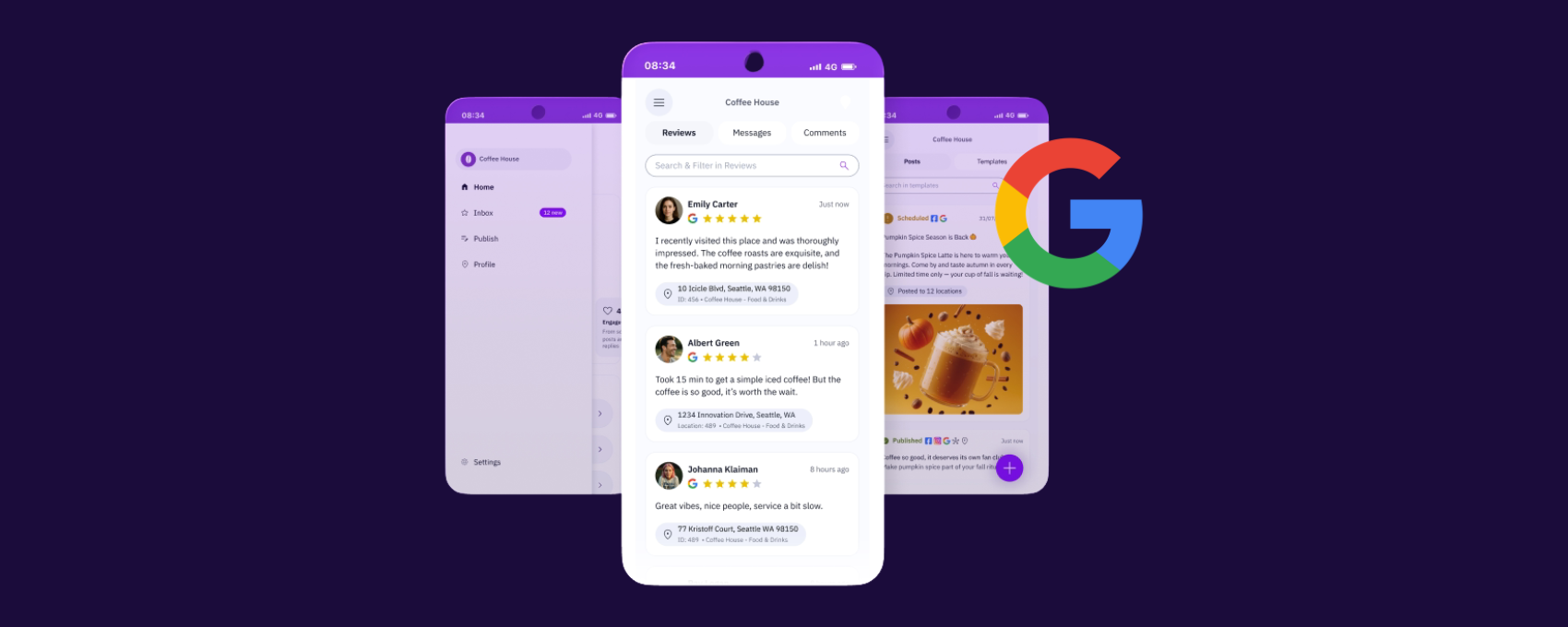
- Reviews are brand content. Actively ask for reviews and respond to all of them — positive and negative. In your responses, you can use keywords and anchor your brand values. Even if it feels unusual, it’s worth showing personality. Reviews are a powerful E-E-A-T signal and influence how AI systems perceive your business.
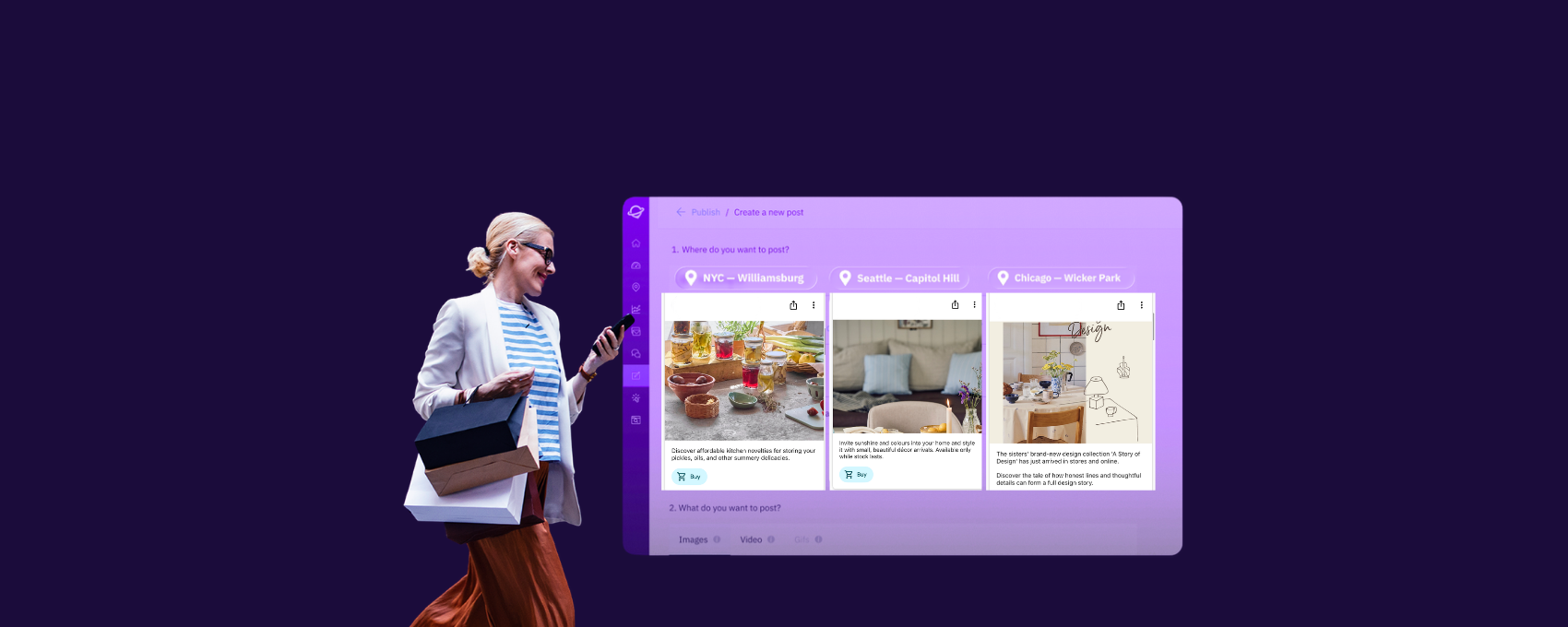
- Posts keep your profile alive. Regular GBP posts about offers, events, or news signal activity and relevance. Use your brand voice consistently — remember, consistency strengthens brand authority.
- Use Q&A proactively. If you haven’t received any questions yet, post questions on your profile yourself and answer them. This way you control the narrative before someone else does. You can also answer these questions on other channels: your website, social media, local pages, etc.
- Photos and videos. Profiles with high-quality, regularly updated images receive significantly more interactions. They convey trust and make the brand more tangible. Videos are still underused — here’s where you can stand out from other brands.
Brand Authority Beyond Your Own Ecosystem: Social Media and Third Parties
Brand authority doesn’t happen in just one place. Unfortunately, no matter how hard we try to speak consistently about our values and mission on our website, in newsletters, and on our Google Business Profiles — users always inform themselves elsewhere too: in forums like Reddit, on review websites like Trustpilot, on social media.
This is both a challenge and an opportunity for local businesses.
Search for your brand on Google and in AI engines.
To build brand authority, ensure consistency across these sources in the following areas:
- Brand name (no variations)
- Address and phone number
- Opening hours
- Description of services
- Logo and visual language
- Tone and brand voice
- Website (https)
Use business directories and business listings to consistently get your brand in front of people online. Discrepancies — even small ones like “St.” vs. “Street” — create confusion for search engines. Prioritize directories that are actually used in your industry and region: alongside Google Maps, this could include Yelp, Tripadvisor, Yellow Pages, or other platforms.
Social media is the shortcut to awareness and trust online. Active, consistent profiles strengthen the image of a reliable brand — and LLMs are increasingly pulling information from social sources. LinkedIn profiles of business leaders are currently particularly relevant.
Reddit, Quora, and similar forums are also great avenues for external brand authority and AI visibility. Focus on the forums where your target audience spends time.
Tracking Brand Authority: How to Keep an Overview
A simple way to measure brand authority is through branded searches. The key is to measure brand search volume over time — so you can prove that your efforts have contributed to brand authority.
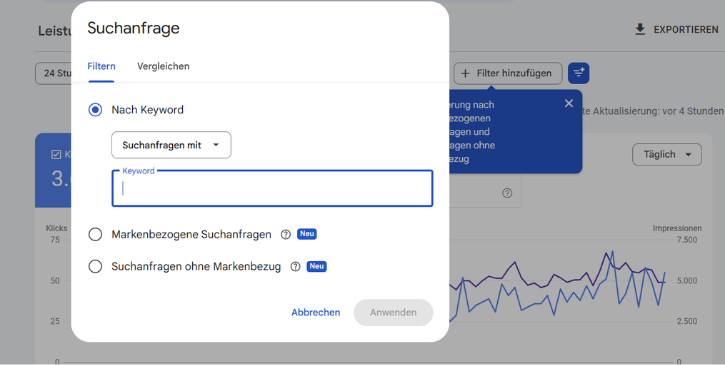
Google Search Console and Bing Webmaster Tools are a good starting point. Filter the performance report by queries containing your brand name. Watch for trends over time: Are impressions and clicks on branded queries increasing? That’s a direct signal of growing brand authority. Make sure you also account for common spelling errors. Ideally, export the data and track it in Google Sheets, for example.
Recently, Search Console has offered AI-powered filter options. Under “Add filter,” you can simply select “Brand-related search queries.” However, I'd recommend not blindly trusting the results — run your own manual cross-checks. Here’s a screenshot (original in German), showing this new filter.
For local businesses, it’s also worth looking at Google Business Profile Insights: How many users explicitly searched for your name (direct searches) vs. other search terms when they found your profile? Here’s a screenshot (original in German) showing you this breakdown.

In addition to these tools, you can measure brand authority here:
- Google Trends: Track the development of your brand name's search volume over time and by region
- Alertmouse or Google Alerts: For brand mentions on the web — ideal for tracking mentions without a link
- GA4: Direct traffic as a proxy for brand awareness — anyone coming directly to your website already knows you
Bonus: Also keep an eye (e.g. with Google Trends or Google Keyword Planner) on how your competitors are being searched for.
Brand Authority Is Local — and Measurable
For local businesses, brand authority is not an abstract marketing buzzword. It shows up concretely in whether people near you are searching for your brand. Brand authority grows through presence and consistency.
Presence exactly where your target audience spends time, and consistency in everything the brand communicates.
Here’s a summary of what it looks like when you strategically build brand authority as a local business:
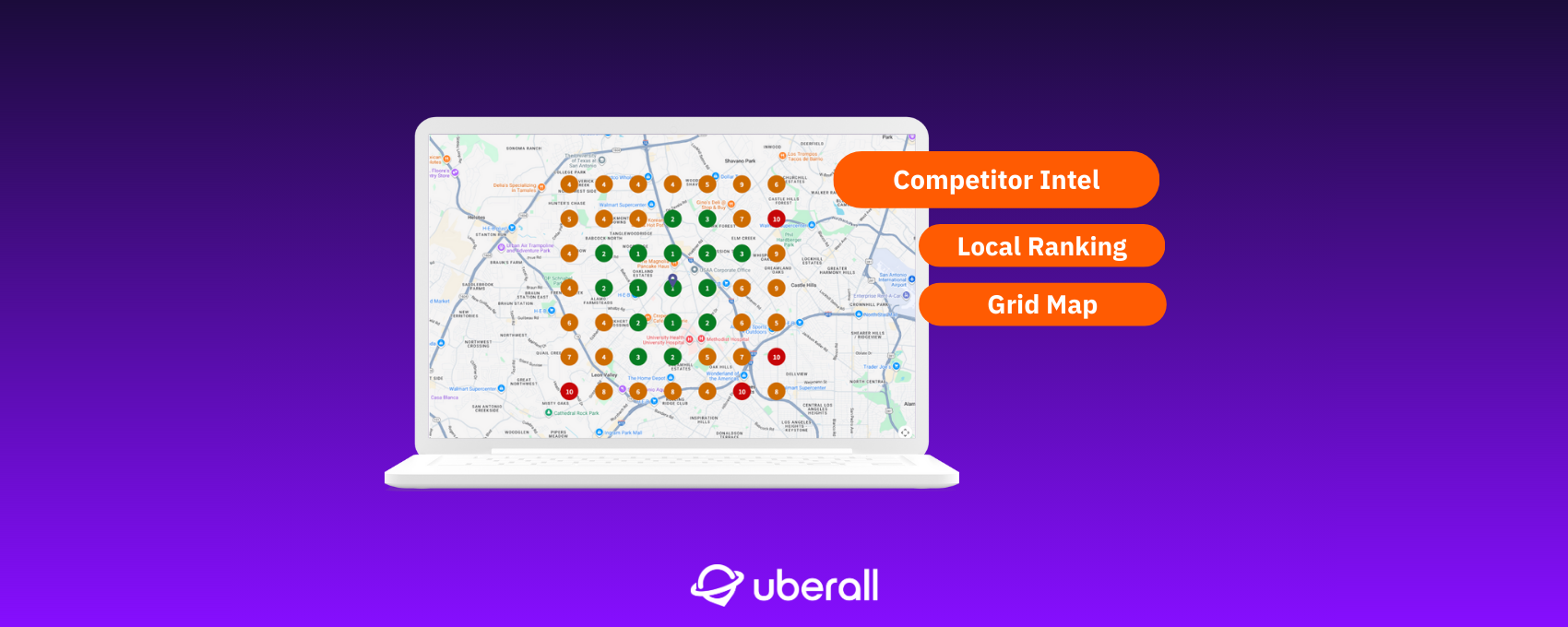
1,800 brands trust us to stay visible
— not just show up once or twice in local search.

.png)

Frequently asked questions
Unbranded searches are generic queries like "dentist london islington" or "best bakery near me" — they don’t contain a business name. Branded searches include the brand name: "dental beauty islington" or "gails opening hours." For local businesses, the ratio between these two types reveals how well-known you are. Unbranded searches bring reach and new customers; branded searches are brand authority in action — a direct signal that people already know you, trust you, and actively search for you.
Branded search volume matters for AI visibility because it’s one of the factors most strongly correlated with whether AI systems recommend your business. If you have a local presence but barely register any branded searches, you’re essentially unknown to search engines and AI systems — regardless of how well your website is optimized. Branded searches also have a positive impact on unbranded searches, meaning more people searching for your name improves your local visibility overall.
You measure brand authority for a local business by tracking branded search volume over time. In Google Search Console, filter the performance report by queries containing your brand name — or use the newer AI-powered "brand-related search queries" filter. In Google Business Profile Insights, compare direct searches (people who searched your name) against discovery searches (people who found you via a category or service). Google Trends tracks your brand name’s search volume by region, and GA4’s direct traffic serves as a proxy for awareness.
Your Google Business Profile builds brand authority by being the first thing customers and AI systems see about your business. Complete every field — hours, services, products, photos, description — using your brand voice. Respond to every review with personality and keywords, since reviews are an E-E-A-T signal that influences how AI perceives your business. Post regularly to signal activity and relevance. Use Q&A proactively by posting and answering questions before someone else controls the narrative.
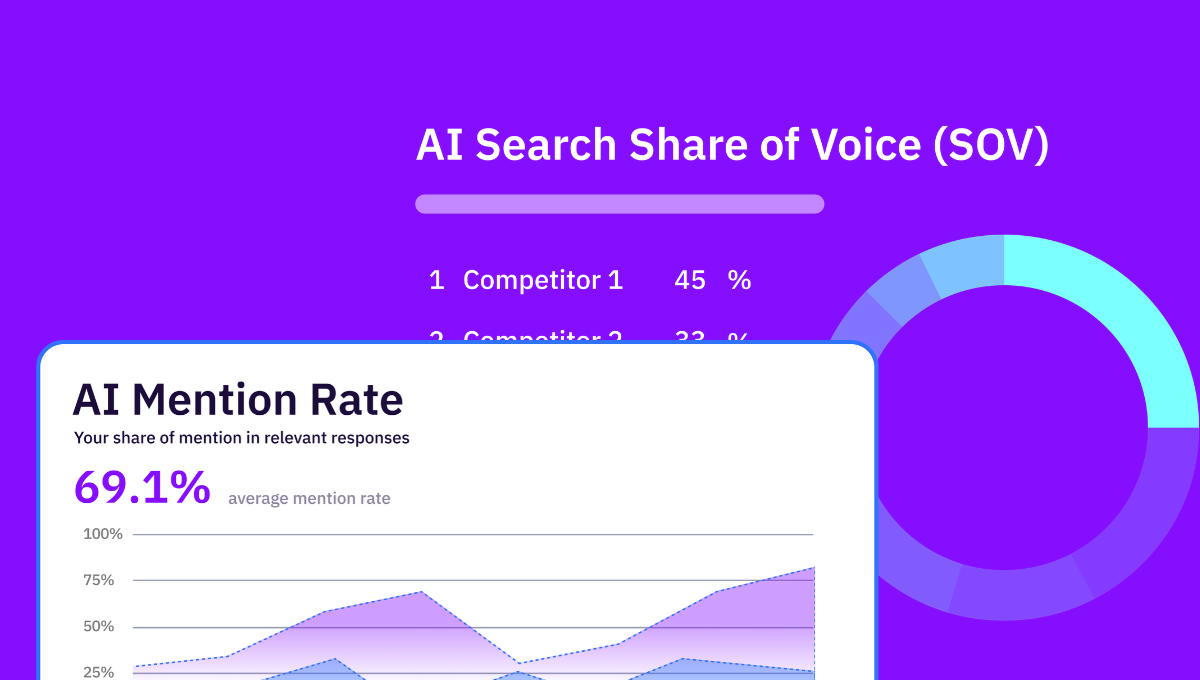
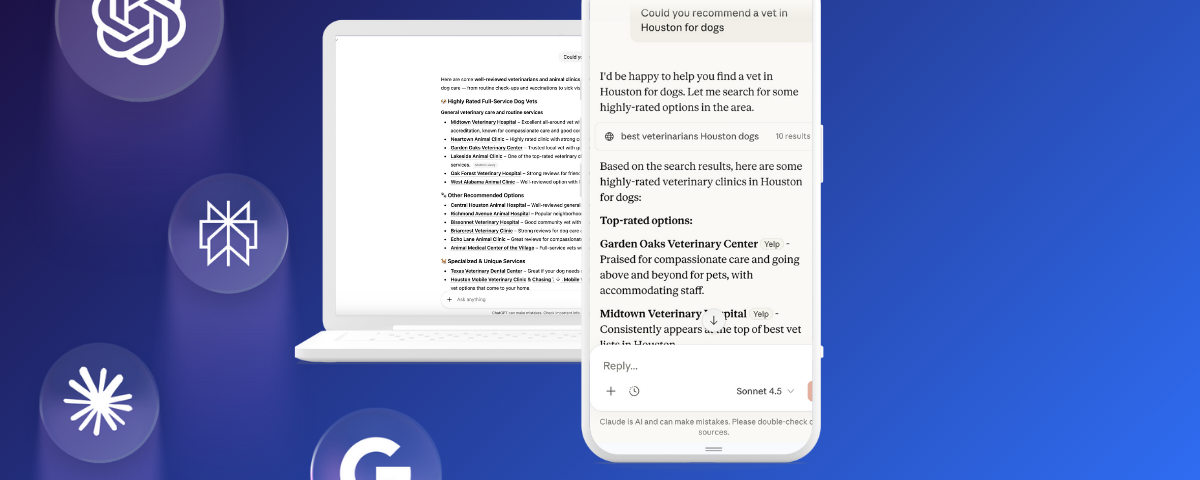
You can track brand mentions in AI search engines, but not with traditional SEO tools alone. Google Search Console and GBP Insights show branded search trends in traditional search; Google Alerts and Alertmouse track mentions on the open web. For AI-specific tracking, a tool like GEO Studio monitors how your brand appears in AI-generated responses across ChatGPT, Gemini, and Perplexity — showing which prompts trigger your mentions, which models mention you, and where competitors are winning.
Consistency across directories directly affects brand authority because search engines and AI systems cross-reference your information across sources before deciding whether to trust you. Even small discrepancies — "St." versus "Street," a missing phone number, conflicting hours — create confusion that accumulates into a trust problem at scale. Prioritize directories that are actually used in your industry and region, and keep brand name, address, phone, hours, description, and visual identity identical everywhere.