Brands Are Optimizing Their Listings — But Bad Location Data Means They’re Never Going Live
Dirty data means unpublished listings. Here’s how location data cleansing actually works — and why it’s the most underrated lever in local SEO.

Key takeaways:
- If location data doesn’t pass cleansing, the listing never goes live
- Location data cleansing is an ongoing process that should trigger automatically every time an address, business name, or location changes
- The best data cleansing services are invisible to the customer: Mandatory, automatic, and included — not sold as a premium add-on
"Coming from a previous vendor, we know that listings management with Uberall is a fundamental thing we need as a footfall business. When we look at all of the views we get on Google Maps and Google Search, listings are our biggest digital customer touchpoint. Ensuring the information is accurate is non-negotiable for us."

A global financial services brand with more than 128,000 locations across 70+ countries recently switched listing providers. Their previous vendor couldn’t cleanse their data (I’ll explain this further down), and around only 10% of their locations were actually published on Google.
The other 90% were hidden to local search systems — not because the profiles weren’t created, but because the location data was too inaccurate to pass directory validation.
When we talk to enterprises evaluating listings management platforms, the same fear comes up repeatedly: Can we actually trust what’s live on Google, Apple, and Yelp without manually checking every listing ourselves? One marketing leader was concerned every day that data would get overridden because it wasn’t in sync — and they’d be back to square one.
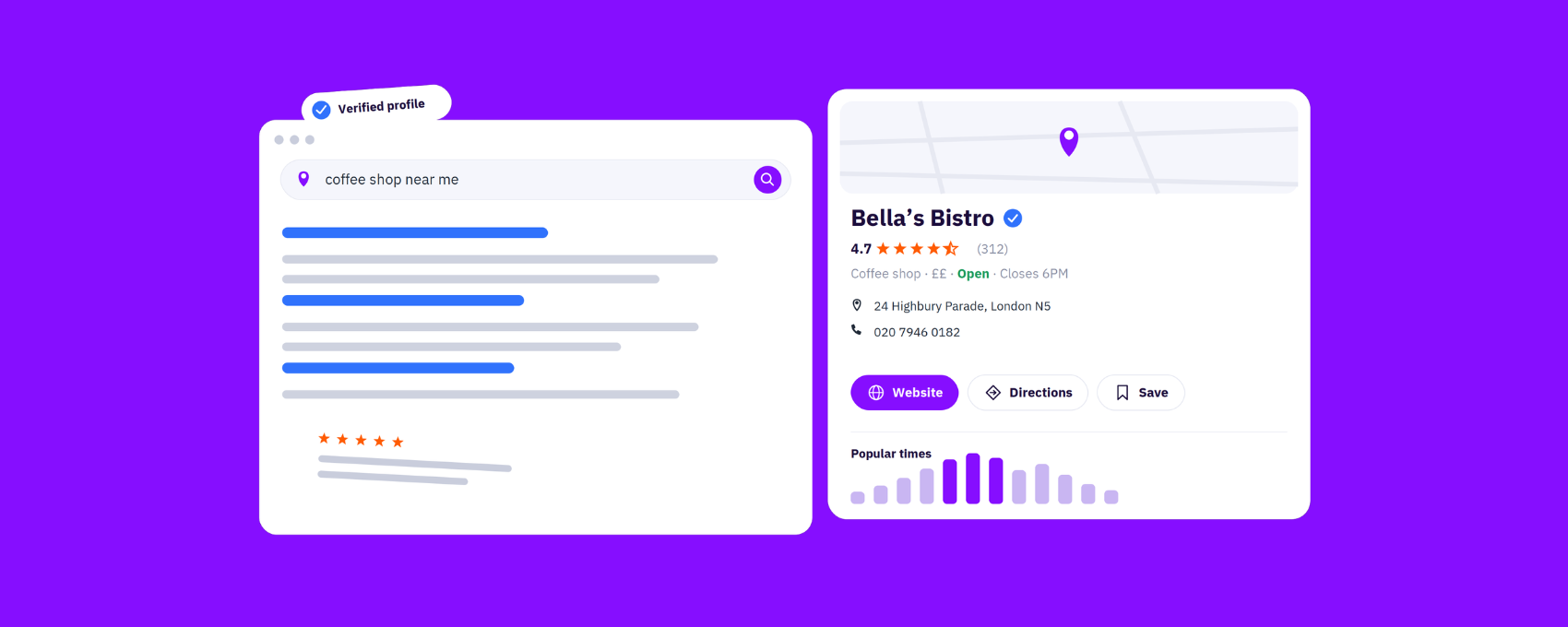
The stakes are higher than most leaders realize. Brands with consistent name, address, and phone data are more likely to appear in the Google Local Pack. And it goes without saying that potential customers are more likely to trust your listing. For a brand with hundreds or thousands of locations, bad data is a revenue problem that needs to be cleaned up as soon as possible.
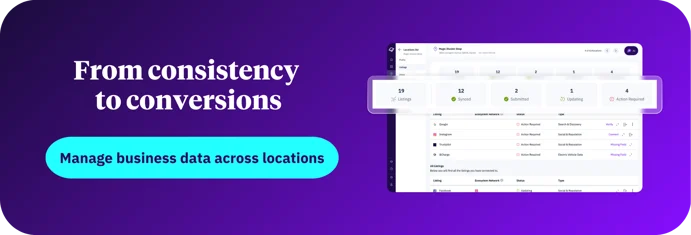
What Location Data Cleansing Actually Does
Data cleansing — sometimes called “data scrubbing” — is the process of detecting, correcting, and standardizing inaccurate or incomplete location data before it gets pushed to directories and search platforms.
For multi-location businesses, that means verifying and correcting business names, addresses, phone numbers, opening hours, and categories across every location in your network.
But “verifying and correcting” completely simplifies what’s actually involved. When we talk about location data cleansing, we’re talking about four distinct operations:
- Google validation: Every address is verified against Google before any directory sees it — this is to avoid failed publications and rejected listings
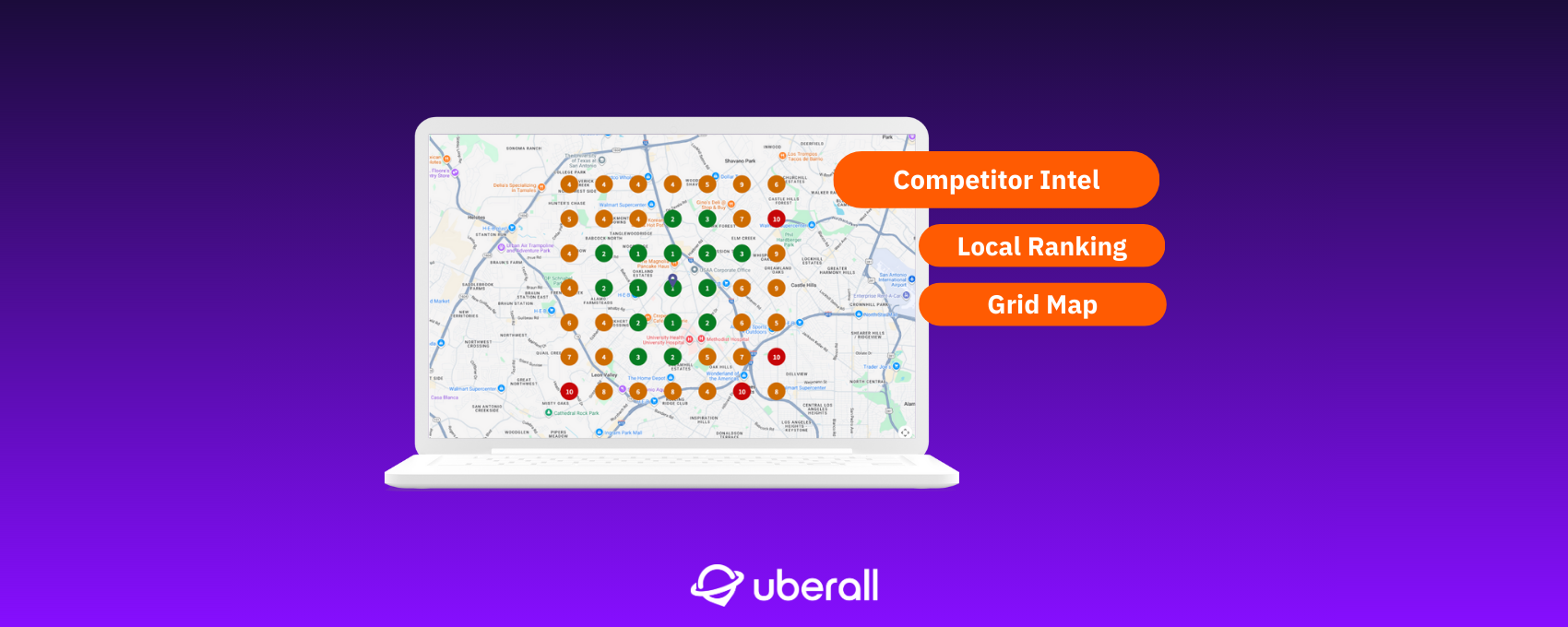
- Lat/long correction: Latitude and longitude are corrected so brands appear exactly where they are on Google Maps, Apple, and Bing — not three blocks away because a geocode was off
- NAP normalization: Street names, ZIP codes, and country formats are standardized so the same business shows up the same way everywhere, across every directory
- Recleansing: Any significant address change triggers a fresh validation flow automatically — accuracy is preserved through the entire location lifecycle, not just at onboarding
This is also why cleansing is a prerequisite for publishing on Apple Maps and Yelp, not just Google. These directories have their own validation requirements, and uncleansed data just won’t pass.
The common misunderstanding is that cleansing is a one-time onboarding project. In practice, location data go stale constantly — businesses open new locations, change hours seasonally, rebrand after acquisitions, move addresses.
So, when we took on the financial-services-client migration I mentioned earlier, we found what you’d expect from a dataset that had never been properly cleansed: Address formats varied wildly across countries, entire regions lacked reliable address infrastructure (some with no Street View coverage at all), and the overall data quality was, to put it nicely, seriously poor.
Our team manually validated 76,535 of those 128,000 locations. Each location was reviewed by a human, because no algorithm alone can resolve address inconsistencies across 70+ countries with different postal conventions.
Each of those changes needs a fresh cleansing event. Only 12% could be auto-cleansed. Real data cleansing at enterprise scale requires human judgment — especially when you’re operating across dozens of countries with fundamentally different address conventions.
What do I mean by that? Well, in Germany, the house number follows the street name (Friedrichstraße 123), while in Japan, addresses work from largest to smallest unit and often don’t use street names at all. Brazil uses a mix of numbered and unnumbered addresses depending on the municipality, and in parts of the Middle East, addresses may reference landmarks rather than formal street infrastructure.
Why Clean Data Is Seen Data
According to Whitespark’s Local Search Ranking Factors, consistent NAP information remains one of the top signals Google uses to determine local pack rankings. But consistency doesn’t just mean “the same data everywhere” — it obviously means correct data everywhere … because how else would anyone find you or contact you. And correctness starts before publication, at the cleansing layer.
Brands do not want to cut the cleansing from their workflows. “Dirty” data fails directory validation → listings don’t get published → unpublished locations don’t appear in local search → the business loses foot traffic from those locations. The marketing team is left wondering why the listings platform they pay for isn’t driving results, when the real problem happened before a single listing went live.
We’ve seen multi-location brands arrive from other vendors with data that looks managed but isn’t actually clean, which is why they routinely need their data re-cleansed before anything can go live.
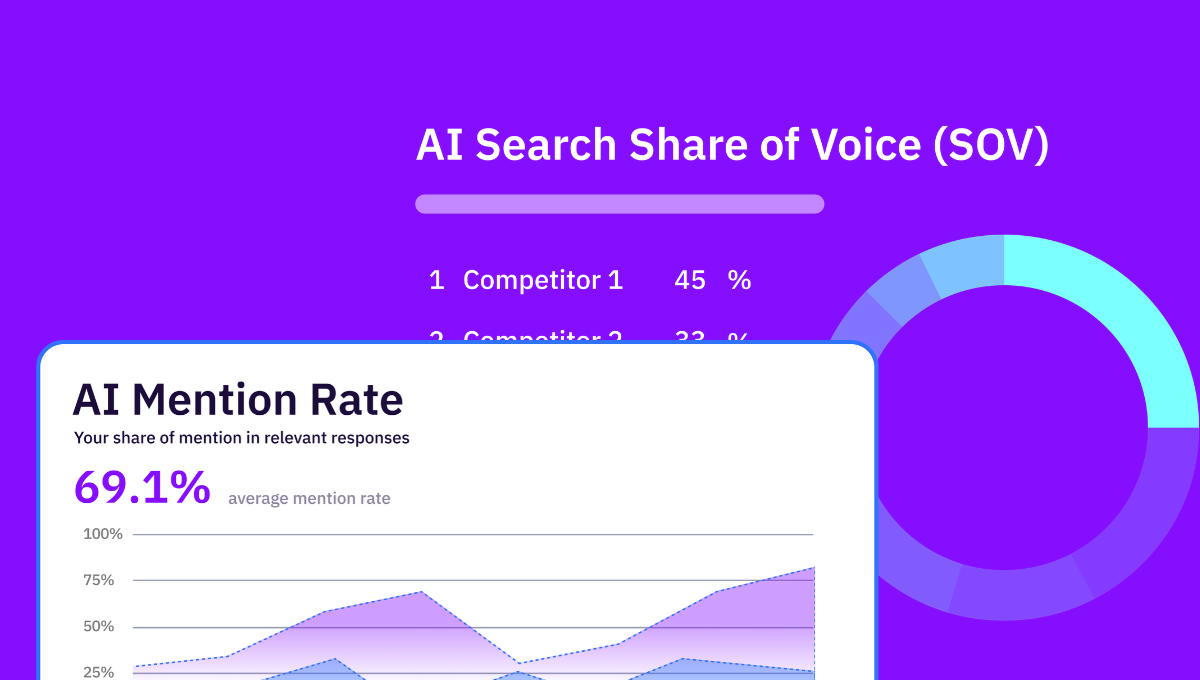
Today, where AI search tools like ChatGPT, Perplexity, and Gemini are pulling local business data from directories to make recommendations, consistent, accurate listings data is a key factor influencing AI-driven discovery. And since more than two in three brands are missing from AI recommendations, location data optimizations could help a lot of brands stand out from their local competitors.
Here’s what to look for when evaluating location data cleansing services:
- Cleansing should run on every new location automatically. If your provider offers cleansing as an opt-in add-on — or charges extra for it — that tells you where data quality sits in their priorities. At Uberall, cleansing is mandatory for every location, every tier (enterprise, mid-market, SMB), at no additional cost.
- A change to an address, business name, or the addition of a new location should automatically trigger a fresh cleansing event. If your team has to manually request a re-cleanse after every update, your data will drift out of compliance within weeks. Uberall runs 375 sync checks per second to keep listings accurate and catch errors before they reach publishers.
- Before any listing is published, every directory should be searched to check whether a listing already exists. Matches get scored against name, address, and key fields — 100% matches are linked instantly, partial ones move to validation, and wrong matches trigger a retry. When no match exists, a clean new listing is created.
- The platform ensures more than internal data hygiene. It prioritizes data that meet the specific formatting and validation requirements of Google, Apple, Bing, and other directories. This is part of why Uberall is partnered with Google and Apple – we don’t want to put any bad data on publisher platforms.
Multiple locations can lead to multiple headaches with the wrong location data cleansing company, so ask what happens to your location data before you ask how many directories they publish to.
Detox Your Dirty Data for Local Search
The marketing leaders worried about data getting overwritten and only 10% of their locations actually being published online are probably not thinking about AI search strategy or social posts — they’re thinking about all the foot traffic they’re losing.
When your location data is squeaky clean — validated, standardized, and maintained automatically and at scale — you stop putting out fires and questioning your listings provider. You can start actually using your listings platform for what it’s there for: driving visibility, building reputation, and bringing customers through the door across your locations.



1,800 brands trust us to stay visible
— not just show up once or twice in local search.





.png)

Frequently asked questions
Location data cleansing is the process of detecting, correcting, and standardizing your business location data — names, addresses, phone numbers, hours, categories — before it’s pushed to directories and search platforms. Sometimes called data scrubbing, it's what makes sure the same accurate details appear everywhere, so listings pass validation and go live. For multi-location brands, it runs across every location in the network.
Location data cleansing matters because inconsistent or inaccurate data blocks your local visibility: if data doesn't pass a directory's validation, the listing never publishes — and an unpublished location can't appear in search or drive foot traffic. Consistent, correct NAP is also one of the top signals Google uses for Local Pack rankings, so clean data is necessary for ranking, not a nice-to-have.
A location data cleansing service verifies and corrects your listing data before it ever reaches a directory. That service covers four jobs: Google validation (every address checked before publishing), lat/long correction (so your pin sits exactly where you are), NAP normalization (street, ZIP, and country formats standardized everywhere), and recleansing (any address change triggers a fresh check). Good address data cleansing keeps this accurate across every location, continuously.
Your business listings often aren’t publishing because the underlying location data is too inaccurate or inconsistent to pass directory validation — not because the profiles weren’t created. One global brand we migrated had only 10% of its locations actually live for exactly this reason. Google, Apple, and Yelp each validate data before publishing, so if an address, geocode, or NAP detail is off, the listing fails to go live until the data is cleansed.
To choose a data cleansing company, ask what happens to your location data before you ask how many directories they publish to. Look for cleansing that runs automatically on every location (not a paid add-on), re-triggers on any address, name, or new-location change, searches each directory for existing listings before creating duplicates, and formats data to Google, Apple, and Bing’s specific validation rules.
Data cleansing is an ongoing process, not a one-time onboarding project. Location data goes stale constantly — brands open locations, change seasonal hours, rebrand after acquisitions, or move addresses — and each change needs a fresh cleansing event. If accuracy is only checked at setup, data "drifts" out of compliance within weeks and listings start failing validation again. The best setups re-cleanse automatically every time location data changes.
There’s no real difference between data cleansing and data cleaning; the terms are used interchangeably, and you’ll also see "data scrubbing" for the same thing. All refer to detecting and fixing inaccurate, incomplete, or inconsistent data. In a local marketing context, cleansing your location data (names, addresses, geocodes, NAP) so it passes directory validation and your listings go live is critical.
AI search tools — Google AI Overviews, ChatGPT, Perplexity, voice assistants — build recommendations from structured business data across directories. Inconsistent data means AI models are less likely to recommend you. NAP consistency, service descriptions, hours, and photos all contribute to AI recommendation signals. Uberall optimizes your location data for AI discovery, ensuring it's structured and accessible to the models increasingly influencing how customers find local businesses.