Social Media for Restaurants: Your Local Content Is Doing More for AI Search Than You Think
Your restaurant's social presence is doing more than building brand awareness — it's influencing AI recommendations. Here's how to make that work at scale.
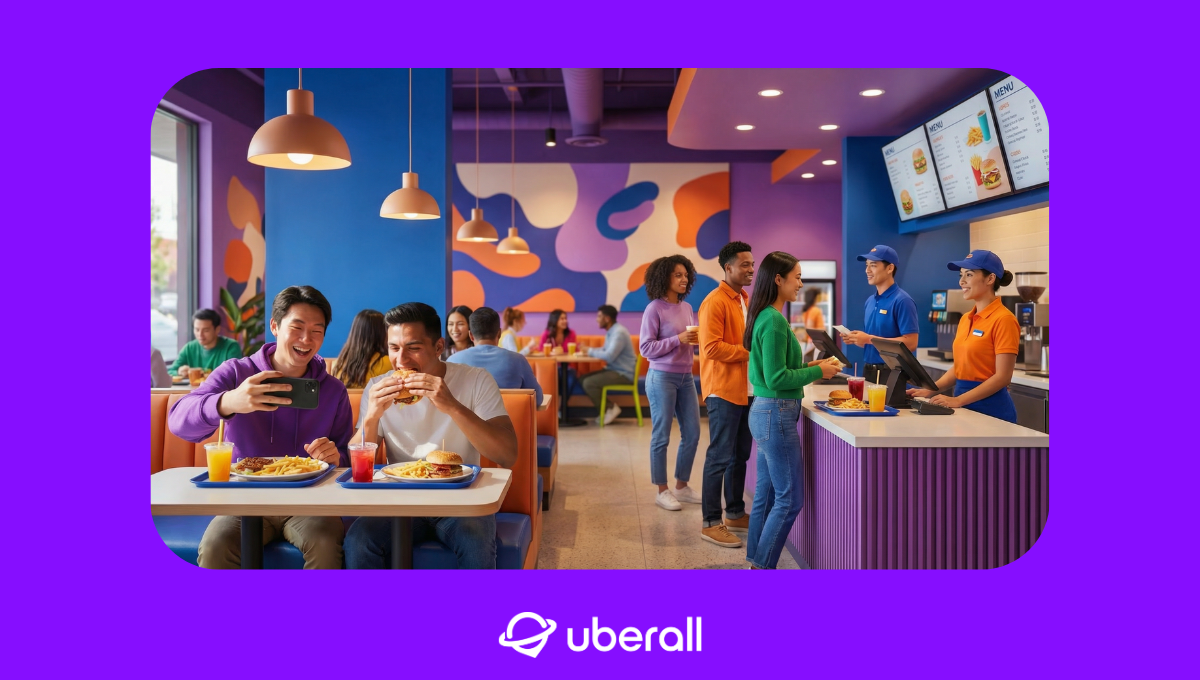


"Where should I eat tonight?" More consumers name AI chatbots like ChatGPT and Perplexity as their primary method for finding a restaurant in their local searches than both social media and personal recommendations. That number is only going to go up.
But no, social media is not dead. And no, word-of-mouth marketing is also not dead.
Consumers and AI systems are using your locations' social channels as a validation layer for their recommendations. AI chatbots pull from Reddit and Facebook when recommending restaurants, so your social presence is still influencing how customers find you — and whether they'll drop in for a visit (and a meal).
But you probably already know local social media isn't irrelevant; you're just worried it's unscalable. When every piece of content needs to be more specific, more local, and more AI-friendly, rolling that approach out across hundreds or thousands of restaurant locations is a monster ask.

Post Where? The Social Channels Amplifying Your Restaurant Locations
Not every social platform deserves equal effort from your restaurant marketing team. The ones worth investing in are those where your content drives visibility, builds trust, and helps customers choose your location over your competitor's down the street.
But it is worth considering that restaurants with a consistent social media presence see 27% higher retention than those without one, so if you want repeat visits and loyal customers, you might want to regularly take to your social channels to show locals what they're missing out on.
"If a brand is not doing [social media & video], they're missing out on a lot of context and data they could be feeding AI and LLMs to learn more about their brand." — Cindy Krum, Founder & CEO of MobileMoxie, Inc., on Local Marketing Beat
Based on our QSR Playbook data, and local social best practices, here's where your restaurant locations should be posting for optimal visibility in AI and traditional search.
Facebook remains the most practical platform for multi-location restaurants but is also a top AI citation source for restaurants.
So make each restaurant location's profile a publicly discoverable Facebook Page — not just a location pin on the brand page. Link to your location pages for that validation layer to make your brand a trustworthy dining option.
You also want it to be easy to drive conversions from Facebook if your customers or AI agents are discovering you there. This means adding call-to-action buttons for bookings and orders. Integrate with OpenTable so mobile users can reserve a table without leaving Facebook.
Reddit is the platform you're most likely unsure about. And I don't blame you because there's been a lot of noise regarding the need for a Reddit strategy.
Our QSR Playbook data shows Reddit appearing consistently as a cited source in AI-generated restaurant recommendations. Consumers ask Reddit for honest opinions, and AI systems reference those threads. You obviously can't control what people say on Reddit, but you can monitor what's being said about your brand and your locations — kind of like a sentiment analysis — and use that insight to fill content gaps or improve your business operations.
Instagram and TikTok
These were probably the first social channels you had in mind.
If you're already investing on either TikTok or Instagram, you might be wondering where to invest or optimize further. I would say to go as local and customer-oriented as possible. New staff, new specials, new booking options for big events, new dietary information on the menu — talk about it, promote it, post it. I'll talk more about what exactly to post on these social channels further down — as well as how you can scale location-specific content across restaurant locations.
Post What? Fill the Social Content Gaps Your Competitors Haven't
The problem for multi-location restaurant brands is that most social media strategies are still built for brand awareness, not local performance.
A corporate Instagram post about a seasonal menu won't compel someone in downtown San Francisco to eat there tonight.
Clean listings data about your restaurant location on 123 San Francisco Street might get you found in local search queries, but your social content is what makes people choose you.
This is where we talk about creating the relevant and context-rich content that really converts visibility into engagement into foot traffic — and measurable location performance.
Structure your social posting schedule to signal consistently why that location is relevant to specific local queries you want to be recommended for. Identify the queries and prompts consumers are using to find restaurants like yours, then create content that fills those gaps across your social channels.
What do these content ideas look like in practice?
- "Best" dining options — your customers want to find the best stuffed-crust pizza options in the area
- New menu item launches — your customers want to try something new on their lunch break
- Customer moments — your customers want a good-quality, memorable dining experience
- Promo codes or loyalty programs tied to specific locations — your customers want to know where they can get the best value for money or where they can expect to be rewarded for return visits
- Location-specific FAQs — your customers have specific questions like "Do you have outdoor seating at the San Francisco Street location?" or "Do I need to book a table in advance on a Friday night?"
- Comparisons with competitors — your customers are deciding between Pizza Hut vs Dominos for delivery speed and pizza quality
When you address these queries in your local social content, this is exactly the kind of specific, actionable, continuous content that both customers and AI systems pick up on.
TIP: From our playbook, we can see that most queries are informational and comparative, so be prepared to answer these kinds of queries for your restaurant category or in your neighborhood.
Of course, there are a whole list of social media best practices for you to follow; these stood from our QSR playbook findings.
And if it sounds like this strategy would be hard to measure or monitor, remember that social signals are affecting local ranking factors more and more.
- Google is integrating social posts into Google Business Profiles
- Google Search Console already tracks social signals
- AI search tools can tell you where you are being cited or mentioned on social channels for specific prompts, such as Reddit or Facebook
Post How? The demands of a multi-location social strategy
If your social presence is stale — last post three months ago, no recent photos, no engagement — that important validation layer fails when consumers are making dining decisions.
But can you maintain location-specific content at the quality and frequency your customers expect? Social media marketing for restaurants works best when you commit fully to fewer platforms rather than spreading thin across all of them.
To show up consistently, repurpose your best content across channels. A social media management platform that lets you post simultaneously makes this realistic at scale.
A reel showing your chef preparing a dish can be embedded on your location page. A customer's Instagram post about your vegan menu can become a photo on your Google Business Profile. A TikTok walkthrough of a newly renovated location can be added to your listings alongside updated photos.
This is where social media management for restaurants connects directly to your broader Location Performance Optimization strategy. Social content feeds your engagement layer — it keeps your presence fresh, active, and current across platforms. And when that content is repurposed consistently across your listings, your website, and your social channels, it reinforces the data consistency that AI systems use to build confidence in your brand, while saving your team time and effort.
In short: Where it's locally relevant, use the same workstream, executed across different surfaces.
Social Is Your Restaurant's Validation Layer
The days of treating social media for restaurants as a separate brand awareness channel are over. Social content now feeds directly into the signals that determine whether you get recommended by AI — and whether a consumer follows through on that recommendation with a visit.
The brands that connect their social media management to their local search strategy — choosing the right platforms, creating location-specific content, repurposing across channels — are the ones closing the gap between discovery and foot traffic.
And if there's one thing to take away from this article, it's that this isn't a chicken-and-egg situation. The content you're feeding AI systems across your social channels, listings, and location pages comes first. Your local search performance follows.
If you want the full data behind how AI recommends restaurants and which sources it trusts, check our QSR Playbook.



1,800 brands trust us to stay visible
— not just show up once or twice in local search.


.png)

Frequently asked questions
You automate social media posts across multiple restaurant locations by using a social media management platform that lets you publish to every location’s profiles simultaneously. HQ creates on-brand content once, and local teams adapt or subscribe to it — no one is drafting captions from scratch per location. The same content can be repurposed across channels: a reel from the kitchen becomes a location-page video, a customer’s Instagram post becomes a Google Business Profile photo.
Restaurant social media content does affect AI search recommendations. AI tools like ChatGPT and Perplexity pull from Reddit, Instagram, and Facebook when recommending restaurants, and Google now tracks social signals in Search Console. Your social presence acts as a validation layer — when a consumer or AI system checks whether your location is active, current, and worth visiting, a stale profile with no recent posts fails that test.
The social media platforms that matter most for restaurants today are Facebook, Instagram, TikTok, and Reddit. Facebook is the most practical for multi-location brands and a top AI citation source — each location needs its own public Page with booking CTAs. Instagram and TikTok drive visual discovery and local engagement. Reddit matters because AI models cite its threads when recommending where to eat, even if you can’t control the conversation.
Restaurant chains manage Instagram and TikTok at scale by splitting content between corporate and local teams. HQ handles brand campaigns and seasonal launches; individual locations post behind-the-scenes kitchen content, staff moments, and locally relevant specials. A social media management platform lets both levels publish from one place, and the same video content can be repurposed across listings, location pages, and Google Business Profiles.
Social media content that drives foot traffic to restaurant locations is specific, local, and actionable — not generic brand posts. The formats that convert include "best of" posts that position your location for local dining queries, new menu item launches timed to lunch or dinner, promo codes tied to specific locations, and location-specific FAQs like outdoor seating availability or reservation policies.
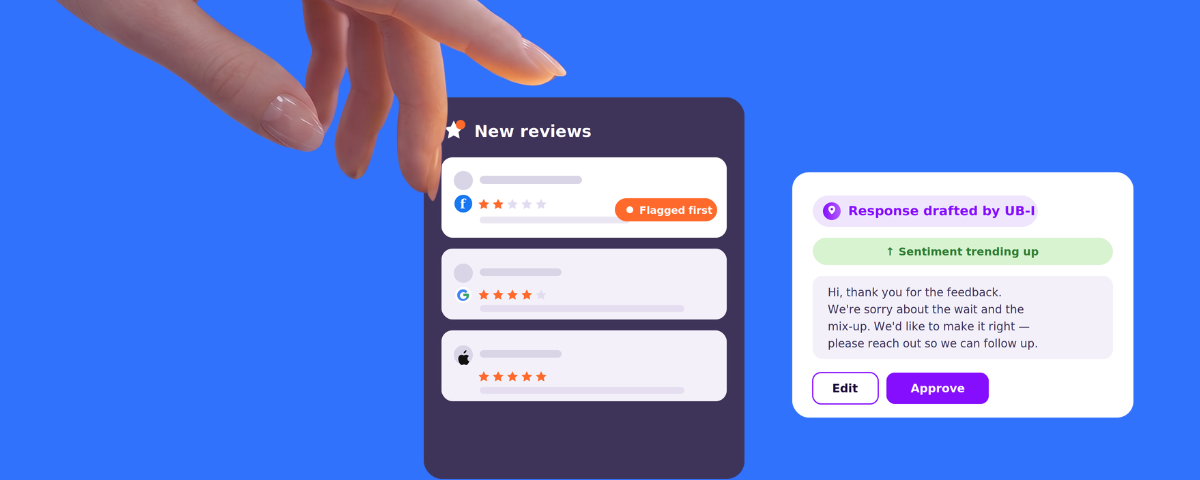
AI tools can create social media content for restaurants. An AI Social Writer generates on-brand posts for individual locations without requiring each location to write from scratch. As MobileMoxie CEO Cindy Krum says on our podcast, brands not using social media and video are missing context and data they could be feeding AI models to learn more about their brand. The content AI creates for your social channels also becomes the content AI search systems later reference.